Physicians writing on KevinMD about treating pain, alongside the pain patients who write back: chronic pain care, opioid prescribing and its reversal, the CDC guideline and forced tapers, pain contracts and monitoring, prosecution risk, and what non-opioid care can and cannot do. Most contributors treat pain or live with it. For a maintained record of what physicians and pain patients have said about opioids on KevinMD since 2007, from how the crisis happened to what the response did, attributed by author and date and organized by question, see Opioids: what physicians and pain patients say, in their own words.
Recently, a group of researchers at the University of California, San Francisco, reported that they may have found the holy grail of pain management. They accomplished this by performing "the first-in-human, long-term direct brain measurement of chronic pain-related neural activity."…
Recently, a group of researchers at the University of California, San Francisco, reported that they may have found the holy grail of pain management. They accomplished this by performing “the first-in-human, long-term direct brain measurement of chronic pain-related neural activity.”
Physicians have long sought a reliable way to detect and track the presence of chronic pain and its response to treatment but have failed completely so far. Old tropes like …
What is a legitimate medical reason to prescribe an opioid medication today? For pain or addiction? Who decides which patients are worthy of treatment? This question is not just of academic interest. Any prescribing medical provider today must constantly live…
What is a legitimate medical reason to prescribe an opioid medication today? For pain or addiction? Who decides which patients are worthy of treatment? This question is not just of academic interest. Any prescribing medical provider today must constantly live in fear that a law enforcement agent somewhere will disagree with the prescriber’s answer to these questions. On its face, it seems simple. If a patient has severe pain, a …
An excerpt from Slow Dancing with the Devil: A Son's Substance Use Disorder, A Mother's Anguish. The only time my anxiety was gone, or at least on pause, was when Luke was in a treatment center or sobriety house. I…
The only time my anxiety was gone, or at least on pause, was when Luke was in a treatment center or sobriety house. I knew he was safe and surrounded by those who understood the game. Neurobiology is a part of addiction, and so is coming to grips with the fact that SUD is …
The definition of addiction, now called substance use disorder, has varied greatly over time. The first edition of the Diagnostic and Statistical Manual, from 1952, didn't include specific diagnostic criteria for this condition. Over the next sixty years, the DSM…
The definition of addiction, now called substance use disorder, has varied greatly over time. The first edition of the Diagnostic and Statistical Manual, from 1952, didn’t include specific diagnostic criteria for this condition. Over the next sixty years, the DSM went through six revisions, with a slow evolution of the terms “substance abuse” and “dependence.” The first was limited to substance use causing social and occupational problems, while the last …
Join L. Joseph Parker, a research physician, as we dive into the intricate world of medical practice and legal challenges faced by health care professionals treating patients with pain and addiction. Joseph sheds light on the complexities of opioid prescriptions,…
Join L. Joseph Parker, a research physician, as we dive into the intricate world of medical practice and legal challenges faced by health care professionals treating patients with pain and addiction. Joseph sheds light on the complexities of opioid prescriptions, the impact of legal actions on medical decisions, and the need for reform in health care …
She walked in with a cane, bent over like a question mark. She was in her seventies and as sweet as people in that age group tend to be. I think most of the cranky ones don't make it that…
She walked in with a cane, bent over like a question mark. She was in her seventies and as sweet as people in that age group tend to be. I think most of the cranky ones don’t make it that far. She was something of an emergency because her doctor had just passed away, and it was time to refill her medications. It would not be safe for her to …
Why would anyone lie about you? And what makes you prone to conviction? There are three types of people that will absolutely bring your world crashing down on you, and you need to know who they are. But first, we…
Why would anyone lie about you? And what makes you prone to conviction? There are three types of people that will absolutely bring your world crashing down on you, and you need to know who they are. But first, we need to understand the formula that prosecutors have developed to target doctors.
Prosecutors go after doctors because they are easy targets. The formula developed by prosecutors has three steps: First, make …
At a recent scientific conference on narcotics, a researcher mused, "Honestly, opioids make me feel gross. I don't see how anyone could get addicted." This is a little like a doctor in the delivery end of a needle saying, "Honestly,…
At a recent scientific conference on narcotics, a researcher mused, “Honestly, opioids make me feel gross. I don’t see how anyone could get addicted.” This is a little like a doctor in the delivery end of a needle saying, “Honestly, you’re a wimp. This doesn’t hurt.” Both examples reveal a lack of empathy and a fundamental misunderstanding of current neuroscience.
The contributions or fear, reward, fight, and flight are a complicated …
Join Amy Baxter, a clinical associate professor of emergency medicine, as we explore the intricate balance between physicians' roles in perpetuating the crisis, addressing systemic factors, and the influence of pharmaceutical industry-sponsored education. Discover the brain's response to pain and…
Join Amy Baxter, a clinical associate professor of emergency medicine, as we explore the intricate balance between physicians’ roles in perpetuating the crisis, addressing systemic factors, and the influence of pharmaceutical industry-sponsored education. Discover the brain’s response to pain and opioids, contextual risk factors for opioid use disorder post-surgery, and the …
Pain is the primary reason people seek medical care. Pain is also the problem that ignited the opioid crisis and continues to supply fuel. Eighty percent of opioid misuse begins with a pill prescribed for pain. Purdue invested heavily in…
Pain is the primary reason people seek medical care. Pain is also the problem that ignited the opioid crisis and continues to supply fuel. Eighty percent of opioid misuse begins with a pill prescribed for pain. Purdue invested heavily in marketing Oxycontin to physicians, training them that home opioids are the standard of care for recovery from surgery. While addiction debunked the myth of universal safety, two fallacies embedded in …
Join patient advocate Richard A. Lawhern as he challenges prevailing myths surrounding the opioid crisis. With insights from medical literature, he questions the link between opioid prescribing and toxicity, highlighting the need for evidence-based public health policies. Learn about the…
Join patient advocate Richard A. Lawhern as he challenges prevailing myths surrounding the opioid crisis. With insights from medical literature, he questions the link between opioid prescribing and toxicity, highlighting the need for evidence-based public health policies. Learn about the human toll of opioid restrictions and explore alternatives for severe chronic …
The call came in during a busy workday. My comprehensive primary care clinic had been built over a decade of hard work and had a general practice clinic staffed by a very capable former surgeon and several nurse practitioners, as…
The call came in during a busy workday. My comprehensive primary care clinic had been built over a decade of hard work and had a general practice clinic staffed by a very capable former surgeon and several nurse practitioners, as well as a pain management program and an addiction treatment clinic. We also had several counselors on staff. I immediately recognized the voice on the other end of the line …
The opioid crisis continues to ravage communities, and everyone, including politicians and federal agents, has a plan. However, no one has an actual solution. It's time to examine the crisis from a more detailed perspective: the clinical perceptions that form…
The opioid crisis continues to ravage communities, and everyone, including politicians and federal agents, has a plan. However, no one has an actual solution.
It’s time to examine the crisis from a more detailed perspective: the clinical perceptions that form during a clinical encounter between a physician and a patient. It is here that we see the true effects of opioid policy and understand why they are so ineffective.
A recently published opinion article by opioid advocates attempts to assuage physicians' prescribing guilt, arguing "doctors prescribing to their patients did not create the U.S. opioid crisis." As lawsuit after lawsuit concludes, Purdue Pharma, Johnson and Johnson, and blindered distributors…
A recently published opinion article by opioid advocates attempts to assuage physicians’ prescribing guilt, arguing “doctors prescribing to their patients did not create the U.S. opioid crisis.” As lawsuit after lawsuit concludes, Purdue Pharma, Johnson and Johnson, and blindered distributors and pharmacies share the blame for propping up pills for profit. Physicians may inflate home narcotic quantities for convenience, but with rare prosecutable exceptions, not monetary gain. But the …
"In July 2015, journalist Johann Hari gave a TED Talk that over 20 million people have since viewed. Hari offered convincing evidence that vulnerability to opioid addiction is a consequence of the conditions under which people live — the social…
“In July 2015, journalist Johann Hari gave a TED Talk that over 20 million people have since viewed. Hari offered convincing evidence that vulnerability to opioid addiction is a consequence of the conditions under which people live — the social determinants of health — rather than simple exposure to opioid pain relievers. This theme is brilliantly elaborated by economist Anne Case and Nobel Prize winner Angus Deaton …
Join us for a fascinating podcast episode as we explore the dangerous consequences of propaganda and misinformation within the context of the opioid epidemic. Our guest, Jay K. Joshi, a family physician and author of Burden of Pain: A Physician's…
Join us for a fascinating podcast episode as we explore the dangerous consequences of propaganda and misinformation within the context of the opioid epidemic. Our guest, Jay K. Joshi, a family physician and author of Burden of Pain: A Physician’s Journey through the Opioid Epidemic, shares his personal experiences and insights. …
An excerpt from Burden of Pain: A Physician's Journey through the Opioid Epidemic. Glide your hand over a piece of velvet and you notice the smoothness. You feel its aggregated smoothness, not the individualized roughness of each fiber. Each fleeting…
Glide your hand over a piece of velvet and you notice the smoothness. You feel its aggregated smoothness, not the individualized roughness of each fiber. Each fleeting fiber, a prick of truth, is nullified, synthesized, and then magnified into the silky fluency of general perception—propaganda containing within it a concoction of ambiguities and assumptions, cooked with a …
Join us for an eye-opening episode as we discuss the truth behind the U.S. opioid crisis with our guest, patient advocate Richard A. Lawhern. Contrary to popular belief, doctors did not cause this crisis by over-prescribing opioid pain relievers to…
Join us for an eye-opening episode as we discuss the truth behind the U.S. opioid crisis with our guest, patient advocate Richard A. Lawhern. Contrary to popular belief, doctors did not cause this crisis by over-prescribing opioid pain relievers to their patients. Instead, illegal street drugs primarily drive this crisis, which is fueled …
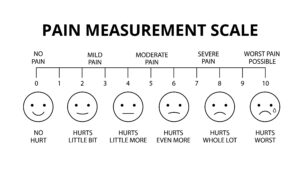
Adapted from The Right to Pain Relief and Other Deep Roots of the Opioid Epidemic. Published by Oxford University Press in January 2023. The 0-to-10 pain intensity scale that has become a familiar feature of clinical care had its origin…
The 0-to-10 pain intensity scale that has become a familiar feature of clinical care had its origin in experimental psychophysics studies that investigated the relationship between noxious stimulus intensity and pain experience. In acute postoperative care, this scale may have improved pain control in the days immediately …
Towards the end of a busy clinic afternoon, I felt my phone buzz with a page in my jacket pocket. It is rare to receive pages on our phones in the middle of the day because we usually get messages…
Towards the end of a busy clinic afternoon, I felt my phone buzz with a page in my jacket pocket. It is rare to receive pages on our phones in the middle of the day because we usually get messages through the EMR or direct calls to the office. I called back the number to the sound of an exasperated ER doctor who had been trying to reach the PCP …