Subscribe to The Podcast by KevinMD. Catch up on old episodes!
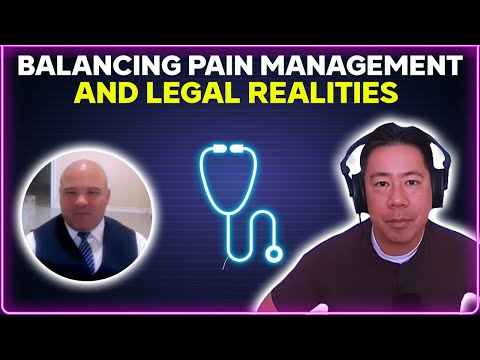
Join L. Joseph Parker, a research physician, as we dive into the intricate world of medical practice and legal challenges faced by health care professionals treating patients with pain and addiction. Joseph sheds light on the complexities of opioid prescriptions, the impact of legal actions on medical decisions, and the need for reform in health care and legal systems.
L. Joseph Parker is a research physician.
He discusses his KevinMD article, “The persecution of pain management doctors.”

The Podcast by KevinMD is brought to you by the Nuance Dragon Ambient eXperience.
With a growing physician shortage, increasing burnout, and declining patient satisfaction, a dramatic change is needed to make health care more efficient and effective and bring back the joy of practicing medicine. AI-driven ambient clinical intelligence promises to help by revolutionizing patient and provider experiences with clinical documentation that writes itself.
The Nuance Dragon Ambient eXperience, or DAX for short, is a voice-enabled, ambient clinical intelligence solution that automatically captures patient encounters securely and accurately at the point of care. Physicians who use DAX have reported a 50 percent decrease in documentation time and a 70 percent reduction in feelings of burnout, and 83 percent of patients say their physician is more personable and conversational.
Rediscover the joy of medicine with clinical documentation that writes itself, all within the EHR.
VISIT SPONSOR → https://nuance.com/daxinaction
SUBSCRIBE TO THE PODCAST → https://kevinmd.com/podcast
RECOMMENDED BY KEVINMD → https://kevinmd.com/recommended
GET CME FOR THIS EPISODE → https://earnc.me/sHB9zC

ADVERTISEMENT
Powered by CMEfy.
Transcript
Kevin Pho: Hi, and welcome to the show. Subscribe at KevinMD.com/podcast and get CME for this episode by clicking on the CME link in the show notes. Today we welcome Joseph Parker. He’s a research physician. Today’s KevinMD article is titled “The persecution of pain management doctors.” Joseph, welcome to the show.
L. Joseph Parker: Thank you very much. I appreciate the opportunity.
Kevin Pho: So let’s start by briefly sharing your story and journey to where you are today.
L. Joseph Parker: I was born in Kansas, but I grew up in rural Arkansas. I joined the Marines out of high school to go to college, finished a degree in computer science and switched to the Air Force. I was an ICBM commander for a while, and then I got accepted into medical school on an Air Force scholarship. I was very blessed to get to go there, and I’ve practiced general and emergency medicine.
Kevin Pho: All right, so tell us about your interest in pain management. I know you’ve written several KevinMD articles, so tell us about your interest in that.
L. Joseph Parker: As an emergency doctor, you see pain all the time. Half the people who come into the emergency room come in for pain, and not all of them have acute pain. Some of them have severe chronic pain, and they’re traveling, or something has happened, and they’re running low on medications. Our doctors had been trained to be pretty harsh on people coming in for pain, so that we could be observant and make sure we didn’t overprescribe. At the same time, as I was doing general medicine, I became aware that people with severe chronic pain are stuck in a horrible situation, because they have nowhere to go but the ER if something goes wrong, and then they are treated horribly. So I started adjusting the way I approached pain when I started working with a pain specialist. I would handle the general practice issues her patients had, and I got to learn a lot by working with her.
Kevin Pho: So tell us what you learned. Tell us how your philosophy toward pain changed from that ER mentality once you got the perspective of pain patients and worked with this pain management physician. Tell us a little more about that transition.
L. Joseph Parker: There is truly an unknowable spectrum of suffering that people can have, which most of us never know if we’ve been blessed not to have severe chronic pain, or really any severe pain at all. I’ve suffered injuries, but I don’t hurt very long. I have a high pain tolerance, and that’s not because I have a lot of willpower or I’m better; it’s just how I am. Some people suffer injuries so horribly severe, like spinal cord injuries and nerve injuries, that it’s as if their leg or arm is on fire 24 hours a day, and none of us except those people know what they’re suffering through. I started to see that the way we were treating some of these patients was unfair to them. We had no sympathy; we had no compassion, especially in the emergency room. When I became the director of an emergency room, I set strict standards for how patients would be treated: Even if you can’t give them what they want, you can treat them with decency and respect.
Then I took pain management for the primary care physician, which was, of course, an in-person course at Harvard, and I started taking an interest in pain management itself. In our clinic, which had multiple providers, I was kind of the go-to guy for controlled medications. Anyone there who was on a benzodiazepine for anxiety, or on something for pain, I was the one who handled it, because my experience working with the pain specialist, and all my extra study, had given me more perspective on it than the rest of them had. So we became known as capable of treating pain. Oncologists would send patients to us, as would pain specialists, because your pain specialist wants to see you, do a procedure and start you on your medications, but it’s not really appropriate for them to see you every month. Your family doctor should be willing to do that on a monthly basis, and then you go back and see the pain doctor on whatever schedule they set up. They’ll say, “Let me see them every six months,” or, “I’ll see them yearly.” Sometimes there’s nothing more for the specialist to do, and that’s what I consider palliative care: when everything’s been done, and that’s just how the patient is. Those were mainly the patients we treated. We would not treat patients who had not been seen by a specialist and had not been started on opiates by another doctor. When I say we wouldn’t see them, I mean we wouldn’t accept them for chronic pain treatment. If they came to us and hadn’t been seen by a specialist, we would refer them on to a specialist.
Kevin Pho: All right, and we’re going to talk more about the position a lot of physicians are placed in when treating legitimate pain in the context of the opioid crisis, which puts a lot of clinicians in very, very difficult situations. You talk more about that in your KevinMD article, “The persecution of pain management doctors.” This particular article resonated with my audience, with over 4,000 social media shares. Tell us how this article came together.
L. Joseph Parker: I had a patient who suffered an industrial accident 10 years before I met him. He had been on opiates for the pain from that. He had had multiple back surgeries and had metal plates and rods in his back, and he’d been put on benzodiazepines for spasms and for the PTSD that often accompanies a traumatic injury bad enough to cause severe chronic pain. He could no longer work in the factory, and he started working as a prison guard. There was an emergency lockdown, and as he was running to get to safety, his right hand was trailing behind him and was caught in a sliding steel door, one of those big steel doors. It crushed his hand and basically pulled off most of one of his fingers.
He went to the emergency room, and his family doctor had just moved out of the area, so he came to see me. He was actually referred to me by a pain specialist. He came to see me from the ER already on opiates for 10 years for his back, and he was on, I think, 270 morphine dose equivalents when he came to see me. So, not the 90 that the CDC recommended primary care doctors seriously consider before going over; he was already on three times that for his back when he came to me. And now his hand had just been crushed, a finger was gone, and he had a rotator cuff tear from the traction and a neck injury. So you have to decide. This is a legacy patient who has just suffered an acute injury. It seems like common sense that you would have to treat that pain.
There’s a misperception that people don’t die from pain, and that’s kind of true. But people don’t die from guns either; it’s always the bullet that kills them. People don’t die from pain; they die from the stress-related consequences of untreated severe pain. They knew during the Civil War that people did die from pain. They had to cut off people’s legs without anesthesia, and they had a very limited amount of time to do it, or the person’s heart would stop, and they would die. That’s what happens: People die from heart attacks, heart failure and strokes, from the stress-related consequences of severe untreated pain. But there’s no way to say that the pain itself killed them.
Kevin Pho: So tell us what happened next. You had this patient come to you. What happened next in the story?
L. Joseph Parker: I got him into multiple hand surgeries. He got a bone infection in the hand, and we got him through all that, IV antibiotics and all. I got him into shoulder surgery and another back surgery. We were getting them all lined up. He had one more surgery left, neck surgery. So he’s driving to Plano, Texas, from Arkansas, to see a neck surgeon, a neck specialist. He’s got written instructions from one of the other specialists, the spinal surgeon who had referred him to this neck specialist, and he’s following the written instructions while trying to drive, and he’s weaving. So a car dials 911, and he gets pulled over. He’s already been driving four or five hours; he had to get up very early. They ask him if he’s been on any medications or if he’s been drinking. He says, “No, I haven’t been drinking, and I took my medications at 9 p.m. last night.” And they want to do a field sobriety test. He told them the only thing he had taken that morning was his Lyrica. Lyrica causes nystagmus, so he’s not going to pass a field sobriety test. Plus, he can’t stand on one leg, period, much less do his ABCs; his back injuries have caused nerve damage, and he can hardly feel his legs. He explains all this to them, but then they go through his car, find a bunch of bottles of medication and say, “Oh my God, who put you on all these?” And they arrest him, because they found a trazodone out of its bottle.
A lot of people don’t know that if you have a prescription medication of any type, Prozac, and it’s out of its bottle and you’re outside your home, that’s a crime. So if you carry something in the Monday-Tuesday-Wednesday pill boxes, that’s actually a federal crime, and usually a state crime also. You can be prosecuted for that.
So they booked him and put him in jail, and as he was being processed, they drew blood. He told them, “I have these severe problems. Am I going to be able to see my surgeon?” “No, you’re not.” “Will you call my doctor?” “No, we won’t.” “Will I get my medications on time?” He was told, “Yes, you will.” He was arrested at 11 a.m. Around 2:30 p.m., he’s telling them, “Hey, I took it last night. I’m really starting to feel bad.” They refused to give him his medications. He started beating on the cell walls with his bare fists, and you can hear it on the camera; we have the video. You can hear the pounding, and they go tell him to be quiet, but they still don’t give him his medications. They tell him, “We don’t want someone to overdose in here, so we’re not going to give you anything.”
At 5:30 p.m. he gets quiet. At 5:30 they go around to give out food, and he’s lying on his bed, drooling, moaning and breathing strangely. One of the guards comes out and makes a sign like this to the others, but they don’t call for help. They do nothing. At 6 p.m., the guards change over. At 6:30 p.m., the new guards get around to him. He’s in the exact same state, but they recognize a medical emergency, so they call for help. The EMTs arrive and ask what medicines he’s on. The guards don’t list all the medicines he’s on; they say he’s having an overdose from opiates. So he gets Narcan, and he’s shipped out.
Well, he had been on diazepam, 40 milligrams a day, for a decade. I had just cut him down to 30 milligrams a day, 30 days before this, because I wanted to reduce his exposure to benzodiazepines and opioids. So he was already on a reduced dose, and the EMTs were not told that his benzodiazepines had been withheld. If they had known he was having seizures from benzodiazepine withdrawal, they could have given him a shot of Ativan or diazepam and saved his life. But they didn’t know; they weren’t told. So they shipped him to the ER, and by the time the ER doctor got a look at him and was trying to work him up, his heart failed.
The autopsy the next day found an 80 percent blockage of the left anterior descending coronary artery, and the coroner said he died of natural causes, of heart failure, but couldn’t rule out a contribution from opiate overdose or withdrawal. Because a chronic patient’s blood levels are going to be higher than normal, when they run the tox screens, which are designed for people not taking any opiates, they’ll come back and say “toxic.” It takes about 1,600 nanograms per milliliter for an opiate-naive person to die from oxycodone; his were 990 when he came in and 660 later. And of course, in a person on chronic opiate medications, levels truly can be anywhere. There are people on huge amounts of medication that seem insane, until you realize that’s what it takes for them.
So after his death, the jailers called his family and said, “Your loved one died of an overdose. His doctor killed him.” They called the DEA, and I ended up getting prosecuted for his death. They tried to give me life in prison for that man’s death. State authorities would not be able to prosecute you if a coroner had said natural causes, but there is no law a federal prosecutor must follow in that way; there’s no one to force them to. If the state does something wrong, you can go to the federal authorities, and they’re pretty good about policing the state authorities. But who do you go to to police the federal authorities if they’re on a bender, like they are right now? The opiate crisis has become an opiate panic. I see these articles about how acupuncture is probably going to be good enough after hip surgery. I would be very interested in seeing the results of that stuff. Do those things help? Absolutely. Are they going to make the pain tolerable? I doubt it very seriously.
Kevin Pho: Talk more about the professional ramifications of this case. You mentioned that the DEA came after you and prosecuted you. Tell us more about that experience.
L. Joseph Parker: It turns out that if you’re lucky enough to be a drug dealer, they have to prove that whatever you sold caused the death of the person who died. So if someone’s dealing heroin, and someone dies while on their heroin and Xanax, they won’t be able to prove that it was the heroin that killed them, and not the heroin and Xanax, or the heroin and alcohol, or something like that. But physicians aren’t that lucky. The law reads that the medication you prescribed contributed to their death, and that is a standard where you have to prove a negative. You have to prove that the medication you prescribed did not contribute to their death, and that’s impossible. If an elderly person on opiates for 30 years dies in their sleep, you can’t prove that the opiate medication did not suppress their respirations enough to cause their death. So any doctor treating pain who has a patient die, for any reason, can be prosecuted. They usually aren’t, but they can be. So you’ll see these doctors getting 20 years, sometimes life in prison, for treating pain, or because they had prescribed something for anxiety and a person drank alcohol with it and died. The law just says “if your medication contributed,” so you’re gone. Even with people who had fentanyl in their system, if you prescribed their hydrocodone, they can still lock you up as if you killed that person.
Kevin Pho: So tell me about the outcome of this prosecution. What happened next?
L. Joseph Parker: They claimed in the charging documents that I had intentionally prescribed something I knew the patient didn’t need, and that made it impossible for me to plead guilty. And I understand that no one takes it to trial in federal court because they think they will win. There’s no winning; your life’s already destroyed long before you get there. The chance of being acquitted is 0.4 percent, so 99.6 percent of the time they win if you take it to trial in federal court, if you’re not willing to lie and say you’re guilty when you’re actually innocent. And I was innocent of the crime, in that I firmly believe every prescription I wrote was in the best interest of my patient. That’s why I wrote it, and I wasn’t going to go into court and say otherwise. So I risked life in prison, and luckily the jury was able to see it. The medical examiner came and testified, the coroner testified that my medications had nothing to do with his death, and I was found not responsible for his death.
But they did convict me for treating him at all, and the prosecution is trying to give me extra time for the first prescription I wrote. So a man comes to me on 270 morphine dose equivalents of opiate medication from his back injuries, with a new hand injury, shoulder injury and neck injury, and it is a crime to write him a single prescription, as if I’m supposed to just cut him off abruptly, which would immediately have killed him.
Kevin Pho: Of course, of course.
L. Joseph Parker: And not only that, but they’re also trying to sentence me for the medications they did not bring to the jury. If they prosecute you for an oxycodone prescription and you’re found guilty, now they can add in the benzodiazepines and anything else you prescribed over that entire period of treatment. The jury didn’t find that; they found one. So if you get convicted of anything, it lets them throw in everything, and they are still arguing that I should get extra time for his death. The fact that the jury found me not responsible for his death does not necessarily protect me from the judge feeling that I deserve extra time for it.
Kevin Pho: So tell us about the impact this case had on you and on your practice.
L. Joseph Parker: Our clinic was the last one standing in this area willing to be the PCP for people with severe chronic pain. So that left hundreds of patients scrambling, trying to find treatment and being treated horribly in the emergency rooms, and every other physician will be terrified to treat them. If someone came from a clinic that was shut down, you’re terrified. You’re afraid you’ll be targeted. So that left the patients in a terrible situation. Of course, it’s absorbed everything I had put away for retirement.
The medical board, by the way, looked at these same patients prior to my indictment. They did an emergency order of suspension at first, looked at the patient records and then removed it. And law enforcement people went on the news saying the board was taking it too easy on doctors, and that’s when I was indicted, after the medical board had looked at the same patients and returned me to practice. And medical boards are not a walk in the park. I don’t know about other states, but Arkansas will come down on you with both feet. They will absolutely shut you down until they are satisfied that it’s safe to let you practice, so they don’t go easy on people in this state. I thought that would help also, but in the end, there’s nothing you can take into court with you. I have a textbook right here about this, The Principles and Practice of Pain Medicine. It’s not allowed in the courtroom. Your CME is not allowed. You can bring an expert, and he or she can argue with the government’s expert, and these government experts are selected from around the country, and they have extreme opinions. The one who testified in my case said the MRIs were not objective. He told that to the jury. He told them that a silent paging system I had, so we didn’t have to yell out patient names, was not the usual practice of medicine.
And the jury doesn’t know. We ask too much of them. We have 12 people without medical education coming off the street who don’t even understand the words you’re saying. You’re trying to talk to them about endorphins and dynorphin and enkephalin and the new opiate receptor, and you may as well be speaking Greek. They have no idea what you’re talking about. It takes four years of dedicated, intensive training and study before you begin to have a concept of who needs which medication. Pharmacists aren’t allowed to do that. Nurses aren’t allowed to do that. Only physicians are allowed to do that. Yet a federal prosecutor or a DEA agent will think they can, in a very short amount of time, know better who needs one.
And I’m not saying doctors don’t sometimes do things wrong. If you’re trading prescriptions for sex or selling them out the back without ever seeing a patient, OK, do your time. But that’s not the case in a lot of these prosecutions. Over the last three and a half years, since all this started, I have been reviewing cases of physician prosecutions, and for about half of them I say, “Yes, that’s reasonable,” and for the other half I say, “Why?” Dr. William Bauer, out of Sandusky, Ohio: It’s ridiculous to prosecute that man, 50 years as a neurologist treating pain. He didn’t do anything technically illegal, anything that is a crime, and the man’s still in prison at the age of 83. They put that man in prison. Dr. Jay Joshi wrote a beautiful book, The Burden of Pain. You have to decide, when they come after you: Do I plead guilty and take a lighter sentence, knowing I’m not guilty? Or do I take it to trial, knowing my life will essentially be over, that they will punish me for taking it to trial, and that I will probably get some ridiculous sentence? That’s a tough call to make.
Kevin Pho: Now, for physicians who prescribe opioids and are listening to your story on this podcast, tell us what lessons you’ve learned that you could share with them.
L. Joseph Parker: I would say the first thing you need to do, if you’re treating pain and prescribing opiates, is to look at the little monthly reports telling you where you are. Some doctors don’t prescribe more than five milligrams of oxycodone three times a day. That’s all the specialist, the expert who came to testify in my case, said he treated with. Well, I had 85 patients with cancer I was treating, so they run a lot more than that. One patch can be 200 morphine dose equivalents. So I would say to get a law practice that specializes in health care law to walk through your practice and see if there is anywhere you’re vulnerable, because there are things doctors don’t notice or don’t realize.
Also, get a second opinion on everything. There were three patients I was prosecuted over, and on one, I was acquitted. That’s because, although we had our own psychologist, when that patient started having suicidal ideation, I sent him to an outside psychologist and asked, “Do I continue his medications or not?” No one wants to tell you anything. No one wants to actually give you an answer. Finally, he did. He said, “Continue pain medications.” Three words. Three words kept me from being convicted for that patient, because the jury saw that and said, “Well, OK, another doctor agreed.” But as long as it’s just you, that’s not good enough. So get backup, and get a walk-through: Have somebody walk through your practice.
Kevin Pho: And my final question, Joseph: Tell us some of the take-home messages that you want to leave with the KevinMD audience.
L. Joseph Parker: This is a phase we will hopefully pass through. Politicians have decided that the opiate crisis needs something done. Ninety percent of deaths are from fentanyl being smuggled across the border, but they’ve given up on trying to help with that, and now we’ve got xylazine and all these other things, so don’t expect this to go away. Tracking down a drug dealer in the deserts of Arizona, or a cartel member in Colombia, is extremely hard. Rounding up a doctor, scanning a thousand patient interactions, finding one that went bad and saying, “This one, we’re going to roast him for,” that’s easy. That’s a walk in the park. They know you; it’s all laid out. There’s no doubt you prescribed it, something bad happened and someone must pay. That is a very, very powerful thing to put in front of a jury that does not understand the practice of medicine.
Kevin Pho: Joseph, thank you so much for sharing your story, time, and insight, and thanks again for coming on the show.
L. Joseph Parker: Thank you, Kevin. I really appreciate it. Thank you.