
















Listen and followApple PodcastsSpotifyYouTubeMore apps · Browse all episodes
“They needed the final story to let go of her body, yet retain her spirit.
Looking back on it, that’s when I saw the greatest honor of all — the everyday honor of storytelling for our patients. Maybe that’s the only cure we have for death … translating what happens from the body into the world. Perhaps that is the last frontier of care: sharing the understanding of how we get to the end — just as much as how we got to the beginning. Maybe, we should reframe the last note we write for our patients — and make it the last story we share instead.”
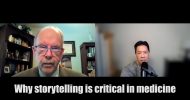
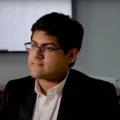
Giannina L. Garces-Ambrossi Muncey is a critical care physician.
She shares her story and discusses her KevinMD article, “Your greatest role as a doctor? Storyteller.”
Did you enjoy today’s episode?
Please click here to leave a review for The Podcast by KevinMD. Subscribe on your favorite podcast app to get notified when a new episode comes out!
Do you know someone who might enjoy this episode? Share this episode to anyone who wants to hear health care stories filled with information, insight, and inspiration.

Hosted by Kevin Pho, MD, The Podcast by KevinMD shares the stories of the many who intersect with our health care system but are rarely heard from.


Transcript
Kevin Pho: Hi, and welcome to the show, where we share the stories of the many who intersect with our health care system but are rarely heard from. My name is Kevin Pho, founder and editor of KevinMD. Today on the show, we have Giannina Garces-Ambrossi Muncey. She’s an anesthesiologist and critical care physician. She wrote two KevinMD articles: the first, “Heroism is a process for physicians,” and second, “Your greatest role as a doctor? Storyteller.” Giannina, welcome to the show.
Giannina L. Garces-Ambrossi Muncey: Thank you so much, Dr. Pho. It’s such a pleasure and honor to be here with you.
Kevin Pho: We’ll get into those articles in a bit, and I know you have an interesting intersection between art and medicine, but first off, tell me your story and your journey to where you are today.
Giannina L. Garces-Ambrossi Muncey: I think one of the interesting things about my story is that superficially it probably sounds pretty unusual, but one thing that creativity, art, and medicine have really taught me is that there are no truly unique situations. Any feeling or experience that we have has probably been modeled or experienced in many other different ways by many other different people.
That being said, I am a first-generation immigrant. I spoke English as a second language. My family and I were always very interested in reading and storytelling. Actually, my uncle has a book up here on my shelf, and my grandmother, back here on my bookshelf, also had a book of poetry. So this storytelling tradition was very alive in my family, but so was science. My father’s side of the family was very much into economics and statistics and things like that.
So I grew up in that household, and I remember when it came time to choose what I wanted to do, I always thought, what is the intersection of creativity, or art, and science? And to me, that was medicine. That is something that allowed me to express both of those things. So I actually graduated college with an M.Litt. in Shakespearean literature, but I majored in biochemistry when I was 14. Then I taught high school math. I graduated when I was 18; I didn’t graduate when I was 14. I taught high school math in central Virginia, and I loved it. It’s still probably one of the hardest jobs I’ve ever had.
I went to school at Johns Hopkins. It was an incredible place, full of the most dedicated and true people you can ever ask for in medicine. Then I went to MGH to do a neurosurgery residency and ultimately found that brain death was really a little bit difficult for me to handle. So I went into anesthesia and critical care, thinking to myself that at the end of life, I really want to be able to see if we can make even marginal gains, even marginal gains in dignity, marginal gains in life, or marginal gains in sort of the experience of medicine.
Throughout that time, I’ve been writing, although clearly it’s difficult to do all those things. I admire all of these residents who are now at MGH, and they’re writing for the New Yorker and treating COVID at the same time. So my hat’s off to them, but that is what brings me here. I actually returned to my hometown because I felt very appreciative for what my hometown gave me, and I started the first ICU in Jupiter, Florida. I founded that ICU with a few other truly incredible physicians from New View, and particularly Bill Ludwig, who was the best mentor you can ask for. Now I’m here, continuing my writing and so forth. So that’s a little bit of a synopsis of my background.
Real physician voices, twice a week
Free, and one click to unsubscribe.
Kevin Pho: I think storytelling is really at the foundation of what we do as physicians. Not only do we encourage patients to tell their story, we as physicians need to be storytellers as well. Maybe you could share from your experience: Why is storytelling, and stories in general, why is that so important for us as physicians?
Giannina L. Garces-Ambrossi Muncey: Yes, that is such a beautiful question. I love the way you think about that. To me, storytelling is important as a physician because it allows us to get back some of our own humanity. It lets us see things in a way that makes sense not just intellectually, which, if you’re boarded and certified and doing CME, you certainly have quite a grasp on. But there is that danger of losing the humanity aspect of it, and putting it back into a story is, for us, or for me at least, particularly important.
I have the very great luck of being in a writing group with Suzanne Koven, who is the MGH writer in residence, and she says that if you’re wondering what you should be focusing on, and a lot of people ask how you get ideas, things like that, she says, “If you’re wondering what you should be focusing on,” and this could be true in medicine or not, “look at the things that really bother you and introspect on that.” And that’s actually where my ideas came from for your pieces, but it’s also what sort of helps me understand difficult patient interactions, difficult diagnostic challenges, anything like that.
If you can reframe it not as a problem, but as an interesting topic, a story that you can explore, that is a way of not necessarily intellectualizing it, but it gives you some space in order to recognize it and approach it in a different way. So I think that storytelling in that way, for us as physicians, is wonderful. Obviously, patients need stories, because we are just as human as they are, and it sort of narrows the gap between patient and physician in that relationship.
Kevin Pho: Now, what kind of tips can you share with physicians to help them tell their story? There are still many stories that we can share, behind closed doors, what happens in a hospital. We need to share stories about some of the difficulties and obstacles that we face in order to convince decision makers to see things from our side. So there are some doctors who are better storytellers than others. Can you share some tips on how we as physicians can be great storytellers?
Giannina L. Garces-Ambrossi Muncey: Well, I’m honored that you think I have any tips, first of all, so thank you. But the other thing I like about that idea is the idea of representation as physicians, because I do think that is something that we can do better on: representing ourselves, representing our own sacrifice, nobility, interest, caring, and love. That is something that we can definitely improve upon.
My only tip, and it’s a difficult thing to say, but a lot of times when I sought inside of myself, when I was writing and being a physician, is that so often we are asked to be uncompromising. We are asked to be perfect, admit no defeat, give no quarter, that we shut down our own questioning, our own curiosity, because we feel that we have to be perfect, we have to know all the answers. But I think storytelling is a way of admitting that you don’t know the answer, but that there is a way to get to the right question. So what is the right question that we should be asking? And humbling ourselves in front of that, saying we don’t know all the answers, I do think that is something important for physicians, because medicine isn’t perfect, right? Medicine doesn’t tell us everything. There’s something more, because we’re not dealing with, you know, E. coli in a petri dish. We’re dealing with humans and the imperfections and the grace that come along with that.
So my main tip for storytelling is honesty and humility, if you can do it. These are things that I still struggle with. I still want to have some bravado. I still don’t entirely feel comfortable taking down the mask, but this is what I try to do, because again, as I said sort of earlier, my experiences are not unique. My emotions are human, and the sooner that we realize that, the more of a connection I think we’ll have with each other, and the more likely we’ll be able to say, “These are the emotions I have,” and other people respond to them.
Kevin Pho: Let’s take a step back. How else have art and creativity intersected with medicine during your career?
Giannina L. Garces-Ambrossi Muncey: That’s a great question. I love this kind of idea. Well, first of all, if we look, we can see that years ago, you know, we had prominent physicians who were writers, right? We have Osler, we have William Carlos Williams. And so there’s a richness of storytelling, and I think it’s coming back, actually. My guess is that for a long time, a purely science background was what was feeding into medical schools. I don’t know if this is true or not. But now there are a lot more sort of nuanced people who are applying for and being selected for medical school, and they’re looking at medicine and they’re saying, “That’s not enough. What else is there?” How else do they see it? Because they bring so much more to the table than people in our generation did, or in the generation before that.
So I think it’s constantly evolving, because we’re allowing a larger breadth of people in. We’re expanding the scope, and we’re getting the benefit of that. We’re getting the storytelling traditions of that. We’re getting the different perspectives. And that’s one of the beauties of, I don’t know, the evolution of medicine and medical training, I think.
Kevin Pho: Wonderful, that’s certainly true. I think of the diversity of backgrounds that we have from our medical students. They don’t necessarily just come from a science background. They’re coming from business, they’re coming from English, they’re coming from art, they’re coming from philosophy. And it’s exactly what you said, that this breadth of backgrounds that they have is going to really add to the profession going forward.
Giannina L. Garces-Ambrossi Muncey: Yeah, I think so. And you see all these clever things. My classmates are doing incredible things. They’re out there doing, you know, the Indian Health Service. They’re doing CEOs of genome variations. It’s very exciting. And one of my classmates was out getting her MFA at the Iowa Writers’ Workshop. It’s a very exciting time, I think, in medicine, in spite of, or maybe even because of, COVID now.
This is a little bit of a sidetrack, but I think the people who have died from COVID, you know, 120,000 souls, I think it’s important now to make sure that those people who have died from this disease have not died in vain. That we are now taking this moment and we’re accelerating medicine, just in the way that medicine was accelerated by the Spanish flu, you know, in 1918. There were such new ideas coming out. Now we’re seeing telemedicine more. We’re seeing the approachability of medicine change. Gosh, I don’t understand how that vaccine is being developed so quickly. So I think if we take this moment in time and say, you know, those people who have died, we’re going to do something on their behalf, and we’re going to radically change the way that medicine is performed, I think it’s a very exciting time in medicine, in that we have the opportunity to do better for our patients.
Kevin Pho: Now, if physicians want to be better writers, what kind of resources can they go to?
Giannina L. Garces-Ambrossi Muncey: First of all, me personally, I think you have to have a little bit of headspace in order to do it, right? And it’s a little bit of an emotionally taxing thing. But I think that looking at, for example, Writer’s Digest, seeing what Writer’s Digest recommends. They have a newsletter that gives you a prompt a day to free write. Again, and this is not, this is Dr. Koven’s idea, to write about what bothers you. Take something that you can’t quite understand, and that’s usually, for me at least, if I don’t understand it, probably why it’s bothering me, to explore that with free writing.
A couple of the books just hanging around here that I really enjoyed on writing are Ann Patchett’s This Is the Story of a Happy Marriage, what a good book. It tells you about the sort of experience of writing. Good Prose by Tracy Kidder. Essays: I love The Fiddle on the Subway. So I think the way to write is through reading, for me at least: to read, and see what your beloved authors read. I like Anne Lamott, Bird by Bird, but I found out about her because I think Ann Patchett just The Sun Also Rises with her. So I looked up, I Googled, I said, you know, “Ann Patchett on writing,” and all of these articles, because writers talk about what they read and what they do. So that’s one simple thing that you can do in between patients.
And just remember that, again, William Carlos Williams, and I don’t know how Chekhov did it. Chekhov was another famous physician, but William Carlos Williams used to write poems. His poems were written on the back of a prescription pad while he was waiting in his room for the next patient to come in. So they were micro poems, but they’re seen as sort of the beginnings of the modern poetry movement. So it can be done, and everyone’s experience is interesting, and everyone’s experience is valid, and we need as many stories as possible. I think if you can remember that, you’re already halfway to the finish line.
Kevin Pho: We’re talking to Giannina Garces-Ambrossi Muncey. She’s a critical care physician and an anesthesiologist, and we’ve been talking about that intersection between creativity, storytelling, writing, and medicine. Giannina, what is your take-home message for the KevinMD audience?
Giannina L. Garces-Ambrossi Muncey: For the KevinMD audience, I hope that everyone realizes what a seminal person you are, Kevin, in the writing community. You know, you’re the Slate for doctors, and it really is an honor to be part of it. And I hope that they’ll use your website for resources, for ideas.
For me, sort of in general as a person, I hope we can use this time of disruption and change and recognize that there’s a lot of growth. You know, Breonna Taylor was a woman who was an EMT, shot in her own house, and these are things that have been happening in our country, in our friends’ lives. Let’s recognize that this is a time of change, a time for growth, a time that is not “Oh gosh, what an awful era that we’re living in.” This is a time of possibility, where now we can see the cracks that have always been there. And we can give each other inspiration, and we can hopefully do better now. We can move forward now.
We have different opportunities in medicine. We have different opportunities living among each other. How can we grow together? And how can we, again, going back to the idea of creativity, how do we use creativity to fuel that? How do we use creativity to bring things forward and not just kind of think to ourselves, “Oh man, 2020 is the worst”? Maybe 2020 is the best. Maybe 2020 is the time where we all improve in ways that we didn’t know we could. So I hope that there’s a message of creativity and a message of moving forward and improving.
Kevin Pho: Well, thank you so much for sharing your insight, and thank you for being on the show.
Giannina L. Garces-Ambrossi Muncey: Well, thank you so much for having me. I really appreciate it.
Listen and followApple PodcastsSpotifyYouTubeMore apps · Browse all episodes