







Listen and followApple PodcastsSpotifyYouTubeMore apps · Browse all episodes
“My own burnout episode forced me into some heavy-duty soul-searching and serious reflection. I got lost in the world of seeing as many patients as possible, battling for more operating room time, and keeping up procedure volumes, prior authorizations, and electronic medical record keeping. I failed to notice early warning signs, including a change in my sleep patterns, apathy towards practice, and things I previously enjoyed in life, such as fitness and surfing. I was constantly irritable, especially toward those who were trying to help me. I started to slowly withdraw from those around me, and I actually started ‘ghosting’ people in my life, concerned I would bring others down, hoping things would eventually get better and just sort themselves out.”
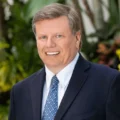
Joseph D. Pianka is a gastroenterologist and author of It’s All in Your Head.
He shares his story and discusses his KevinMD article, “Self-discovery, health and fitness as the ultimate remedy for stress, anxiety, depression, and burnout.”

The Podcast by KevinMD is brought to you by the Nuance Dragon Ambient eXperience.
With a growing physician shortage, increasing burnout, and declining patient satisfaction, a dramatic change is needed to make health care more efficient and effective and bring back the joy of practicing medicine. AI-driven ambient clinical intelligence promises to help by revolutionizing patient and provider experiences with clinical documentation that writes itself.
The Nuance Dragon Ambient eXperience, or DAX for short, is a voice-enabled, ambient clinical intelligence solution that automatically captures patient encounters securely and accurately at the point of care. Physicians who use DAX have reported a 50 percent decrease in documentation time and a 70 percent reduction in feelings of burnout, and 83 percent of patients say their physician is more personable and conversational.
Rediscover the joy of medicine with clinical documentation that writes itself, all within the EHR.
VISIT SPONSOR → https://nuance.com/daxinaction
SUBSCRIBE TO THE PODCAST → https://kevinmd.com/podcast
RATE AND REVIEW → https://kevinmd.com/rate
FOLLOW ON INSTAGRAM → https://www.instagram.com/kevinphomd
FOLLOW ON TIKTOK → https://www.tiktok.com/@kevinphomd
GET CME FOR THIS EPISODE → https://earnc.me/aSOCV5
Powered by CMEfy.
Transcript
Kevin Pho: Hi, and welcome to the show. Rate and review at KevinMD.com/rate. Subscribe at KevinMD.com/podcast. Today on the show we have Joseph Pianka. He’s a gastroenterologist, and we’re going to talk about his KevinMD article, “Self-discovery, health and fitness as the ultimate remedy for stress, anxiety, depression, and burnout.” Joseph, welcome to the show.
Joseph D. Pianka: Hey, Kevin. Thank you for having me.
Kevin Pho: We’ll get to the article in a little bit, but first off, briefly share your story and journey to where you are today.
Joseph D. Pianka: So I was a Long Island guy growing up and always wanted to be a doctor. I remember mentioning it in the circle in kindergarten: What do you want to be when you grow up? And it was a doctor and a baseball player. My baseball career ended when I had to study a whole lot, so that didn’t pan out, but I became a gastroenterologist and moved to the Newport, Rhode Island, area for my first job, and I’ve been here all along. I absolutely love it here in the Northeast. I also have a passion for fitness, nutrition, and the great outdoors, especially surfing and snowboarding, which I relate to a lot of my patients with.
Real physician voices, twice a week
Free, and one click to unsubscribe.
Kevin Pho: All right, so we’ll get into the article in a little bit, but one thing that struck me about what you just said is that you are still in the first job that you had, and that’s actually kind of rare among physicians. A lot of physicians move from job to job, especially right out of residency and fellowship. So what about your job made you stay for this longer period of time?
Joseph D. Pianka: I think without question it’s the people here in the Rhode Island and New England area. At first, being a New Yorker and a carpetbagger, so to speak, here in New England, it was a little bit awkward for me to shift gears. But New Englanders, I feel that they are who they are, and if you win them over, it’s forever. They’ve certainly won my heart over, and I now consider myself very much a New Englander, even though I still have some Long Island roots. And you’re familiar with the Newport, Rhode Island, area. It is just one of the prettiest places on the planet. People come here from all over the world to vacation during the most beautiful times of the year, and I get to say, as a local, I live here, and it’s just wonderful. I wouldn’t have changed anything in the world about my career.
Kevin Pho: And tell me about some of the challenges that you face as a gastroenterologist.
Joseph D. Pianka: So I think it’s the same challenges we all face, especially over the last three years or so. Who would have seen this coming? I don’t think anyone would have predicted a pandemic. I also don’t know if any of us, in those starry-eyed days where we were all going to save the world, predicted the trajectory that medicine in general and the field would go down, this certain path, specifically the strains on, call them clinicians, providers, physicians, but I think everyone in health care in general.
We really are, if you think of it collectively, an incredible unit who delivers something so powerful and so special, and so we’re so privileged to be able to do that. I think what has been almost heartbreaking at times is that everyone around us almost seems to put up some sort of resistance or obstacle to us doing what we were very much called to do and are most passionate about. And that’s where my heart lies these days.
Kevin Pho: And you talk more about that in your KevinMD article, “Self-discovery, health and fitness as the ultimate remedy for stress, anxiety, depression, and burnout.” Now, for those who get a chance to read your article, just walk my audience through it. Share the story of why you decided to write it.
Joseph D. Pianka: So it all evolved in the very earliest days of the pandemic. For many years, I had been dabbling in fitness and nutrition, a very active sports lifestyle, but I realize now, in retrospect, I was becoming a bit burned before the pandemic, just by virtue of what we’re all going through, EMRs and challenges in health care in general. But then the pandemic hit, and that was the first time that I was really faced in my career with this concept of, “Hey, you’re not able to take care of patients right now. COVID comes first, and all those other sick people in the wings have to be put aside.” And that really tore me in two. I just got lost, and I was in a very dark place early on in the pandemic when the powers that be made those decisions.
And sitting on my kitchen table had been this brochure, if you will, this outline for patients about my fitness and nutrition tips. And in the darkest hour, I just grabbed it and started typing and wrote a book called It’s All in Your Head, which very much highlights my experiences, almost a bio narrative, but then inclusive of my steps to fitness and nutrition. And I realized that in facing all of those challenges and going back to what I enjoyed most in life, and recognizing the things that were so special to me in my immediate surroundings rather than this search for Shangri-La, there were answers there. There was direction there. There was peace and tranquility.
So it got me into this term of self-inspiration, but with that, the ability to pay things forward to others who may also be in a dark place. And isn’t that fundamental to what our original journey was all about, the ability to do that? So really, for me, it was scratching and clawing out of the darkest places to find the light. I’m not saying I’m sitting here in nirvana all the time, but I’m saying I’m a heck of a lot better off than I was in March, April of 2020, and I can see nothing but bright paths ahead of me going forward for the rest of my career.
Kevin Pho: So before talking about that book and some of the messages from that book that brought you out of that dark place, just give a picture of what exactly you were feeling in March, April of 2020, at your lowest time.
Joseph D. Pianka: So I think if I were to simplify the term, and it’s so complex because there were so many moving parts coming at us at once, but to the best of my ability, my definition of burnout was this realization that I was in a situation that I was powerless to get myself out of. I was in a situation where I was powerless to help the people that needed me most at that given time. For the first time in my life, I wasn’t able to clearly come up with the answers. Being a gastroenterologist, I’m pretty used to and good at adapting on the fly and taking care of critical situations and rallying a team around me and working with other providers to get things done. This was the first time in my life that I felt I didn’t have the tools or ability to do something. That was my personal definition of burnout, and I never want to go back there again. I don’t know if that explains it fully, but for me, that’s as dark as it could have gotten.
Kevin Pho: So talk about this epiphany, or the light, as you so put it, that health and fitness brought. Talk about how that dragged you out of that darkness.
Joseph D. Pianka: So I did mention the book before, and it’s pretty much this metaphoric situation that happened in the darkest of places. It was almost as if my mind had to search and find a bright spot or a light, and I suddenly had this concept: Hey, wait a minute, have I been in, maybe not as dramatic or profound, but dark places before? Have I been depressed before and didn’t even really appreciate it? And if so, how did I pull myself out of those situations? And then could I take that knowledge from my past and my personal victories and my successes and use them, almost putting them together as this great big puzzle of my life, and form this picture, which got me to the next level?
And it started slow. It started with just recognizing that I do have good ideas, that I am a valuable part of health care, that my successes have helped a tremendous amount of people over a 21-year career. And in doing that, healing myself first, so to speak, I then decided to take it to another level and bring that to other people who may be in a tight spot themselves right now, and greater than 50 percent of us are there right now.
So it brought up this concept of advocacy. Why don’t I continue to do what I do fairly well, I think, since I’m still here 21 years later and they haven’t gotten rid of me yet, and then maybe bring some brightness to somebody else who may be in a similar situation? And then why stop there? All the proceeds or profits of my book are going to go to Ukraine relief, to boot. So it’s just this continual looking forward to something bigger than myself, first looking at myself and taking credit for who I am, and then just going forward with that in the most positive direction I can possibly go.
Kevin Pho: So tell us about some of the specific things that you would do. You could tell us a story or give an example of how you would apply those concepts in action.
Joseph D. Pianka: So one of the things that I have always been guilty of, and I’m still working on it, full disclosure here, is that I’m a person who can absorb a situation that I’m in, any situation, every detail of it, but not appreciate it in the moment. And I know this sounds cliche. Everybody tells you, “Hey, smell the flowers and love life every moment you’re living it.” But for me, as somebody who’s somewhat analytical, I have a tough time with that, but then the next day, I really appreciate that last day. I think I’ve been a lot better at appreciating things in the moment.
For example, I have some buddies; we meet up and surf sometimes at first light, and there was just this particular day early on in the pandemic, because nobody was working, it seems, or everyone was Zooming, and everyone was out surfing, where a buddy of mine just looked over, and the sun was rising, and it was one of those perfect days. I can’t even put it into words, but it could have been a work of art if someone painted it. And I was able, for the first time, to appreciate the moment, and then every one, and that just built some momentum, if you will, and I’ve been able to do that a lot better. So the dark times became a lot less, and the positive times became a lot more. But it was almost addictive. I wanted more of those positive times, and I wanted to share them with the people I take care of and love and want to spend the rest of my life with. And I think even though it sounds very touchy-feely, granola-ish, right, when you talk like that, it’s powerful, and it’s real, and it’s what we have right now to fight for a better place that we’re in.
Kevin Pho: So how do you do that? How do you go about sharing some of those positive moments with people who are close to you, or your patients?
Joseph D. Pianka: So I think, yeah, it’s about not only appreciating what’s immediately around you but taking care of yourself, absolutely, carving out and making time for yourself. Years ago, my mother-in-law bought me this book. She must have sensed I was going through a rough patch at work or whatever, and it was called Don’t Sweat the Small Stuff and It’s All Small Stuff, really. And it wasn’t my favorite book in the world, but there’s a paragraph that stuck with me through my entire life: “If you feel as if you don’t have time for yourself and your health and your fitness, set your alarm clock an hour earlier.”
I thought about that, saying, “That’s crazy. I can’t do that. I need my sleep. I had a late night. I was on call. I got called in at midnight for a food bolus impaction. I can’t lose that hour of sleep, right?” Wrong. I set my alarm clock an hour earlier, and maybe instead of binge-watching Netflix, you know, later into the night, I went to bed a little earlier, but with a much more restful sleep because I had worked out that day. Following that, my nutrition and my diet just cleaned up radically, and I became, physically and mentally, following that, a very different person. It was almost as if this fog had lifted. I wasn’t looking through smoked glass anymore. It was very clear.
And I do try to share that with patients, and the way I do that as well is saying, “I’m not just telling you a whole bunch of things to do, ‘Do as I say, but not as I do.’ This is what I do, and if you want, I’ll meet you out on the beach one morning and we’ll do it together.” Things like that, leading by example, but with actual methods that I learned by trial and error and many falls and successes that absolutely work. And if I could give that to people, and they can see that it does work in a realistic example that they can resonate with, or that resonates with them, it does work.
Kevin Pho: We’re talking to Joseph Pianka. He’s a gastroenterologist, and his KevinMD article is titled “Self-discovery, health and fitness as the ultimate remedy for stress, anxiety, depression, and burnout.” Joseph, let’s talk to those 50 to 60 percent of physicians that you mentioned are in a dark place and experiencing symptoms of burnout. What’s the one thing that they could immediately do right now?
Joseph D. Pianka: I think it’s, in a productive, creative way, continued dialogue with the administrators and powers that be that send us these links to websites or referrals to wellness rooms or centers: “Here you go, click this link, good luck, I hope it all gets better for you.” No, that’s not good enough. Let’s have a conversation on why much of what we do on the EMR is redundant, ridiculous, and burning us out, why we cannot prescribe the medications we think are right or best for our patient, why patients are not just revenue numbers, and they’re real human beings and lives.
I think that if you, too, get passionate or an advocate about something you feel strongly about, it will bring you back to the roots or foundation of why you’re here in the first place, what called you to this insane lifestyle that most of us have chosen and live and practice. There had to be something real deep about that that called us and kept us in it through all the hardships and pain, etc. That thought process will bring you back to your fundamentals and then drive you forward in terms of direction and energy to do that. We’ve got to keep these conversations going, and we’ve got to take back the field that we’ve obviously let slip through our fingers over the years.
Kevin Pho: And my final question: What are some of your take-home messages that you want to leave with the KevinMD audience?
Joseph D. Pianka: My take-home message is where I started with this interview, Kevin, and that is that we are all absolutely blessed and privileged to be able to do what we do and to make the connections with people as we do. We are in a field where every single day there’s something new, or 20 things new, that we pull up on our computer screens. It’s incredible, and I think we start by recognizing that and fighting to make that, or preserve that, as such a wonderful calling that we have. That would be my take-home message. Let’s keep creatively and civilly fighting the good fight, but never stop fighting for ourselves and this beautiful field that we’re in.
Kevin Pho: Joseph, thank you so much for sharing your time and insight. Thanks again for being on the show.
Listen and followApple PodcastsSpotifyYouTubeMore apps · Browse all episodes