Subscribe to The Podcast by KevinMD. Watch on YouTube. Catch up on old episodes!
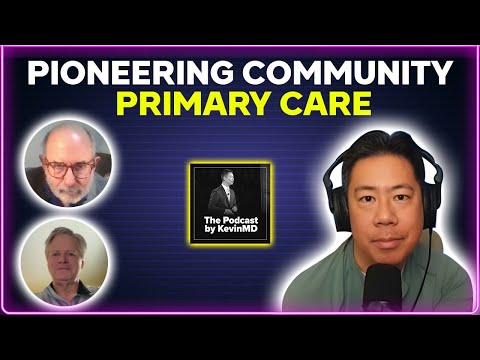
We join family physicians Michael Fine and Scott Conard. In this episode, we delve into how Michael’s visionary leadership propelled the creation of America’s inaugural community health alliance in response to rising health care costs and diminishing insurance options. Through collaborative efforts, the alliance introduced population-based primary care, prioritizing proactive wellness strategies and comprehensive health care services.
Michael Fine and Scott Conard are family physicians.
They discuss the KevinMD article, “Primary care for all Americans: What the U.S. health care system can learn from Scituate, Rhode Island.”

Our presenting sponsor is Nuance, a Microsoft company.
Together, Microsoft and Nuance are leveraging their rich digital technology and advanced AI capabilities to tackle some of health care’s biggest challenges. AI-driven technology promises to revolutionize patient and provider experiences with clinical documentation that writes itself.
The Nuance Dragon Ambient eXperience, or DAX for short, is a voice-enabled solution that automatically captures patient encounters securely and accurately at the point of care. DAX Copilot combines proven conversational and ambient AI with the most advanced generative AI in a mobile application that integrates directly with your existing workflows.
Physicians who use DAX have reported a 50 percent decrease in documentation time and a 70 percent reduction in feelings of burnout, and 85 percent of patients say their physician is more personable and conversational.
Discover AI-powered clinical documentation that writes itself. Visit https://nuance.com/daxinaction to see a 12-minute DAX Copilot demo.
VISIT SPONSOR → https://nuance.com/daxinaction
SUBSCRIBE TO THE PODCAST → https://kevinmd.com/podcast
RECOMMENDED BY KEVINMD → https://kevinmd.com/recommended

ADVERTISEMENT
GET CME FOR THIS EPISODE → https://earnc.me/XPQTuI
Powered by CMEfy.
Transcript
Kevin Pho: Hi, and welcome to the show. Subscribe at KevinMD.com/podcast, and get CME for this episode by clicking on the CME link in the show notes. Today we welcome Michael Fine and Scott Conard. Both of them are family physicians, and we’re going to talk about the KevinMD article “Primary care for all Americans: What the U.S. health care system can learn from Scituate, Rhode Island.” Michael and Scott, welcome to the show.
Michael Fine: Thank you so much, Kevin.
Scott Conard: Thanks, wonderful to be here.
Kevin Pho: All right, so Michael’s been on several times, Scott is new, so I’m just going to ask both of you to briefly share your story and journey. And I know we’re going to talk about Michael’s story more in depth, but Michael, let’s start with you. A few words about yourself.
Michael Fine: Sure. I’m a family doc, a community health guy, and an author, and now the president and board chair of Primary Care for All Americans. We’re trying to build the social movement it’s going to take to create a health care system for the United States that’s for people, not for profit, and starts by providing primary care to all Americans.
Kevin Pho: All right, Scott, you are a family physician as well. Tell us a little about yourself.
Scott Conard: So I still practice. I’m a family physician, I’ve been in practice for 36 years now. And I’m a co-founder and on the board also of Primary Care for All Americans.
But really my story has three parts to it. I live at the intersection between practicing clinical medicine as a family doctor, I was a professor at UT Southwestern for 23 years. The second thing is managing and working with clinicians. We built a group of 510 doctors that was very focused on primary care and the difference it can make, and we were able to get the cost down and the quality up dramatically. That was 2006 to 2010. And then since that time I’ve been working with corporations, insurance companies, brokerage firms, and captives to bring this concept of proactive advanced primary care to every American. And in that case it’s the middle working class that really needs that support.
Kevin Pho: All right, so you and Sara wrote an article about Michael. Sara Pastoor is also a regular guest of my podcast, and your article is titled “Primary care for all Americans: What the U.S. health care system can learn from Scituate, Rhode Island.” So Scott, tell us what this article is about.
Scott Conard: It is a product of a conversation where we were starting Primary Care for All Americans. This is like a six-month effort that we’ve really pushed on to get it moving.
And I was talking to Sara, and Sara was saying, I believe in the concept, but I don’t understand how it would work, I don’t understand what you’re trying to accomplish with Primary Care for All Americans. I need a concrete example of somebody who’s done this and made a difference for me to spend my time, energy, and effort doing this.
And so I connected her with Michael, and the three of us entered a conversation to say, what does it look like literally on the ground, look like in action, to bring primary care to every American? And when we say all Americans, it’s not just American citizens, it’s every person living in America today, whether they’re legal, illegal, or whatever. It’s bringing care to people in need with the advanced primary care model.
And so that’s where the conversation started, the article is written, and Kevin, thank you so much for allowing us to publish it with you. And so today the conversation is, Michael, tell us specifically how this could manifest and how it could change the States.
Michael Fine: So Scituate, Rhode Island is a community of 10,000 people, kind of exurban, about 15 miles from Providence, Rhode Island. So the 10,000 people in Scituate are police folks and fire folks and nurses, not a lot of doctors, lots of sort of everyday people.
And in about 2000, a little before 2000, there were a couple of big health insurance companies that left the little state of Rhode Island, and everybody got scared about the cost of health insurance going up, which it was going to. But the town council constituted a little committee, and that committee spun off and became its own 501(c)(3). It’s a committee of volunteers that has worked for 25 years now trying to figure out how to provide primary care to everybody in the town of Scituate, because we all understood that primary care is what makes a difference, is what matters for health care.
And so what we’ve done over the years, as a committee of volunteers, we meet once a month for like 25 years, a committee of volunteers who figured out that there was a way to provide primary care to everybody by getting some practices to agree to accept a subscription, where we pay practices by the year to provide primary care for individuals, and then we go around and find out who doesn’t have primary care and get them into primary care by sending them to these practices.
There’s some people who think that the DPC movement partially originated by that original process, because we were among the first places that ever negotiated a subscription payment. But we’ve been doing this now for 25 years. We raise money to fund it from the town council in the most Republican town in the most Democratic state in the country, but it’s a very Republican town. The town council’s been kicking in some money. There’s a big art festival, we raise some money there. Sometimes we’ve done bake sales and so on and so forth.
And this group of people has done not only that, but does a bunch of other things that are kind of public health oriented. We go around and do flu shots in the fall, we give out tick tubes because this is a Lyme endemic place. This is a bunch of volunteers who have taken it on themselves to create a health care system and a process for making sure every single person in Scituate, as best as we can, gets access to primary care.
Kevin Pho: So Michael, to follow up on that, without this initiative, are you saying that there’s going to be a substantial part of that population in Scituate that will not have any access to primary care otherwise, through governmental programs or insurance?
Michael Fine: Yeah, I mean, there were a bunch of people who fell through the cracks. The numbers of people we were able to assist dropped after the Affordable Care Act started, but still there are numbers of people, not huge numbers, but 30, 40 people a year who need help and who we connect to primary care in this way.
The other thing we ended up doing, and this gets to your question about government stuff, is we began to be aware of the huge problem in workforce that exists in primary care around the country. So about five years ago we worked with a community health center and brought that community health center into Scituate. So we now have a sort of constant workforce supply, we have a place in Scituate that didn’t exist where everybody can go to get their primary medical care, primary dental care, and also mental and behavioral health care in Scituate. Something that didn’t exist until the committee put its heads together and figured out how to get this done.
I think the thing that this shows, the reason it’s moving to me, is it shows that communities can take this on themselves. You don’t have to wait for the federal government or the state government or some other cavalry to come. This shows that communities can provide primary care to everyone in their own community, take it on by themselves and get it done.
Kevin Pho: So Scott, when you first heard Michael’s story, tell us what your reaction was and what was going through your mind.
Scott Conard: I felt very inspired. I felt like, OK, it has happened before, and we can start to work toward that across the United States.
And Kevin, what I see, I have a data analytics company called Converging Health now, and I have data on hundreds of thousands of people in the United States. And the thing that most people in the United States don’t realize is, the people who need this support the most are the working people who have access to insurance through their employers but can’t afford it. They’re the uninsured, or many times they’re paying the premium to have insurance but the high deductible plans are so high they can’t use it. And it’s this working group that has actually been devastated by the health care system in America.
So I’ve been wandering around saying, what do we do to help these folks? Because the companies can’t afford to give them less expensive health insurance, and they can’t afford to pay when they do have a problem. And only 12 percent of people meet their deductible every year, so there’s a whole lot of people, like 82 percent of people, that are walking around with a card in their wallet thinking they’re covered and they’re not, and they end up with the 20 percent of Americans that have significant medical debt.
So for me, I was trying to solve the working underinsured group, and when I heard and saw this, I’ve been working as actively as a working doctor can to really support this effort. And I really hope that other people hear this and they’re like, well, I don’t know how we’re going to solve the problem, but I see there are many innovative ways to do it.
Kevin Pho: So Michael, under this system, what is the access like? Because I think one of the issues a lot of places have with primary care is that even if they have some type of insurance that they could see a clinician, they may not be able to see one. So if one of these constituents over in Scituate wants to see a primary care clinician for whatever reason, how long do they have to wait to see one?
Michael Fine: I don’t know the exact number, but I’m pretty sure it’s within weeks, because of this relationship with this community health center. Actually it’s the first Neighborhood Health Station in the United States. This community health center came here and we have a clinical facility now, and that’s part of the partnership that you have to pull together. You can’t just think about how to pay for stuff, you have to think about workforce and access.
It’s really interesting to me to pick up on Scott’s point, that now only about 67 percent of Americans with Medicare have and use primary care. That means 33 percent of people with the best insurance we know don’t have the kind of access we need them to have if we’re going to get the best health outcomes at the lowest costs.
Scott Conard: And Kevin, if I could jump in here, there’s two aspects to this in my opinion. One aspect of it is the workforce that Michael continues to focus on and bring our attention back to. But the second thing is the effectiveness and efficiency of that workforce.
And one of the things that we see with the fee for service model in the United States is, you have to run people through your office like cattle to get paid. And when you go to a prepaid advanced primary care program that we’re talking about, and one of the initial places, which we call direct primary care, and that’s fine, but I think there’s a distinction between direct primary care and advanced primary care. Advanced primary care is much more proactive and participates with a team based, like the team of specialists and everything, approach.
But anyway, the point is that you don’t have to call people in to take care of them, you can do things without running them through like cattle. So the other aspect of this system is, by having it be prepaid, the doctor is now able to improvise, whether that’s a group office visit, it’s a proactive outreach call, it’s their nurse doing things that can be delegated effectively, it’s working with other professionals in the community to make sure people get care, but not having to do it yourself in order to get paid. That model will increase the efficiency of our system dramatically.
Kevin Pho: Michael, what’s it like to work at this community health center under this model? Tell us a little bit about your staff, how many patients are they seeing, what are their patient panels like? Give us a sense of what it’s like to work at this clinic.
Michael Fine: Actually, I don’t see patients there, so I’m not involved in the day-to-day operations. I’m not going to be able to answer most of those questions with precision.
I’m a patient there, however, and as a patient, it’s really smooth. I walk in, they take my information, they take me to the back, I see the clinician who’s taking care of me. I go there for my dental care. It’s actually in the IGA Plaza, so when I’m finished there I can go shopping, or there’s a little exercise place there, or there are a couple of restaurants. So it’s pretty sweet. It’s about five minutes from my house.
Which is, I think everybody should have primary care that’s got a multidisciplinary team, with a clinician who knows them and who they know and trust, and it’s right down the street, and you can take care of some other stuff while you’re there.
Scott Conard: Yeah, and Kevin, one of the reactions we get is, oh, that’s too expensive, oh, you couldn’t do that. That is a freaking joke. We’re spending the money in the United States, and if we reallocated the money to this type of a model, the truth is that the downstream costs would go down dramatically, because unnecessary surgeries, redundant care, things that could have been prevented that were allowed to progress, so now we’ve got complications of care. This is actually, primary care and preventive care is an investment, whereas the rest of health care is an expense.
And so Michael, would you say, one of the things that I found very inspiring that you’ve taught me is that we should start thinking of this differently, like we do police, fire, sanitation. Would you talk about that for a moment?
Michael Fine: Sure. Well, this comes out of a study I got to do that was based on my own practice, like in 1996. I did it with an economist from Bryant College, great guy. We actually looked at the per person per year cost of primary care in the United States at that point and compared it to the cost of other services like police and fire and keeping roads up and water and sewage and stuff like that.
And we discovered, to our surprise, that the cost of primary care for everyone is basically less than the cost of police and fire protection. It’s about the cost of running EMS, it’s about the cost of keeping the roads up, and it’s one-tenth of the cost of education, when you view education not per pupil per year but per person per year for the whole community.
So it drives me crazy, because here’s this essential service. Primary care is something everybody needs. It’s our leverage to get evidence-based prevention to the entire population. It is a critical public health process as well as a personal health process, and it costs the same amount as the services that we give away as part of what people get from their taxes.
We could give it away to everybody in the United States tomorrow, and communities could do this for themselves, and we as a nation would end up saving 20, 30, 40, probably 50 percent on what we’re spending on health care when you compare us to other countries. It’s amazing, that it’s this critical value as an essential service that we could provide to everybody, and life would get better for everybody, we’d save a whole bunch of money, and our public health outcomes would massively improve.
Kevin Pho: So Scott, tell us what needs to be done to scale a model like this. Why isn’t this everywhere? I know it involves a lot of cooperation, but tell us about some of the challenges that we face in terms of scaling a model like this elsewhere.
Scott Conard: Well, first of all, Kevin, that’s what we’re solving for with Primary Care for All Americans. So the first thing is just putting an email address in our website and then starting to see what’s possible.
I think, you don’t know what you don’t know that you don’t know, and most people don’t think about this. It’s not something they walk around contemplating. And pretty soon, when you see these models and you get around people like Michael, you realize this is eminently solvable if we’re willing to think differently.
So right now, where I am, I’m in Texas, I’m in Dallas, Texas, and Texans, we tend to be like Scituate County residents. We don’t like big government, we don’t want Big Brother telling us what to do, we want to be very independent-minded. And this is in all of our interests, whether you’re Democrat, Republican, or anything, to figure out and solve this problem.
So for me, step one is awareness, and that’s what Primary Care for All Americans is doing. There’s a wonderful tension between the right and the left, I mean, I say politically, on this group, because there are a lot of us who don’t want to see government run it. But then on the other hand, when you see how well government does with EMS, and you think this could be run in a similar way to EMS, and you would actually start decreasing the cost for the community. And like, I live in Dallas where we have to pay $2,000 per resident per year to fund Parkland. Well, that’s a joke, because it’s not an efficient system, and that’s taxes, and here we go, I’m going to be my Texan self again.
So the net net is, this is an efficient way for all of us to find a different mechanism to bring primary care. So to answer your question, number one is awareness, number two is look at the possibilities, and number three is to put models out there that politicians and people who are actually looking at the public good could act on. And it’s going to take us a minute to do that, but we’re well on the way with Primary Care for All Americans.
One thing that we have understood is there’s no one size fits all, and so the opportunity is to get everybody to focus on this simple idea, providing primary care to every single person in all American neighborhoods and communities, and then give communities the resources they need to figure it out for themselves, because people can do this, and Scituate shows them.
Kevin Pho: We’re talking to Michael Fine and Scott Conard. They’re both family physicians. Today’s KevinMD article is “Primary care for all Americans: What the U.S. health care system can learn from Scituate, Rhode Island.” So I’m going to ask both of you to end with some of your take-home messages to the KevinMD audience. Michael, we’ll start with you.
Michael Fine: Primary care is an essential service. Everybody needs it. We can provide it to everyone in every neighborhood and community, and local communities can figure it out for themselves. They have the competence, they have the energy, they have the ability, and they do it for a bunch of other essential services. Why not do it for primary care as well?
Kevin Pho: And Scott, we’ll end with you.
Scott Conard: I would just ask each person to be selfish, to realize that primary care and access to it is something that is going to add years to their life and life to their years, and it’s going to determine how long and how well they can live.
And so act. We’ve got 4.5 trillion reasons for the system to not change, so expecting government and industry to fix the problem is not going to happen. It’s going to happen with individuals like the people in Scituate who took up the banner and made it happen. And we’re at a place right now, with the way the politics work in the United States, that we can’t wait for someone else to fix the problem. We have to do it ourselves, every person taking a little bit of time to understand and to act.
Kevin Pho: Michael and Scott, thank you so much for sharing your perspective and insight, and thanks again for coming on the show.
Scott Conard: Kevin, thanks for all you do. So appreciate the wonderful messages and information you bring to us.
Michael Fine: Thanks.