An excerpt from Physicians With Lived Experience: How Their Stories Offer Clinical Guidance (APA Publishing, 2025).
“I am a Black gay man from Detroit,” spoke Chris Veal mid-way into a podcast when he was a fourth-year medical student at the University of Vermont Larner College of Medicine. He was coming out of a seven-year depression, COVID-19 had struck, he lost five family members to the disease, and on top of this a cousin died in a police shooting in Pennsylvania. He was touching on disparities in health care and this, coupled with the suicide death of a medical student at his school in July 2020, led to his decision to speak out. His friend’s death, so close to home “knowing what I bad been through and how bad things can get,” was especially traumatic for him. He was also Black and one year behind him in school, a medical school with very few Black students at the time.
Dr. Veal describes how the usual academic pressures of medical school are enhanced when you are dealing with “the pressure of depression, the pressure of being a person of color in medical school” and often the legacy of racism. Dr. Veal’s maternal great-grandfather was killed by the Ku Klux Klan. “There is not enough space in one’s soul.”
A narrative of survival
Dr. Veal’s invited commentary in Academic Medicine is a powerful and summoning narrative. The reader grasps the anguish of this young man, struggling all alone with academic and mood decline, as he concludes there is no other relief but suicide. In the nick of time, he decides to place a phone call to his godmother, whom he trusts, to open up a little. She and her husband, both physicians, are survivors of their own son’s suicide the year before. She saves his life. They take him in, get him professional help, an effective course of CBT, followed up later with medication and uncovering trauma-informed therapy.
Real physician voices, twice a week
Free, and one click to unsubscribe.
Dr. Veal’s piece is particularly effective in addressing racial issues in medical school, representation in particular. He was the only Black man in his class. Being in academic difficulty, and fearing dismissal, he worried that his family would be humiliated and beyond, that his failure could harm other African Americans’ chances of gaining admission to medical school.
Breaking the silence
Looking back, he realized he had suffered before with untreated depression. “Where I was raised, therapy was for white people; you were supposed to just push through the pain.” Dr. Veal has gone on to found the Larner Stories Project video series, featuring one-on-one conversations with Larner College of Medicine alumni, upper-level medical students, and faculty, modeled after the “It Gets Better” initiative, providing hope and encouragement for LGBTQ+ youth. His personal story is recorded here online.
I caught up with Dr. Veal and interviewed him via Zoom on August 1, 2023. I wanted to gather more detail about his 2021 decision to tell his story in Academic Medicine.
“Ultimately, it was being overwhelmed and tired of the bullshit.”
He recounted his losses, outlined above, in the early months of the pandemic, and what a terribly frightening time this was. He reminded me of his earlier piece in 2020 in the Annals of Internal Medicine about his solitary and terrifying drive from Chicago to Vermont on the heels of George Floyd’s murder and subsequent protests and riots across the country. This article garnered considerable attention, which spurred him on.
“At any given point I could die, what do I have to lose?”
This was countered, however, by many if not most people whom he knew strongly discouraging him from writing. “In my heart and soul, I had to do this.” And this is why he only told his godparents about his intention. They were not only encouraging and supportive but helped him with editing. The day before it was to be published, he then began to tell others. One hour after it was released, the dean of his medical school called him and told him, “I am so happy you did this.”
Worth the risk
Although Dr. Veal did not match on the first round for residency, but did find a spot in the scramble, he will never know if his candor affected the application interview process. Any regrets or doubts that he had were offset by heartwarming emails from strangers reacting to his story. More than one writer told him he had saved his life, that if they had not read his story, they would have killed themselves.
“And for that, it was worth the risk.”
Another moment that will stay with him forever occurred during his residency. He wanted to perform in drag at a staff party but thought he should run it by his training director first. Their response was, “Christopher, if you ever felt you could never be yourself at this program then we are not doing our job right.” Dr. Veal said to me, “I nearly cried when he told me that.”
His patients have been infinitely accepting. Some have read up on him before seeing him and have come specifically to him “because they know my story. It has made me a more honest and transparent clinician which my patients find of great value.”
When applying for jobs after residency, there was one place where he was told that “the people you serve don’t fit our business model.” He works in primary care, largely with LGBTQ+ patients, with a subspecialty in trauma-informed care.
Dr. Veal said to me, “This kind of reaction fuels ‘my business model’ which is for ‘my people.’ I am so grateful I can live my life as authentically as possible.”
This article is discussed on The Podcast by KevinMD in the episode Physician vulnerability and authenticity: How shared stories heal.
Michael F. Myers is a professor of clinical psychiatry at SUNY Downstate Health Sciences University in Brooklyn, New York, where he previously served as vice-chair of education and director of training in the Department of Psychiatry and Behavioral Sciences. He is internationally recognized for his work on physician mental health, suicide prevention, ethics, and professional identity across the medical lifespan.
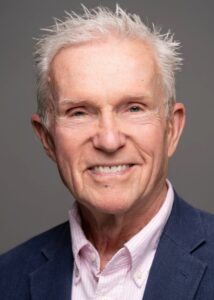
Dr. Myers is the author or co-author of ten books, including Physicians With Lived Experience: How Their Stories Offer Clinical Guidance (APA Publishing, 2025), Becoming a Doctors’ Doctor, Why Physicians Die by Suicide, and The Physician as Patient, Touched by Suicide, and The Handbook of Physician Health, as well as widely cited works on medical relationships, marriage, and divorce. He has published more than 150 articles on topics including suicide, stigma, boundary crossings, ethics in medical education, sexual assault, AIDS, gender issues in training and practice, and the treatment of medical students and physicians.
Dr. Myers has received multiple awards for excellence in teaching and has served on several medical journal editorial boards, including the Bellevue Literary Review, where he has been a board member since 2021. He is a recent past president of the New York City chapter of the American Foundation for Suicide Prevention and lectures widely throughout North America and internationally. More information is available at michaelfmyers.com, as well as on LinkedIn and X @downstatedoctor.