Here is a question I have never been able to get comfortable with: How did we build an entire prescribing system for one of the most common infections in America without ever confirming what we are treating?
Acute sinusitis generates more than 30 million patient encounters a year in the United States. Antibiotics are prescribed at 84 to 91 percent of those visits. And at virtually none of them does anyone take a culture.
The gold standard for diagnosing bacterial sinusitis, sinus puncture with aspiration, is almost never performed in outpatient practice because it is invasive and impractical. So we do what every guideline tells us to do: We guess. We use clinical criteria (duration of symptoms, severity, the pattern of worsening) to estimate whether the infection is bacterial. And then we prescribe.
The problem is that our guesses are not very good. Viruses cause 90 to 98 percent of acute rhinosinusitis. Only 0.5 to 2 percent of viral upper respiratory infections ever progress to bacterial sinusitis. And when researchers have actually punctured sinuses and cultured the fluid, only about one-third of patients clinically diagnosed with sinusitis grow a bacterial pathogen.
Real physician voices, twice a week
Free, and one click to unsubscribe.
Two-thirds of the patients we are calling “bacterial sinusitis” do not have a bacterium causing their symptoms. But most of them are getting an antibiotic anyway.
There is a name for what happens next. The infectious disease literature calls it the Pollyanna effect. Because sinusitis resolves on its own in approximately 85 percent of cases, viral or bacterial, any antibiotic prescribed during that window will appear to have worked. The patient gets better. The doctor’s clinical judgment feels confirmed. The antibiotic gets the credit. And neither the patient nor the physician has any reason to question the decision.
But the numbers tell a different story. A meta-analysis of placebo-controlled trials found that the number needed to treat with antibiotics for one patient to be cured faster was 18. The number needed to harm, to cause an adverse drug event, was 8. We are harming more than twice as many patients as we are helping, and we cannot even identify which patients we are helping because we never confirmed the diagnosis.
This is not a failure of individual physicians. It is a failure of the system we were all trained in. We were taught that sinusitis is a clinical diagnosis. We were taught to use symptom duration and severity as proxies for bacterial etiology. And we were taught that empiric antibiotics are the standard of care once those criteria are met. What we were not taught is that the clinical trials supporting those criteria never included microbiological confirmation. The 2025 AAO-HNS sinusitis guideline states this explicitly: None of the randomized controlled trials comparing antibiotics to placebo in acute bacterial rhinosinusitis confirmed the diagnosis with sinus puncture or middle meatus cultures.
We built the evidence base for treating bacterial sinusitis without ever proving the patients in the studies had bacterial sinusitis.
There is a way forward, and it does not require sinus puncture. Endoscopically guided middle meatus cultures, swabs taken under direct visualization from the drainage pathway of the maxillary sinus, correlate well with sinus aspirate cultures and are recognized by the IDSA as adequate specimens in adults. In my practice, when a patient has failed initial therapy or has recurrent disease, I do not guess. I scope the nose, identify purulence if it is there, and culture it. The result tells me whether there is a bacterial infection, which organism is responsible, and which antibiotic will actually work. It takes minutes, and it changes the entire treatment plan.
But that is the specialist’s office. What about the 30 million encounters happening in primary care and urgent care, where most sinusitis antibiotics are written?
A 2023 randomized clinical trial published in JAMA tested a simple idea: Before prescribing antibiotics for children with acute sinusitis, check whether bacterial pathogens are present in the nasopharynx. Children without detectable pathogens derived minimal benefit from antibiotics. Limiting prescriptions to children with confirmed pathogens would have reduced antibiotic use by 28 percent. Limiting to the two pathogens most likely to cause true infection, Streptococcus pneumoniae and Haemophilus influenzae, would have reduced prescribing by 53 percent.
Fifty-three percent. Not by discovering a new drug. Not by writing a new guideline. By asking one question before writing the prescription: Is there actually a bacterium here?
I understand the counterargument. Cultures take time. Patients want relief now. The path of least resistance is the prescription pad. But the path of least resistance is also the path that has given us an antimicrobial resistance crisis projected to kill 1.91 million people a year by 2050.
We do not start chemotherapy without a biopsy. We do not manage diabetes without checking a glucose. But we treat one of the most common infections in the country, 30 million encounters a year, based on how long the patient has been congested and whether their mucus looks the right color.
I am not arguing that we should never prescribe empirically. There are patients who are sick, who meet every clinical criterion, and who need treatment now. Empiric therapy has a role. But it should be the exception, not the default. And when a patient has already failed one course, or is on their third sinus infection this year, or has been cycling through antibiotics for months, at that point, guessing is not medicine. It is habit.
Every prescription written without a diagnosis is a vote for the Pollyanna effect, and for the selective pressure that breeds the resistant organisms I spend my career trying to treat.
The prescription pad is the most powerful tool in medicine. It deserves a diagnosis.
This article is discussed on The Podcast by KevinMD: Antibiotics for sinusitis without a real diagnosis.
Franklyn R. Gergits is a board-certified otolaryngologist and fellowship-trained otolaryngic allergist with a clinical focus in rhinology and airway disorders and more than 30 years of clinical experience. He is affiliated with HonorHealth Scottsdale Shea Medical Center and is the founder of Sinus & Allergy Wellness Center of North Scottsdale.
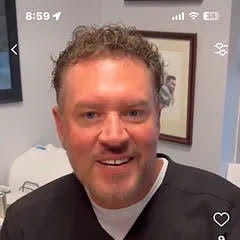
Dr. Gergits performs in-office balloon sinuplasty, turbinate reduction, NEUROMARK posterior nasal nerve ablation, and Eustachian tube dilation under local anesthesia. He performed the first balloon sinuplasty in Pennsylvania and holds dual Entellus Centers of Excellence certifications.
His recent scholarly work includes “Posterior Sinonasal Syndrome: A Pepsin-Mediated Hypothesis for Chronic Rhinosinusitis” and “The Continuous Mucosal Liquid Layer: A Unified Hypothesis for Airway-Digestive Immune Surveillance, Mucociliary Transport, and Disease Susceptibility.” His ORCID profile is available at ORCID. He also publishes patient education and clinical commentary through the Airway & Sinus Wellness Review and shares updates through Facebook, Instagram, LinkedIn, X, YouTube, and TikTok.