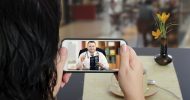
A patient called at 7:45 on a Tuesday morning. She was a nurse, working nights. She had confirmed flu, her employer needed documentation within 24 hours, and the nearest GP clinic had a three-week wait for a routine appointment. Getting seen that day would have meant taking a taxi to an urgent care waiting room, feverish, and sitting next to people who didn’t need to be exposed to influenza.
She got her sick certificate in 12 minutes. Online. From her bed.
I tell that story not because it’s exceptional. It isn’t. I tell it because it captures something the telemedicine debate keeps missing. The critics focus almost entirely on what telemedicine can’t do: the physical exam, the palpation, the things that genuinely do require a room and a pair of hands. Those limitations are real. But the conversation almost never asks what in-person care fails at, routinely, every single day.
Let me ask that question.
The waiting room is an infection vector we’ve normalized
We built a system where people who are contagious travel to a shared space to be certified as contagious. A 2020 modeling study published in BMC Infectious Diseases estimated a 2.6 percent infection risk from a single influenza-positive patient after just 30 minutes of shared waiting room air. Sixty minutes pushed that to 6.6 percent. For measles, a single infectious individual in the same room for 30 minutes carried a 13.5 percent transmission risk.
Real physician voices, twice a week
Free, and one click to unsubscribe.
And it isn’t only patients. A 2021 cohort study in Infection Control and Hospital Epidemiology found sickness presenteeism rates among health care workers ranging from 14 percent to 68 percent across influenza seasons. The people running the clinics show up sick too.
Telemedicine for acute infectious illness doesn’t solve every access problem. It completely solves this one.
The physical exam does less diagnostic work than we admit
This is the uncomfortable part. Hampton’s landmark 1975 study found that history alone led to the correct outpatient diagnosis in 82.5 percent of cases. More recent work puts the figure at 76 to 80 percent. The physical examination adds roughly 8 to 12 percentage points of additional certainty, mostly by ruling things out. That contribution matters. But it is not the irreplaceable cornerstone it’s often treated as, and the gap between what the exam could reveal and what actually happens in a rushed 18-minute appointment is wider than most physicians will acknowledge.
According to data analyzed by Healio, the average primary care appointment lasts under 20 minutes, with a significant portion going to documentation rather than examination. For the most common acute presentations (respiratory infections, migraine, mild anxiety, musculoskeletal strain) a good clinician can reach the correct judgment just as well on a video call.
Often better. And here’s the part that rarely gets said: In a clinic, patients perform illness. They get dressed, sit up straight, speak clearly. There is an unconscious pressure to look sick enough to justify the appointment. On a video call from a bedroom, that filter is gone. A patient with genuine gastroenteritis is lying down, pale, a bucket nearby. A patient who is mostly anxious about symptoms but basically well is eating toast and has good color. The home doesn’t lie the way a consultation room does.
The home environment also reveals things a clinic structurally conceals. I’ve seen medication bottles on the shelf behind a patient that contradicted what they’d told me. I’ve noticed a patient who described managing fine living in what was visibly a cold, dark, chaotic flat. I’ve asked patients to go and read me the labels of every medication in their cupboard, the only genuinely reliable method of reconciliation, and discovered duplicate prescriptions, long-discontinued drugs still being taken out of habit, and dosages nobody had reviewed in years. None of that information exists in a 10-minute in-person appointment.
The Kaiser data are harder to dismiss than critics would like
In 2023, researchers at Kaiser Permanente Northern California published results from 2.3 million adult primary care visits conducted in 2021. Emergency department follow-up within seven days was 1.6 percent after office visits, 1.8 percent after video, and 2.1 percent after telephone. Antibiotic prescribing was 6.6 percent for office, 6.6 percent for video, and 6.7 percent for telephone.
The feared overtreatment, the worry that doctors would overprescribe antibiotics to compensate for not examining patients, didn’t materialize. These are not boutique results from an academic pilot. This is a major regional health system managing millions of patients across multiple years.
Patient satisfaction data tells the same story. A 2024 meta-analysis of 107 studies covering more than 53,000 patients found a cumulative satisfaction effect size of 0.88 for telemedicine, with only 2.72 percent of studies reporting satisfaction below 75 percent.
What telemedicine genuinely cannot do
The honest case for telemedicine doesn’t require overstating it. New diagnostic ambiguity belongs in person. A patient whose symptoms don’t fit a clean pattern needs to be examined. Complicated mental health risk assessments, abnormal vitals requiring verification, pediatric presentations, anything that involves palpation or auscultation as the key diagnostic step: These require a room. A patient who is elderly, frail, or has limited health literacy may simply get better care face to face regardless of what the chief complaint is.
There are also contexts where telemedicine specifically underperforms. A 2022 JAMA Network Open study found that telehealth follow-up after an ED visit was associated with 28.3 more repeated ED encounters per 1,000 patients compared with in-person follow-up. The lesson there is not that telemedicine fails. It’s that post-ED care is genuinely complex and virtual visits are not always the right triage call.
There is, though, a triage mechanism built into telemedicine that nobody planned. A patient who can book an appointment online, open a video link, and hold a coherent clinical conversation is, by definition, not critically ill. The act of navigating the process is itself a screening tool. Patients who are confused, severely impaired, or in acute distress can’t complete it. This means telemedicine structurally routes genuine emergencies to emergency care, while keeping self-limiting illness out of clinics and hospitals. It isn’t elegant design. It’s an accidental feature that works.
What sick certification exposes about the default
Sick note certification has become, inadvertently, a stress test for everything wrong with in-person-first thinking. The clinical questions for short-term sick leave (acute viral illness, gastroenteritis, a migraine, a musculoskeletal strain) are almost entirely history-based. The patient is often contagious. They may have already lost half a day’s wages getting to the appointment. And the outcome of the visit, in the vast majority of cases, is a document confirming what the patient already knew about themselves.
For mental health presentations, the problem is worse and more specific. A patient with burnout or an anxiety disorder who needs a sick note faces a particular cruelty: To obtain a document certifying that they cannot function in public, they must get dressed, commute, sit in a waiting room full of strangers, and present themselves coherently to a doctor. The very act of doing this becomes, in their own mind, evidence that they are not as sick as they thought. I’ve had patients cancel sick note appointments because getting ready for the appointment made them feel they were overreacting. The clinical encounter was undermining the clinical need.
A telemedicine consultation removes that paradox entirely. The patient calls from the environment where their symptoms are most visible. For conditions where the illness is precisely an inability to function outside that environment, remote certification isn’t a convenience. It’s a more accurate clinical setting.
The U.K. recognized this explicitly. Since 2022, fit notes can be issued remotely by a broader range of registered clinicians, including via video consultation. Ireland’s framework allows equivalent remote certification for qualifying presentations.
The access argument is not soft
A 2022 study in Findings surveyed patients at a large U.S. health network and found 41 percent had experienced transport barriers to in-person care in the prior year. Among those who had used telemedicine, 78.3 percent said it had been easier to get medical care because it didn’t require going anywhere.
GP waiting times in Ireland and the U.K. are not improving. The physician shortage is real and structural. When a patient with a straightforward acute illness can be seen in under 15 minutes from home, and the clinical outcomes are equivalent, the question of whether this is “real medicine” starts to feel like the wrong question.
The clearest evidence I have of this isn’t a study. It’s that a significant number of my telemedicine patients call from a parked car outside their workplace. Not from home. From a car. They booked a lunchtime slot, drove to the car park, and dialed in because that was the only way to see a doctor without losing a half-day of work or annual leave. Those patients are not looking for a relationship with the health care system. They are looking for a 10-minute window to deal with a problem that would otherwise be ignored until it got worse.
That is the real access gap. Not the dramatic one, the rural patient, the disabled patient, the person who can’t leave the house. The ordinary one. The one where a functioning adult in a city, with insurance or a medical card, simply cannot afford the friction of in-person care for every encounter. Telemedicine doesn’t fix primary care. But it removes a barrier that the current system treats as normal, and that patients have apparently been quietly working around, from car parks and bathroom stalls and parked outside schools at pickup time, for longer than any of us noticed.
Viktor Simunović is a physician executive.