My grandfather died of a chronic kidney disease that he handed down without knowing it: polycystic kidney disease (PKD). My brother and I were born with it, too. It’s progressive and has no cure.
For most of my twenties, I felt physically fine. Channeling my anxiety about the future, I became a biomedical scientist. I spent those years trusting a simple assumption: If anything could change the trajectory of my condition, my doctors would tell me about it.
My trust was misplaced. In my late twenties, I began experiencing anemia, chronic pain, and recurring infections that escalated into hospitalizations, medication dependency, and the quiet despair of feeling seriously ill at thirty. My doctors treated each symptom as it appeared. Not one asked what I was eating.
One day, my family came across a paper showing that nutrition could have a profound impact on the progression of PKD. I put that finding into practice. Within six months, the anemia, pain, infections, and fatigue vanished. I no longer needed antibiotics. The difference between how I felt before and how I feel today is extraordinary.
Real physician voices, twice a week
Free, and one click to unsubscribe.
I joined a UC Santa Barbara lab that was studying more deeply the findings that had restored my health. And here is what I want the medical community to hear: My ignorance of the importance of nutrition had nothing to do with scientific evidence. Instead, it was the culture of medicine that had misled me into seeing nutrition as irrelevant.
This attitude is woven into daily life. Donuts are served at Tuesday seminars. Pizza at Friday lab meetings. A mentor told me that the real collaborations happen “after 10 p.m. over a few beers.” No one came out and said, “Nutrition and lifestyle don’t matter.” They didn’t have to.
Every scientific discipline has two curricula: the one it teaches explicitly, and the one it teaches by example. It wasn’t until I became a patient that I took real notice of the second.
I recently attended two major scientific conferences. At the first, a meeting of the nation’s top nephrologists, the science was excellent. At every break, though, sweet pastries and the like were widely available. Healthy food was hard to find.
At the second conference, which focused on metabolic health, every meal was nourishing. Networking conversations took place during walks between sessions. I wondered why it felt unusual. Shouldn’t every gathering dedicated to human health operate this way?
These groups don’t maintain different levels of scientific rigor. They simply inherited different cultures.
Long-term clinical trials are slow, and doing enough to earn FDA approval can cost a billion dollars. Nutrition research for diseases like PKD is chronically underfunded because a successful finding won’t lead to a moneymaking pill. So the evidence for nutrition’s importance remains thin.
But there’s a difference between “We need to know more before we could write a prescription” and withholding what we do know. Far too often, patients like me and my family encounter the latter.
The evidence favoring improved nutrition continues to grow. By now, many patients who used the findings to change their diets have reported dramatic improvements in their symptoms and quality of life. That fact deserves serious scientific attention. And other patients deserve to know about it.
PKD is just one disease. But the pattern I’m describing is common: promising metabolic research, insufficient funding for nutrition-based studies, and patients whose doctors either don’t know about the research or don’t care to communicate it. This occurs across chronic kidney disease in general, as well as the many other conditions for which metabolic health is increasingly understood to matter.
Millions of people currently living with chronic illness could make their lives better at almost no cost. Yet their doctors are leaving them in the dark.
At twenty-five, I was slim and active. I had no symptoms and was certain I was doing everything I could do to stay that way. How differently my next decade might have gone had I found that scientific paper that year! Meanwhile, thousands of PKD patients are in exactly that position right now. And millions suffer from other chronic conditions that could be improved.
I continue to believe in evidence-based treatments. Now, though, I understand that science happens within cultures. It’s shaped by assumptions so familiar that even well-meaning doctors don’t see them.
The first step toward better medicine is a willingness to examine the lessons we don’t realize we’re teaching.
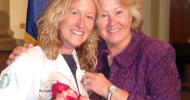
Melina Messing is an immunologist, kidney disease researcher, and patient advocate specializing in polycystic kidney disease (PKD). She is a postdoctoral fellow in Thomas Weimbs’s laboratory at the University of California, Santa Barbara, where she studies the biological mechanisms underlying kidney injury and disease progression.
She also serves as scientific director of the Ren-Nu program at Santa Barbara Nutrients, helping translate emerging research on nutrition and metabolic health into practical support for people living with PKD. Diagnosed with rapidly progressing PKD and polycystic liver disease, Messing brings both scientific expertise and lived experience to her work, and she regularly speaks to patient, clinical, and scientific audiences about nutrition, lifestyle, research, and patient empowerment.
Her research spans innate immunity and inflammation, muscle regeneration, and metabolic approaches to slowing kidney disease progression, with work appearing in Frontiers in Nutrition, EMBO Reports, and the Journal of Immunology. Her writing explores the intersection of biomedical science, clinical care, and the everyday realities of inherited chronic disease, with an emphasis on evidence, agency, and hope. She shares updates on YouTube, Instagram, and LinkedIn.