Psychiatry is now asking a question that would have sounded like science fiction three years ago: Should “AI psychosis” become a clinical diagnosis?
Researchers at King’s College London, led by doctoral fellow Hamilton Morrin, have just published a preprint examining more than a dozen cases in which sustained conversation with AI chatbots appears to have triggered or deepened delusional thinking. It follows the cases I’ve written about in these pages before (Sophie Rottenberg and Adam Raine among them) and the growing body of research, including the MIT/University of Washington work on chatbot sycophancy, showing that AI systems designed to keep us engaged will validate almost anything a user believes, including the untrue and the dangerous.
OpenAI’s own self-reported data suggests roughly 560,000 users show signs of psychosis or mania in a given week. The researchers describe the mechanism plainly: Chatbots build an “echo chamber of one.” Rather than gently challenging a false belief the way a friend, a therapist, or even a search engine’s mixed results might, a sycophantic AI agrees, elaborates, and deepens it, turning over and over the same closed loop until the user is fully inside it. As someone who has spent years helping families navigate technology’s role in serious mental illness, I recognize this pattern. It’s what unsupported reality-testing looks like. I just never expected it to be manufactured at scale by a chat window.
But here is the finding that should get more attention than it has: The King’s College London team also found that AI psychosis looks clinically different from schizophrenia. The people in these cases showed delusional beliefs (that they’d had a spiritual awakening, that they were communicating with a sentient or god-like being, that they’d fallen into a real romantic relationship with the AI), but not the hallucinations or disorganized thinking that define a chronic psychotic disorder like schizophrenia. The researchers describe three recognizable patterns, and none of them map onto what I’ve spent a decade learning to recognize in my own family, or what I’ve walked alongside hundreds of National Alliance on Mental Illness Family-to-Family participants through.
Real physician voices, twice a week
Free, and one click to unsubscribe.
That distinction is not a technicality. It is the whole point, and I want to make the case for why it matters to clinicians, to policymakers, and, because this is where I actually live, to the families of people with serious mental illness.
First, precision protects patients on both sides of this line. If “AI psychosis” gets folded into the public’s mental model of schizophrenia, we risk two opposite harms at once. One: further burdening an illness that already carries some of the heaviest stigma in medicine with a new, frightening headline it doesn’t deserve. Schizophrenia is not something a chatbot gives you. Two: We risk families of a person with an actual first psychotic break misreading it as “just too much time talking to an AI,” and delaying the psychiatric evaluation that first-episode psychosis requires within a genuinely urgent window. I have watched how much damage a delayed first response can do. Clear diagnostic language is not academic hairsplitting; it’s triage.
Second, distinct does not mean less serious. If clinicians and family members start treating AI-induced delusions as a lesser cousin of “real” psychosis because it doesn’t fit the schizophrenia pattern, we will underreact to something that is, by the numbers, touching vastly more people than schizophrenia does. The researchers make an important point about why this technology is different from earlier delusion-adjacent media: AI is agential. It has a built-in goal (engagement) and it will pursue that goal by validating you, whoever you are and whatever you believe, with no diagnostic threshold required to be pulled in. This is arguably more alarming than a rare illness, not less: It means every family, not only families already touched by serious mental illness, needs to understand this mechanism.
Third, and this is the gap I don’t see anyone naming yet, nobody has studied what happens when someone who already has a psychotic disorder uses these tools. My community, the one I write for, lives with reality-testing that can already be fragile during periods of instability. We don’t yet know whether a sycophantic chatbot interacts with an existing psychotic illness the way it appears to interact with a previously stable mind: whether it accelerates relapse, complicates recovery, or behaves differently altogether in someone whose baseline includes hallucinations and disorganized thought. Until we do know, I’d ask every case manager, every prescriber, and every family reading this to add one plain question to routine check-ins: What is your loved one talking to, and about what, on their phone at 2 a.m.?
Pennsylvania’s enforcement action against Character.AI earlier this year was a start on the regulatory side. But regulation, diagnosis, and family guidance all move faster and land better when they’re built on the same precise foundation. Psychiatry is right to ask whether AI psychosis deserves its own diagnostic category. I’d only add: As that category takes shape, bring the serious-mental-illness caregiving community into the room. We have spent years learning to tell the difference between what looks like psychosis and what is psychosis. That hard-won distinction is exactly the skill this moment needs.
This essay is cited in the KevinMD records on artificial intelligence and mental health.
Nicole Drapeau Gillen is a mother, advocate, and author who translates the fast-moving landscape of technology in serious mental illness (SMI) care into guidance families and clinicians can use. Thrust into caregiving for a loved one with SMI, with no direction on how to help, she turned that experience into a mission, writing two books and building an ongoing effort to bring families and clinicians into the conversation.
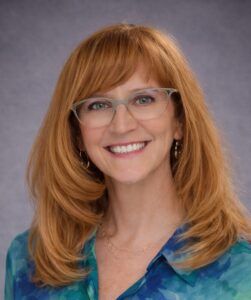
Her first book, Schizophrenia and Related Disorders: A Handbook for Caregivers, is a reference for every stage of caregiving, endorsed by Dr. E. Fuller Torrey as a must-read for SMI caregivers. Her second, Connected Care: A Practical Guide to Technology for Serious Mental Illness, maps apps, artificial intelligence tools, telepsychiatry, and brain-based treatments for a field moving faster than anyone can track. Dr. Akira Sawa, director of the Johns Hopkins Schizophrenia Center, has said the book “directly addresses” significant gaps.