In the same week this October, two announcements promised to bring brain science into the psychiatrist’s office.
In Shanghai, doctors described China’s first psychiatric brain-computer interface clinic. Patients get MRI, EEG, and functional near-infrared spectroscopy (fNIRS) scans, engineers analyze the data to choose personal stimulation targets, and patients then receive an intensive course of navigated transcranial magnetic stimulation (TMS): 30 to 50 sessions over 6 to 8 days. When the clinic opened, every initial appointment was booked within 10 minutes.
In California, Universal Brain announced the first clinical deployment of its FDA-cleared EEG system at Acacia Clinics in Sunnyvale, a practice that offers fMRI-guided and accelerated TMS and esketamine. The system uses a dry-electrode cap to measure the brain’s electrical responses to stimuli, and the clinic will pilot it for three months alongside its usual assessments.
I understand the appeal. As a caregiver, I have watched treatment decisions in psychiatry come down to trial and error: try a medication, wait weeks, try another. The Shanghai authors call this “a blunt, one-size-fits-all approach,” and they’re right. An objective measure of what is happening in a person’s brain is exactly what families have been asking for.
Real physician voices, twice a week
Free, and one click to unsubscribe.
But look closely at what each announcement actually shows. The Shanghai report is a description of a service, not a study. The authors say plainly that it “lacks quantitative data on patient numbers, treatment efficacy, follow-up results and adverse events” and that they cannot draw conclusions about safety or effectiveness. Their honesty is to their credit. And “brain-computer interface” here doesn’t mean an implant. It means brain scans used to aim TMS.
Universal Brain’s FDA clearance covers acquiring and analyzing EEG signals “to aid in diagnosis” in adults and adolescents. It doesn’t name any condition, and the announcement includes no clinical results. Yet the company’s description talks about classifying patients and supporting “personalized treatment decisions.” A device cleared to measure is not proof that measuring improves care.
For families living with schizophrenia or bipolar disorder, the gap is wider still. Acacia’s listed conditions are depression, anxiety, OCD, and PTSD. The Shanghai clinic describes targeting the circuits behind auditory hallucinations, but offers no results for it.
This matters because the people most drawn to these clinics are the people with the fewest options left. That Shanghai waiting list tells you how much unmet need there is. Desperation is exactly when words like “FDA-cleared,” “objective,” and “brain-computer interface” start to sound like proof.
So here’s what I’d ask before a family pays for scan-guided psychiatric care:
- What exactly is FDA-cleared, and for what? A cleared device and a proven treatment are different things.
- What results do you have in people with my loved one’s diagnosis? Not depression in general. Schizophrenia, or bipolar disorder, specifically.
- How will the scan change the treatment plan? If the answer is “it adds information,” ask what you’d do differently without it.
- What does it cost, and will insurance cover it? Ask about the scans and the treatment separately.
- What happens if it doesn’t work? Who follows up, and what comes next?
And I’d ask something of the clinics and companies, too: publish your outcomes, including for people with serious mental illness, and say plainly which parts are still research. The Shanghai team has already called for large studies with long-term follow-up. That’s the right standard for every clinic selling a scan-guided future.
Precision psychiatry may well be coming. Families who have waited years for something better deserve to know when it has actually arrived.
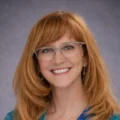
Nicole Drapeau Gillen is a mother, advocate, and author who translates the fast-moving landscape of technology in serious mental illness (SMI) care into guidance families and clinicians can use. Thrust into caregiving for a loved one with SMI, with no direction on how to help, she turned that experience into a mission, writing two books and building an ongoing effort to bring families and clinicians into the conversation.
Her first book, Schizophrenia and Related Disorders: A Handbook for Caregivers, is a reference for every stage of caregiving, endorsed by Dr. E. Fuller Torrey as a must-read for SMI caregivers. Her second, Connected Care: A Practical Guide to Technology for Serious Mental Illness, maps apps, artificial intelligence tools, telepsychiatry, and brain-based treatments for a field moving faster than anyone can track. Dr. Akira Sawa, director of the Johns Hopkins Schizophrenia Center, has said the book “directly addresses” significant gaps.