









A new study in the journal Schizophrenia shows that artificial intelligence can estimate which people who have had psychosis will go on to be diagnosed with schizophrenia. Columbia researchers trained a deep-learning model on Medicaid claims from 158,704 people with a history of psychosis. Of those, 8.5 percent were later diagnosed with schizophrenia. The best model reached an area under the receiver operating characteristic curve (AUROC) of 0.791. In a separate group of commercially insured patients, it reached 0.763.
That matters. After a first psychotic episode, families and clinicians face the same question: Is this a single episode, or the start of a lifelong illness? Without reliable tools, that question is very hard to answer, and long-term care decisions get made without it.
As a family caregiver, I read the study with one question in mind: What did the model learn from? Its strongest predictors weren’t symptoms. They were patterns of health care use: psychiatric diagnoses and prescriptions, how often a person sought care, and where they sought it, whether the emergency room, the hospital, or the outpatient clinic.
I know what those patterns look like from the other side. Many of those emergency room visits happen because a parent drove there in the middle of the night. Many of those outpatient appointments happen because a sibling kept calling until someone answered. Claims data records the visit. It doesn’t record what came before it: the sleep that stopped, the friends who drifted away, the texts that stopped making sense. Families usually see those changes long before there is a bill.
Real physician voices, twice a week
Free, and one click to unsubscribe.
A model built on billing records learns from the moment a family’s worry finally became a visit. That’s useful, but it comes late.
As this work moves toward clinical use, I have three questions.
- Who tells the family? The researchers describe the model as a way to support clinical judgment, not replace it, and it isn’t in clinical use yet. When a clinician eventually sees a high-risk flag, what happens next? If the answer is only a note in the chart, the people most likely to notice the next warning signs won’t know to watch for them. With the patient’s consent, a risk score should come with a plan that includes the family.
- What about what families know? The model can’t hear a mother say her son hasn’t slept in three nights. Future versions could test whether adding structured observations from families improves the predictions. Families are an underused source of information in psychiatry, and this is a chance to measure what we add.
- Who gets missed? The team found that sensitivity was lower for women, which means more women at risk were missed. The researchers also warn that models trained on real-world data can carry the biases of the systems that produced that data. A model trained on claims can only learn from people who reached care. The people who never made it to a clinic or an emergency room leave nothing for it to learn from.
The team is now reviewing patient charts at NewYork-Presbyterian and Columbia to check the model’s predictions. That careful step is the right one. I would add another: Ask the families of those patients what they saw, and when they saw it.
Recognizing schizophrenia earlier could change the course of a young person’s life. Technology that helps clinicians see risk sooner is welcome. It will work best when it is connected to the people who see it first.
Nicole Drapeau Gillen is a mother, advocate, and author who translates the fast-moving landscape of technology in serious mental illness (SMI) care into guidance families and clinicians can use. Thrust into caregiving for a loved one with SMI, with no direction on how to help, she turned that experience into a mission, writing two books and building an ongoing effort to bring families and clinicians into the conversation.
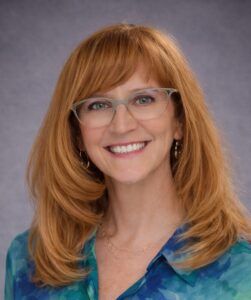
Her first book, Schizophrenia and Related Disorders: A Handbook for Caregivers, is a reference for every stage of caregiving, endorsed by Dr. E. Fuller Torrey as a must-read for SMI caregivers. Her second, Connected Care: A Practical Guide to Technology for Serious Mental Illness, maps apps, artificial intelligence tools, telepsychiatry, and brain-based treatments for a field moving faster than anyone can track. Dr. Akira Sawa, director of the Johns Hopkins Schizophrenia Center, has said the book “directly addresses” significant gaps.
She shares updates on LinkedIn and Facebook.
Your KevinMD author page is one of the top results for your name. Turn it into a premium profile, publish in 1 to 3 days, and get a guaranteed podcast slot.