Psychiatrist Ravi Singareddy did something rare in his recent KevinMD piece on accelerated transcranial magnetic stimulation (TMS): He slowed the hype down. SAINT’s open-label pilot reported remission in about 90 percent of completers. Under sham control, remission was closer to 50 percent versus 21 percent. SWIFT showed that an accelerated deep TMS course could match a standard one, reaching remission about a week sooner. His conclusion: “Faster” is not the same as “better.”
I agree, and I’m grateful a clinician said it plainly. I’m the mother of a daughter with schizophrenia, and I’ve spent a lot of time in treatment waiting rooms. I want to add what families see that trial tables don’t.
Five days for the patient is five days for the family. Accelerated protocols compress weeks of treatment into one intense stretch. SAINT, for example, packs multiple sessions into each day. For someone too depressed to drive, that means a family member taking the week off, handling the logistics, and staying close afterward. For many families, that trade is worth it: fewer weeks of commuting, less work missed. But it’s a different decision, and clinics should describe honestly what the week will ask of the patient and the caregiver.
The weeks after matter as much as the week of. Dr. Singareddy notes that evidence on durability is limited and calls for maintenance data. Families feel that gap in our stomachs. A treatment that works in five days lifts everyone’s hopes. If the benefit fades in week four and no one is assigned to notice, the fall is harder. Before starting, ask: What’s the maintenance plan, who checks in at two weeks, one month, and three months, and who do we call if things start slipping?
Real physician voices, twice a week
Free, and one click to unsubscribe.
Families living with serious mental illness are reading these headlines too. Both trials studied depression. But intermittent theta burst stimulation, the pattern at the heart of both protocols, is also being studied in schizophrenia. A 2026 meta-analysis of 17 randomized trials found it reduced negative symptoms, with an early signal that the effect lasts to six months. It isn’t cleared for schizophrenia, and the evidence is young. Families of people with schizophrenia or bipolar disorder deserve that answer stated plainly, along with a second one: whether people with their loved one’s diagnosis were even included in the studies behind the headlines.
Cost and access shape the choice. As Dr. Singareddy explains, SAINT requires functional MRI and neuronavigation, and its price is widely reported to be considerably higher than conventional TMS. SWIFT runs on deep TMS equipment many clinics already own. For families already juggling co-pays and prior authorizations, that difference can be the whole decision.
Many families are also weighing ECT. When medications haven’t worked, the real choice is often TMS versus electroconvulsive therapy. ECT remains one of the most effective treatments for severe depression. It can also bring memory effects that, for some people, are not short-term. Families need clinicians to lay the options side by side, including what each one costs the person in daily life.
Here are five questions I’d encourage every family to ask, and every clinic to answer before it’s asked:
- Is my loved one eligible? Were people with their diagnosis included in the trials?
- What will the week require of us? Sessions per day, hours at the clinic, driving, time off work.
- What’s the maintenance plan? Who checks in afterward, and how often?
- What will it cost? What has insurance actually covered for patients like mine?
- How does it compare? With standard TMS, and with ECT, for our situation.
Dr. Singareddy closes by calling these trials “promising, small, and not yet the last word.” I’d add one thing. Part of the last word belongs to the people who live with the results long after the treatment week ends. Ask families what they need to know. Then tell them the truth, numbers and all.
Nicole Drapeau Gillen is a mother, advocate, and author who translates the fast-moving landscape of technology in serious mental illness (SMI) care into guidance families and clinicians can use. Thrust into caregiving for a loved one with SMI, with no direction on how to help, she turned that experience into a mission, writing two books and building an ongoing effort to bring families and clinicians into the conversation.
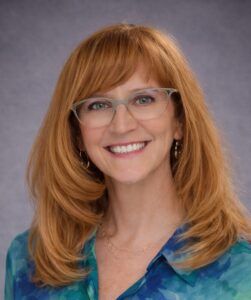
Her first book, Schizophrenia and Related Disorders: A Handbook for Caregivers, is a reference for every stage of caregiving, endorsed by Dr. E. Fuller Torrey as a must-read for SMI caregivers. Her second, Connected Care: A Practical Guide to Technology for Serious Mental Illness, maps apps, artificial intelligence tools, telepsychiatry, and brain-based treatments for a field moving faster than anyone can track. Dr. Akira Sawa, director of the Johns Hopkins Schizophrenia Center, has said the book “directly addresses” significant gaps.