This past Friday, October 23, I stood in front of a variety of clinicians sponsored by Harvard Medical School for Grand Rounds. I am not a clinician. I’m a mother whose daughter lives with schizophrenia, and I’ve spent years mapping the space between the appointment and my kitchen table at 2 a.m.
I expected polite skepticism. What surprised me most was how open the room was to the entire conversation. Here is what landed, and what I think it says about where psychiatry is ready to go.
They wanted the promise and the problems, together. I didn’t pitch technology as a fix. I showed both sides. The FDA has just cleared Motivista, the first prescription app for schizophrenia. And half of mental health apps vanish within three years. Clinicians are tired of hype and tired of blanket warnings. They wanted the honest middle: what works, for whom, and what’s still research.
They wanted to talk about chatbots, not just warn about them. Our loved ones are already using AI, often alone, often late at night. Families tend to see the warning signs first. My suggestion was simple: Build conversations around chatbots instead of pretending they aren’t there. Ask about AI use the way you’d ask about supplements: how much, when, and whether the patient feels it “understands” them. The room agreed, and so do I. The same advice goes for caregivers. We need a script for that conversation at home too.
Real physician voices, twice a week
Free, and one click to unsubscribe.
They loved the least glamorous tool I showed. Out of dozens of apps, AI tools, and brain-based treatments, one that drew a strong interest was Primary Record, an app that gathers a family’s health history, medications, and documents in one place and lets caregivers share it. It was co-founded by a former critical care nurse to replace the binders families carry from appointment to appointment. Every caregiver knows that binder. It turns out clinicians know it too, from the other side of the desk, when a family arrives with a stack of paper and a history no one has written down in one place.
They connected with Maya. Maya is a composite patient I built from common caregiving patterns: aged twenty-five, stable for eighteen months, seen every four weeks. Her sleep began to fall apart in week two. The tracker on her phone recorded it, but no one on her care team knew it existed. By week four, she was in the emergency department at 2 a.m. Nothing in that story requires anyone to have done their job badly. It’s what happens in the space no one’s job covers. The technology to close that gap exists. What’s usually missing is a person assigned to watch it, which I write about in a companion piece on alert fatigue.
What the openness means. I came in braced to justify why a caregiver belonged at Grand Rounds. Instead, the room leaned in. That tells me the barrier isn’t willingness. It’s that clinicians and families rarely get in the same room to compare notes on the tools both are already using.
So here is one thing to try this week. Ask your next patient’s family what app or tool they’ve already found on their own. You may learn more about the last four weeks than the chart can tell you.
And if you’re planning a Grand Rounds or a department meeting, consider inviting a caregiver. We won’t tell you how to practice medicine. But we can tell you what happens after the appointment ends.
Nicole Drapeau Gillen is a mother, advocate, and author who translates the fast-moving landscape of technology in serious mental illness (SMI) care into guidance families and clinicians can use. Thrust into caregiving for a loved one with SMI, with no direction on how to help, she turned that experience into a mission, writing two books and building an ongoing effort to bring families and clinicians into the conversation.
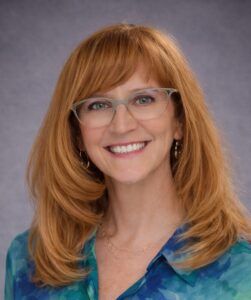
Her first book, Schizophrenia and Related Disorders: A Handbook for Caregivers, is a reference for every stage of caregiving, endorsed by Dr. E. Fuller Torrey as a must-read for SMI caregivers. Her second, Connected Care: A Practical Guide to Technology for Serious Mental Illness, maps apps, artificial intelligence tools, telepsychiatry, and brain-based treatments for a field moving faster than anyone can track. Dr. Akira Sawa, director of the Johns Hopkins Schizophrenia Center, has said the book “directly addresses” significant gaps.