Seventeen years ago, I opened a family medicine practice with a simple goal: take care of my community. I am board-certified in family medicine and obesity medicine, and I loved the work. What I did not love was what the work slowly became.
Like many of you, I spent my days racing a clock I didn’t set. Short visits. Prior authorizations stacked on my desk. Evenings spent finishing notes while my family went on without me in the next room. I would walk out of an exam room knowing my patient needed thirty more minutes of conversation about weight, sleep, energy, and hormones, and knowing I didn’t have thirty more seconds.
My panel grew past three thousand patients, and I was burned out. I didn’t have a name for it at first. I just knew I was tired in a way an evening or a weekend couldn’t fix.
I was not alone. American Medical Association (AMA) data shows roughly four in ten physicians report symptoms of burnout, and family medicine is among the hardest-hit specialties. We talk about this crisis constantly, at conferences, in journals, and on sites like this one. We talk less about the doctors who found a way through it without leaving medicine. My path is not the only one, but I wish someone had shown me this door sooner.
Real physician voices, twice a week
Free, and one click to unsubscribe.
Moving my primary care to a concierge model
The first door I walked through was concierge medicine. For colleagues who haven’t looked at it closely, the idea is simple. Patients pay an annual membership directly to the practice, and the physician cares for a much smaller panel that offers direct access to them and longer visits.
A concierge physician is still a primary care physician. I still do annual physicals, manage chronic disease, treat acute illness, review labs, and coordinate with specialists. What changes is how. Patients can be seen the same day or the next day. Visits last as long as the problem requires. Patients can reach their own doctor directly instead of navigating a phone tree. Annual exams become a real conversation about prevention and long-term health, not a race through a checklist.
For me, it meant knowing my patients again. For them, it meant a doctor who finally had time.
Listening to what patients were asking for
Once I had time, I could hear what my patients kept asking for: help with weight that wouldn’t move, with fatigue, with perimenopause symptoms that had been dismissed elsewhere, and with wanting to look and feel like themselves again. These were not trivial requests. Obesity is a chronic disease. Hormonal changes affect sleep, mood, metabolism, and cardiovascular risk. How patients feel about themselves affects whether they show up for the rest of their care.
So I made room. I pursued additional training in obesity medicine, hormone therapy, and peptide therapy, and later in aesthetic medicine, and built that care into the same membership relationship, outside the insurance treadmill.
What changed when the model changed
The first thing that changed was time. Appointments became long enough to actually practice medicine: to take a real history, order the right labs, explain the plan, and follow up. The second thing was the relationship. Patients I see every few weeks for months are patients I actually know. I watch their numbers improve, and I watch their faces change when they tell me they have energy again.
The third thing was me. I got my evenings back. I was at the dinner table. I traveled with my family. I remembered why I chose medicine in the first place.
There is nothing like watching a patient walk in exhausted and self-conscious and leave standing taller, lighter, and more confident in their own skin. That part of medicine brings me real joy, and for years I didn’t have the bandwidth to feel it.
A word of caution about the aesthetics industry
I would be doing my colleagues a disservice if I didn’t say this plainly: The medical spa industry has an oversight problem. Many medical spas are not owned or overseen by physicians. Some bring on a medical director only to satisfy state requirements, and that physician may rarely see a patient or review a chart.
Injectables, lasers, prescription weight-loss medications, and hormones are medical treatments with real risks. Vascular occlusion, burns, inappropriate dosing, and missed contraindications are not hypotheticals. States are starting to respond with closer scrutiny of physician supervision, and I think that is overdue. A physician’s name on a compliance document is not the same as a physician engaged in patient care.
This is exactly why I believe more physicians should be in this space, not fewer. Patients are going to seek these treatments either way. The question is whether a physician stands behind the treatment plan. We are trained to take a history, recognize red flags, manage complications, and know when not to treat.
What I would tell a burned-out colleague
If you are reading this at 10 p.m. while finishing charts, here is what I wish I had heard years ago.
You don’t have to choose between being a doctor and having a life. Concierge care, obesity medicine, hormone health, longevity care, and aesthetics all reward the clinical judgment you already have. Training is available, and it is worth doing properly.
Listen to your patients. The care they keep asking for, and can’t get, is often where the need and the opportunity meet.
Don’t do it halfway. Stay clinically involved. See patients. Review charts. Train your team and hold them to a medical standard. Your presence is the value.
And give yourself permission. Changing the way you practice is not the same as leaving medicine. For me, it was how I stayed.
Seventeen years in, I still practice family medicine in the truest sense. I care for people over long stretches of their lives. I just do it in a model that lets me be present for them, and for my own family.
Burnout is not a personal failure. Often it is a signal that the model you are in no longer fits the doctor you are. Pay attention to it. There is another way to practice, and it is still medicine.
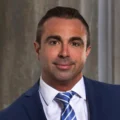
Michael C. Luciano is a board-certified family medicine and obesity medicine physician and a master aesthetic injector. He is trained in hormone and peptide therapy. He is the founder and medical director of Healthy Solutions Medspa, a physician-led practice with two corporate locations in Ivyland and Furlong, Pennsylvania. He is also the cofounder and chief medical officer of Healthy Solutions Medspa Franchise, where he sets the clinical standards and protocols for new franchise locations.
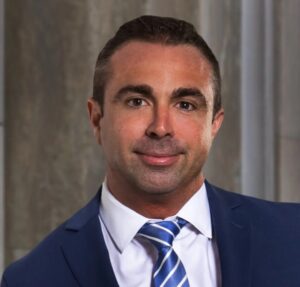
Dr. Luciano opened his practice in Bucks County in 2009 as a primary care physician focused on preventive medicine and patient education. Many of his patients struggled with weight and had hormone problems nobody had checked. That led him to build programs that bring medical weight loss, hormone optimization, and aesthetics under one roof, all with physician oversight.
He is a member of the American Academy of Family Physicians, the American Osteopathic Association, the American Society of Bariatric Physicians (now the Obesity Medicine Association), and the Pennsylvania Osteopathic Medical Association. He earned his undergraduate degree at the University of California, Santa Cruz, and his medical degree at Western University of Health Sciences. He is also on Doximity.