


















Thirteen of 30. That’s how many people with schizophrenia showed meaningful improvement in a new Semmelweis University study of virtual reality (VR) avatar therapy. Every participant had heard voices for at least three months despite medication. By the end of treatment, two no longer heard the voice at all. Four more saw symptom severity drop by at least half. Across the group, the voices came less often and caused less distress.
That matters because medication doesn’t quiet voices for everyone. The psychiatrist who created avatar therapy, Julian Leff, estimated that one in four people with persecutory voices doesn’t respond to antipsychotics. Families see what that looks like at home. A loved one answers someone who isn’t in the room. They stop sleeping. They won’t leave the house because of what the voice says will happen.
Here’s how the therapy works. The patient and a therapist build an avatar of the most distressing voice, choosing its face, its tone, and the things it says. In VR sessions, the therapist speaks as the avatar through software that makes it sound like the real voice. The patient practices talking back. If it gets to be too much, the therapist switches to their own voice and supports them.
The Hungarian study is small and had no randomized control group. The researchers say plainly that it’s an add-on to medication, not a replacement. But it builds on stronger evidence. The U.K.’s AVATAR2 trial randomized 345 people and found the extended version reduced how often they heard distressing voices. England’s National Institute for Health and Care Excellence recommended avatar therapy for National Health Service use while more evidence comes in. In the U.S., when AVATAR2 was published, there was no U.S. version yet.
Real physician voices, twice a week
Free, and one click to unsubscribe.
Here’s the part I want researchers to hear. The Semmelweis trial’s registered protocol lists “caregiver opinion” at week 24 as one of its outcomes. Someone planned to ask families what changed. The public report of the results says nothing about what they said.
That data should be published. A symptom scale completed in a clinic captures how often a voice speaks and how distressing it feels. A family member sees whether the voice still runs the day: whether their loved one eats dinner with them, sleeps through the night, goes to work.
Families also affect whether a patient gets through treatment at all. In AVATAR2, only 58 percent of people in the extended group completed the 28-week follow-up. The Semmelweis team found older patients improved more and linked that to their experience coping with the illness and navigating treatment. That experience is rarely built alone. A therapy that asks someone to face the voice that has tormented them for years is hard. Getting to seven sessions over 12 weeks often depends on someone at home.
So here’s what I’m asking for.
- Researchers running avatar trials should report caregiver outcomes when they collect them, and collect them when they don’t.
- U.S. funders should support an American trial. Families here shouldn’t have to read about a treatment for persistent voices that they can’t get.
- Clinicians should tell families when medication hasn’t quieted the voices, and what options exist now: voice-focused psychological therapy, and avatar or VR trials when they open.
Avatar therapy is not a cure. The Semmelweis researchers don’t claim it is. But for the one in four whose voices don’t respond to medication, it’s one of the few new options with real evidence behind it. Families should help decide whether it works. Ask us what we see.
Nicole Drapeau Gillen is a mother, advocate, and author who translates the fast-moving landscape of technology in serious mental illness (SMI) care into guidance families and clinicians can use. Thrust into caregiving for a loved one with SMI, with no direction on how to help, she turned that experience into a mission, writing two books and building an ongoing effort to bring families and clinicians into the conversation.
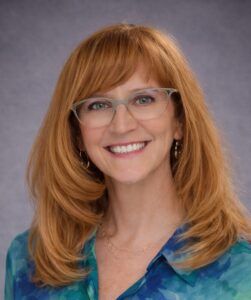
Her first book, Schizophrenia and Related Disorders: A Handbook for Caregivers, is a reference for every stage of caregiving, endorsed by Dr. E. Fuller Torrey as a must-read for SMI caregivers. Her second, Connected Care: A Practical Guide to Technology for Serious Mental Illness, maps apps, artificial intelligence tools, telepsychiatry, and brain-based treatments for a field moving faster than anyone can track. Dr. Akira Sawa, director of the Johns Hopkins Schizophrenia Center, has said the book “directly addresses” significant gaps.