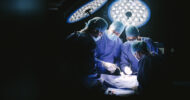
Robotic surgery is redefining what’s possible in medicine, turning once unimaginable procedures into everyday realities that save lives across the globe. When we look at the human brain, with its intricate architecture and concentration of critical structures, operations inside the skull require the utmost delicacy. As a neurosurgeon, I have dedicated over twenty-five years to understanding this complexity, driven by a passion found early in my medical training. This is why leading the world’s first fully robotic intracranial tumor resection was not just a personal milestone; it was a leap for global medicine.
The patient, a 68-year-old businessman, came to us with a history of debilitating headaches and diminishing concentration (a tumor pressing on his brain and affecting the decisions he made in daily life). What set this surgery apart was not just the technology, but the outcome: in under an hour, we removed a golf ball-sized tumor from an extremely sensitive region, using robotic arms guided by advanced 3D imaging and magnified visualization. Within 24 hours, the patient was alert, dressed, pain minimized, and ready to return home, a recovery time nearly four times faster than routinely seen in traditional approaches.
A new philosophy in surgical care
Every surgery starts days before the patient enters the operating room. I review every possibility, consider every path the operation could take, and prepare for every outcome, always with the patient’s safety as my guiding principle. Robotic systems are not simply advanced tools; I think of them as a “third eye,” augmenting my own senses and eliminating hand tremor and fatigue, which, even for the most practiced hands, can never be fully controlled. It is still the surgeon’s judgment at the heart of every decision, but the robot’s stability, precision, and superior visualization enable us to deliver minimally invasive care and reduce trauma to healthy tissue.
Real physician voices, twice a week
Free, and one click to unsubscribe.
What stands out most is what matters to patients: the journey through surgery. Many people fear long recovery, pain, and disruption to their lives and families. When I saw my patient awake and comfortable, ready to go home less than 24 hours after surgery, it reaffirmed for me the promise of robotics: not just technical success, but the restoration of normal life to those who trust us.
Building on a legacy of innovation
What makes advances like these sustainable is teamwork: Every achievement involves coordination between surgeons, anesthesiologists, technologists, and nurses. Preparing for the first robotic neurosurgery demanded months of study, training, and experimentation. When we succeed, gratitude is shared among all who took part: most of all, the patient, whose trust made the breakthrough possible.
Expanding access, advancing vision
Robotic platforms now make it possible for expert surgical care to transcend physical borders. With improvements in telecommunications and remote control, we are beginning to see the potential for operations performed across continents, granting lifesaving care to patients in underserved areas without requiring travel. The future is not medicine automated, but medicine augmented, with artificial intelligence and robotics serving as powerful partners to human skill and compassion.
Realistic optimism for the path ahead
These are still early days for robotic neurosurgery. Not every patient or tumor is a candidate, and there remain technical limits, especially for tumors deep inside the brain. Innovation must be validated by data, and change needs thoughtful adoption. Experience teaches me that skepticism is natural, but with measured optimism and continued investment, robotic surgery will become routine in even the most remote corners of the globe. Our responsibility is not only to adopt technology, but to ensure that every step forward is anchored in the values of safety, empathy, and teamwork.
Ultimately, robotic surgery’s value lies not just in what it achieves technically, but in what it enables for patients: the chance for a full, swift recovery and a return to the life they cherish. The profound trust patients place in medical teams fuels every advance. I’m grateful to my colleagues, my patients, and all those who make transformation possible. By building these bridges between technology and humanity, we lay the foundation for a truly global health system, one where innovation is matched by the wisdom and gratitude of those whose lives we serve.
Homoud Aldahash is a skull base and tumor consultant at King Faisal Specialist Hospital and Research Centre in Riyadh, Saudi Arabia. He previously served as deputy director of the Neuroscience Centre and director of the Integrated Practice Units for Skull Base Surgery and Neuro-Oncology.
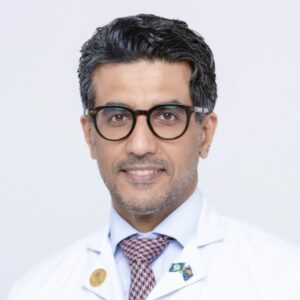
He completed his neurosurgery training through the Saudi Commission for Health Specialties, followed by fellowships in cerebrovascular, endoscopic, and open skull base surgery at the University of Ottawa. Dr. Aldahash also holds a master’s degree in health leadership from McGill University.
His clinical and research interests include minimally invasive skull base surgery, cerebrovascular disorders, and neuro-oncology. He has led several pioneering initiatives, including performing the first intraoperative radiotherapy for brain metastases in Saudi Arabia and the Middle East and North Africa region.