There were three of us who probably could have been valedictorian. I was one of them.
At English High School in Boston, I earned straight A’s from tenth grade onward. Yet my academic record contained a blemish that proved impossible to overcome. A B+ in ninth-grade English.
The explanation was even harder to forget than the grade itself. My teacher wrote that my work “did not reach my potential.”
At fourteen, I was baffled. At seventeen, I was annoyed. For years afterward, I viewed that single grade as the reason I was not valedictorian.
Real physician voices, twice a week
Free, and one click to unsubscribe.
High school students have an extraordinary ability to magnify the importance of things that eventually prove unimportant. Valedictorian was one of those things. At the time, it felt like the ultimate prize. It symbolized academic excellence, recognition, and validation. We competed for grades the way athletes compete for championships.
Looking back, I realize we were competing for a title. Life was preparing us for something far larger.
My educational path unfolded during a turbulent period in Boston’s history. The city’s school system created an unusual arrangement in which some middle schools hosted ninth graders. That B+ followed me into high school calculations, even while my grades afterward were consistently excellent.
By the time I graduated, three students had legitimate claims to distinction. One received the title. The rest of us received something more valuable: opportunity. At the time, however, I did not appreciate the difference.
I went on to Boston University, where I discovered something interesting. The competition had changed. Nobody cared who had been valedictorian. Nobody asked. Nobody was impressed. Students were judged by what they did next.
That realization was both liberating and unsettling. For the first time, I was not competing against classmates from a single high school. I was competing against students from private schools, elite preparatory academies, and educational backgrounds that seemed far more impressive than my own.
I responded the only way I knew how. I worked.
I challenged myself academically, often taking the more demanding science sequence rather than the easier path commonly chosen by pre-med students. I became involved in student government. I wrote opinion columns for the Daily Free Press. Ironically, one of my predecessors in that role was a young student named Bill O’Reilly, long before he became a household name.
I learned something important during those years. Success is not a title. Success is momentum. One accomplishment creates the opportunity for the next. One challenge prepares you for another. The scoreboard keeps resetting.
At Boston University, I was accepted into the inaugural MMEDIC early-admission program to medical school. I graduated magna cum laude with distinction in biology and a minor in chemistry. I served in student government and found opportunities that had never existed in high school.
Then came commencement. That was when I ran into the woman who had been selected as valedictorian.
Because our academic interests had diverged so dramatically, we rarely saw one another during college. She had followed one path. I had followed another.
We began catching up. She noticed the honors listed after my name in the commencement program and asked about them. She asked about medical school. She asked about my academic accomplishments. She asked why I had resigned as president of the student government.
As we talked, I experienced an unexpected feeling. It wasn’t triumph. It wasn’t vindication. And it certainly wasn’t revenge. It was perspective.
For years, I had viewed valedictorian as the outcome. In reality, it was only a moment. A snapshot. A title assigned at a particular place and time. What mattered far more was everything that happened afterward. I eventually became a physician, researcher, educator, and writer.
Which brings me back to that B+ in ninth-grade English. There is a delicious irony in the whole story. The one teacher who denied me a perfect record did so because, in her judgment, my writing had not reached its potential.
At the time, I considered the grade an injustice. Today, I view it differently.
She may have been right.
The criticism stayed with me. Over the years, I wrote research papers, book chapters, grants, policy documents, and opinion essays. Decades later, I would publish article after article, discovering that writing had become one of the most enduring parts of my professional life.
The teacher who gave me a B+ saw something I did not yet see in myself. Potential. Not performance. Potential. That distinction matters.
As physicians, educators, and parents, we spend much of our time evaluating performance. We count grades, scores, rankings, publications, and awards. The harder task is recognizing potential.
Potential is messy. It unfolds over decades rather than semesters. It often hides behind disappointments. And it rarely follows the script we imagine.
I never became valedictorian. For years, I thought that mattered. Now I think it was one of the least important disappointments of my life.
Titles are snapshots. Trajectories are stories.
A ninth-grade English teacher once told me that my work did not reach its potential.
I spent the next fifty years trying to prove that teacher right.
Ronald L. Lindsay is a retired developmental-behavioral pediatrician whose career spanned military medicine, academic leadership, and national advocacy for dignity-centered neurodevelopmental care. His NIH-funded work with the RUPP Autism Network helped define evidence-based approaches to autism and related developmental disorders.
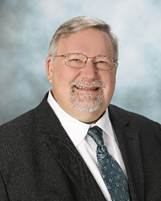
He directed the LEND Program at The Ohio State University and founded JBLM CARES, a $10 million autism resource center for military families. His writing spans clinical scholarship and long-form fiction. He is the author of The Mercy Directive and the six-novel Cassandra series, a completed political and medical fiction saga tracing the rise of the Cassandra system from its origins to its national and international legacy. His forthcoming memoir, The Quiet Architect, examines how conscience and structure collide in modern medicine.
He shares updates on LinkedIn.