
The plan is made. The chart is closed. The doctor’s voice has already changed. “Anything else?”
Most physicians have asked that question thousands of times. I have asked it more times than I can count, and often at precisely the moment I was ready for the visit to end.
Nearly every clinician says it, and most say it the same way. “Anything else?” sounds like an invitation. It functions as a closing. It does not matter whether the physician is standing or sitting, reaching for the handle or still at the keyboard. Patients are expert readers of the moment a person has finished. They have been reading it their whole lives, in every office where someone busy asked whether there was anything else.
So they say no. Not because there is nothing, but because the question was shaped to produce a no. The word “anything” does the work. It frames an additional concern as an extra, an imposition, something that would be a bother. Most people, asked by a person in a white coat who has visibly finished whether they have anything more to add, will decline out of courtesy. The courtesy is the problem. Clinicians rely on it without knowing they do.
Real physician voices, twice a week
Free, and one click to unsubscribe.
A 2007 primary care study in the Journal of General Internal Medicine showed that a single word changes this. After the patient had presented the opening concern, physicians were trained to ask either “Is there anything else you want to address in the visit today?” or “Is there something else you want to address in the visit today?” Compared with usual practice, asking “something else” reduced unmet concerns by 78 percent without significantly lengthening visits. One word. A different invitation.
It is hard to believe at first. One word? But the study is measuring something larger than vocabulary. It is measuring whether the clinician expected an answer. “Something” presumes there is more. “Anything” presumes there isn’t. Patients hear the presumption and answer it. And notice where the researchers put the question: early, after the first concern, not at the end. The study is about how a visit opens. This essay is about how one closes. The two turn out to be connected.
What the no is covering
It is worth being specific about what goes unsaid, because none of it is exotic. It is the medication quietly stopped because of a side effect the patient was embarrassed to describe. It is the symptom that seemed too small to mention until it wasn’t. It is the question about a test result the patient did not fully understand but nodded through. It is the thing they actually came in for, which never came up because the visit opened with the thing on the schedule.
Some of these take a minute to clarify. Others reveal problems that cannot safely wait. What makes them dangerous is not their complexity. It is that the clinician may never learn they exist.
The opening question and the closing question
The question a physician asks at the end of a visit is usually a mirror of the one asked at the start.
A physician who opens with “So you’re here about the knee” has set the agenda, and the patient has learned that their job is to answer questions about the knee. Whatever else they walked in with gets filed under not what the doctor wants. By the end, “Anything else?” is not an opening. It is a formality that confirms the agenda set in the first ten seconds.
A physician who opens with “What’s on your list today?” and then, before saying a word about the first item, asks “What else?” until the list is empty, finds that the ending changes on its own. There is less left hidden at the close because the patient was given permission to speak at the open. The last question becomes what it is supposed to be: a check, not a trap.
The literature on interruptions shows that when clinicians elicit a patient’s agenda and then cut it off, they often do so within seconds. That is usually read as a finding about rudeness. It is better read as a finding about endings. Every interruption teaches the patient what the visit is for. By the end of the visit, they already know whether their remaining concern is welcome. A better closing question may come too late to repair a visit in which the patient was never invited to set the agenda.
What changes
The fix is not a script. It begins with a stop: not a pause for effect, but a real stop, long enough for the physician to notice that they have been finished for a while and the patient has not. Sitting down does not accomplish this on its own. Patients have been asked “Anything else?” by seated physicians who had plainly moved on, and they said no like everyone else. The signal is not where the doctor’s body is. It is where the doctor’s attention is.
Then the word changes. Not “anything” but “What else is on your mind?” or “Is there something we haven’t gotten to?” Then silence. It is uncomfortable for about three seconds. Sometimes, on the fourth, something comes.
And when the answer is a real no, the physician can believe it, because the patient was given room to say yes.
None of this adds much time to a visit. Inviting every concern is not a promise to resolve every concern today; it is how the clinician learns what matters, so the two of them can decide together what needs attention now and what can wait. What it adds is a visit that ends when the patient is finished, rather than when the doctor is.
The question they meant
The old words do not go away easily. The plan made, the chart closed, the habit halfway out. Physicians say them for so long that they live below the level of intention.
But the ones who stop, say something, and wait discover the same thing. The question is the same length it always was. What changed is that they finally want the answer. And their patients always knew the difference. Patients were never answering the question the doctor asked. They were answering the question the doctor meant.
Gurdev Singh is a physician-writer whose work centers on one idea: Most misunderstandings don’t occur because no one spoke, but because meaning did not transfer. Singh studies the gap between what is said and what is heard, especially in high-stakes settings such as illness, aging, and difficult decisions, and explores how trust is formed or lost within seconds, why reassurance sometimes increases distress, and how presence can succeed where explanation fails.
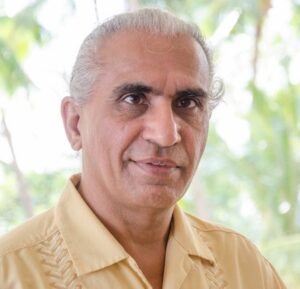
Singh writes literary nonfiction, research-informed essays, and fiction, and gives talks on empathy, communication, and human dignity. The aim is not to teach scripts, but to deepen awareness of what people carry away from an encounter, because that, more than information, shapes outcomes. In Singh’s words, “Where words end, meaning begins.” Singh’s writing appears on Substack at The Two Wells.