When I arrived at Boston University in 1975, I carried more than a class schedule. I carried doubts.
I had graduated from English High School in Boston during the turbulent years of court-ordered desegregation. Although I had performed well academically, I knew many people viewed graduates of urban public schools as less prepared than students from elite suburban schools and prestigious private academies.
Medical schools would eventually decide whether I was qualified. Before that happened, however, I needed to answer a more important question. Could I compete?
Boston University maintained two educational tracks in many introductory science courses. One track was designed primarily for premedical students. The other was intended for science majors and generally demanded greater mathematical sophistication and a deeper understanding of the subject.
Real physician voices, twice a week
Free, and one click to unsubscribe.
Whenever possible, I chose the harder path. Not because anyone advised me to. Not because it would improve my résumé. Because I needed proof.
Thanks to advanced placement and entrance examination credits, I entered Boston University with some flexibility in my schedule. Rather than taking the easiest route, I consistently enrolled in the science-major versions of courses.
By my sophomore year, I had maintained a strong record in upper-level science classes. Still, one challenge remained in my mind. Physics.
Most pre-med students enrolled in the algebra-based sequence. Science majors generally took Physics 111, a calculus-based course. I had earned an A-minus in calculus the previous year. So I signed up for Physics 111.
It wasn’t required. That was precisely why I took it. I wanted to know whether I belonged.
At the time, I did not appreciate how much of my decision was driven by my own insecurity. I had spent much of my adolescence proving people wrong. Teachers had underestimated me. Guidance counselors had underestimated me. Even after earning academic honors, part of me still wondered whether I could compete with students who seemed far more polished and confident.
Physics became my test. As it turned out, the hardest part was not the coursework. The hardest part was confronting the possibility that I might fail.
I didn’t. I earned an A-minus.
Years later, I realized the grade itself was almost irrelevant. The challenge had already done its work. I had proven to myself that I could succeed.
Around the same time, Boston University created an innovative early-admission pathway to its medical school called the Modular Medical Integrated Curriculum (MMEDIC). Unlike many traditional premedical programs, MMEDIC was looking for more than academic achievement. The faculty wanted students who were intellectually curious, broadly educated, and engaged in university life.
Many applicants had perfect science grades. I did not. Instead, I built a portfolio around challenge and opportunity.
Alongside science courses, I studied psychology, sociology, history, and chemistry. I served in student government and wrote opinion pieces for the Daily Free Press. The previous columnist in that role had been Bill O’Reilly long before his national television career. I discovered that leadership, communication, and intellectual curiosity could matter as much as memorization.
Medicine, I concluded, was ultimately about people. The MMEDIC interviews confirmed that suspicion.
One interviewer asked why I had chosen the more rigorous science sequence instead of the easier pre-med path. The answer came easily. I wanted the challenge. More importantly, I wanted to know whether I could meet it.
A close friend of mine chose the algebra-based “baby physics” sequence. During his own interview, he was asked to explain why. He ultimately became a successful urologist and enjoyed an excellent career.
The lesson was never that one path was right and the other wrong. The lesson was that difficult choices reveal something about character. Admissions committees often learn more from the challenges students willingly embrace than from the grades they accumulate.
Ultimately, I was accepted into the inaugural MMEDIC class. The irony was impossible to miss. The admissions committee valued precisely the traits I had been trying to prove to myself all along: resilience, adaptability, leadership, intellectual curiosity, and a willingness to tackle difficult problems.
Years later, I encountered another unexpected twist. The student who had been selected as valedictorian over me at English High also attended Boston University. We rarely crossed paths because our academic interests differed dramatically. At commencement, she asked about the honors listed after my name: magna cum laude with distinction in biology, a chemistry minor, and acceptance into medical school through MMEDIC.
For a brief moment, I allowed myself a private smile. I had never “won” the valedictorian competition. But life has a way of rendering its own verdicts.
Looking back nearly fifty years later, Physics 111 remains one of the most important courses I ever took. Not because it improved my transcript. Not because it helped me gain admission to medical school. And certainly not because it was required.
I took it because I doubted myself. I finished it knowing I belonged.
Every physician remembers a moment when uncertainty collides with opportunity. Mine happened in a calculus-based physics classroom.
The grade was an A-minus. The lesson lasted a lifetime.
Ronald L. Lindsay is a retired developmental-behavioral pediatrician whose career spanned military medicine, academic leadership, and national advocacy for dignity-centered neurodevelopmental care. His NIH-funded work with the RUPP Autism Network helped define evidence-based approaches to autism and related developmental disorders.
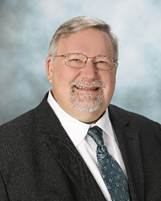
He directed the LEND Program at The Ohio State University and founded JBLM CARES, a $10 million autism resource center for military families. His writing spans clinical scholarship and long-form fiction. He is the author of The Mercy Directive and the six-novel Cassandra series, a completed political and medical fiction saga tracing the rise of the Cassandra system from its origins to its national and international legacy. His forthcoming memoir, The Quiet Architect, examines how conscience and structure collide in modern medicine.
He shares updates on LinkedIn.