In December 2001, I received an invitation that surprised me. U.S. Surgeon General David Satcher invited me to present at his final official conference, Closing the Gap: Surgeon General’s National Conference on Health Disparities and Mental Retardation.
The invitation was unexpected. At the time, I was directing Ohio’s Rural Developmental and Behavioral Clinic Initiative, a program designed to bring developmental and behavioral services to underserved communities. The work aligned closely with Dr. Satcher’s lifelong commitment to reducing health disparities, but I assumed I was simply one speaker among many.
When I arrived, I discovered otherwise. I had been scheduled as the final speaker of the morning session. The problem was that several presenters before me exceeded their allotted times, throwing the entire schedule into disarray. By the time I approached the podium, the session was running late, and my presentation faced being compressed into a fraction of its intended length.
Then something unusual happened. Dr. Satcher left the dais and took a seat directly in front of the podium. The gesture was impossible to miss. The surgeon general of the United States had positioned himself in the front row to watch my presentation.
Real physician voices, twice a week
Free, and one click to unsubscribe.
Suddenly, eight minutes became much more important than twenty-one slides. I had spent four years helping build and evaluate Ohio’s rural developmental clinic network. Like many physicians who care deeply about their work, I wanted to explain everything. The history. The data. The partnerships. The outcomes.
Instead, I was forced to focus on what mattered most. A favorite saying guided me through those eight minutes: “Vision without execution is hallucination.”
Health disparities were not an abstract concept in rural Ohio. They were children waiting months for evaluations. Families driving hours for specialty care. Communities with little access to developmental and behavioral services. Our challenge was not merely to identify those disparities. It was to build a practical system to reduce them.
We used emerging internet video conferencing technology to connect expertise with underserved communities. We partnered with local providers. We established regional clinics. We focused on implementation rather than rhetoric. In other words, we tried to translate policy into practice.
When I finished, I looked up. The audience stood. It was the only standing ovation I recall during the conference. To this day, I am not entirely certain whether they were applauding the program’s accomplishments or simply thanking me for ending on time. Either way, I was grateful.
The most important moment came afterward. As attendees gathered around, Dr. Satcher approached me and offered his hand. Then he said something I have never forgotten. “I was right in personally inviting you.” He went on to praise the program and mentioned that he had also heard one of my earlier presentations on autism research.
Then he said something far more profound. “You have a gift for program building to eliminate health disparities, and you can do it in the field; I can only draft policies that most ignore. You must carry on our mission in the field.”
Our mission. Those two words stayed with me long after I boarded the plane back to Columbus.
Physicians spend much of their professional lives seeking recognition from peers, departments, institutions, and journals. Yet this felt different. Dr. Satcher was not congratulating me for a successful presentation. He was reminding me that health equity does not happen because someone writes a report. It happens when someone builds something.
The longer I have practiced medicine, the more I appreciate the distinction. Policy matters. Research matters. Advocacy matters. But none of them improve a child’s life until someone converts ideas into functioning programs.
Children do not receive services because a strategic plan was published. Families do not gain access because a committee reached consensus. Communities do not become healthier because a conference ends with applause. Progress occurs when people do the difficult work of implementation.
That lesson shaped much of the remainder of my career. Whether developing programs for children with developmental disabilities, building rural service networks, training future leaders, or addressing health disparities, I repeatedly returned to the same principle: Vision must become execution.
Twenty-five years later, health disparities remain a national challenge. Many of the same conversations continue. Many of the same barriers persist. Yet I remain optimistic because I witnessed firsthand what can happen when committed individuals translate vision into action.
I also remember Dr. Satcher’s humility. Despite serving as surgeon general, despite leading national conversations on health disparities, he suggested that a physician working in communities could sometimes accomplish things that federal policy alone could not.
That observation was not a criticism of policy. It was an acknowledgment that meaningful change requires both visionaries and builders. We need leaders who can articulate a mission. We also need people willing to carry that mission into clinics, schools, hospitals, and communities.
I left that conference with more than a standing ovation. I left with a charge.
The mission was never the speech. The mission was the work.
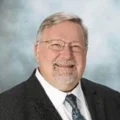
Ronald L. Lindsay is a retired developmental-behavioral pediatrician whose career spanned military medicine, academic leadership, and national advocacy for dignity-centered neurodevelopmental care. His NIH-funded work with the RUPP Autism Network helped define evidence-based approaches to autism and related developmental disorders.
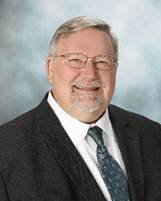
He directed the LEND Program at The Ohio State University and founded JBLM CARES, a $10 million autism resource center for military families. His writing spans clinical scholarship and long-form fiction. He is the author of The Mercy Directive and the six-novel Cassandra series, a completed political and medical fiction saga tracing the rise of the Cassandra system from its origins to its national and international legacy. His forthcoming memoir, The Quiet Architect, examines how conscience and structure collide in modern medicine.
He shares updates on LinkedIn.