My rushed morning started in the injection bay, where the radiology technician was getting ready to start an IV line to inject a contrast agent called gadolinium into the patient’s vein. As a third-year medical student, I was curious to finally see a part of patient care that often happens out of my view when working with physicians: imaging. I often saw physicians order imaging studies, read the radiologist reports, but never the process that happens in between.
The patient was a woman in her early fifties. As I reviewed her chart, it caught my attention that she had a history of breast cancer, now several years in remission, and had come in for a lumbar spine MRI to evaluate new-onset back pain. As she rolled up her sleeves and held out her arms, I saw her translucent and fragile skin. Her veins were delicate, like faded blue threads. I wondered if the cycles of chemotherapy had left her veins thin and scarred. This made it difficult for the technician to find an access point. It took two attempts to start an IV line, and I watched her wince and hold her breath each time the needle searched under her skin. This small procedure in and of itself carried significant anxiety for the patient.
I sat with her for a few minutes before she was taken into the MRI scanner. Her hands were sweaty and lay folded in her lap. She slowly spoke about her underlying claustrophobia. She said she wasn’t scared of the pain in her back, but rather the machine itself. In an effort to relieve her anxiety, I explained why this particular scan mattered. Her physician needed clear images of her spine to understand whether her back pain had a structural cause, an inflammatory cause, or something related to her cancer history, and an MRI was simply the best tool to see that clearly.
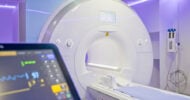
Seeing firsthand the psychological and physical toll required to gather those crucial images made me aware of the anxiety that patients feel when they undergo an imaging study. The moment a patient lies down on a narrow table and is guided into a machine that will, for the next half hour or so, be the only thing that exists in their reality. The patient is in an enclosed space and the face is often very close to the top of the machine. The physical constraints, the rigid positioning, the absolute need for immobility, and the lengthy duration can all make the experience discomforting.
Real physician voices, twice a week
Free, and one click to unsubscribe.
Understanding the emotions that patients experience when undergoing imaging procedures reinforced the importance of patient safety and comfort. For instance, by explaining to patients why they are about to undergo a certain imaging procedure. While many of these tasks are routinely done by technicians, it is also important for physicians to be aware of these realities. Every imaging study imposes a physical, financial, and emotional toll on a patient. As such, it is important to be mindful of ordering only necessary sequences, avoiding redundant scans, and actively weighing whether the diagnostic yield justifies the strain placed on the patient.
This experience also made me curious about the different kinds of medical equipment used for imaging. What was especially fascinating was learning about the numerous innovations that have led to improvements in patient care experience. For instance, for patients with significant claustrophobia, some centers have wide-bore or open MRI machines that reduce the sense of enclosure. Mild sedation can be arranged in advance for patients who need it and discussed with the ordering physician ahead of time. Coping techniques such as closing eyes before entering the bore, playing music, having a technician talk the patient through each stage, and practicing slow breathing can also make a meaningful difference.
I think back to the patient sitting with her hands folded nervously in her lap as she prepared to enter the MRI scanner. Her discomfort, fear, and uncertainty reminded me that every image carries a human experience behind it. I hope to practice medicine with intention by staying mindful of whether obtaining imaging is necessary, how it can be made safer, and how the patient can feel supported along the way.
Riya Sood is a medical student.