After nearly four decades in medicine, I have had more than my fair share of encounters with academic publishing, some pleasant and some less so. I spent the earlier part of my career in academic medicine and, even after moving into private practice, I never quite shook the urge to write. These days I gravitate toward essays and books, but working alongside students has pulled me back into case reports and literature reviews. Their enthusiasm has rekindled my own, and I enjoy helping them navigate the, at times, bewildering maze of technical publications.
I recently reviewed the publishing options available for one of these collaborative projects and decided to submit our paper to Cureus, a peer-reviewed, open-access journal. We took the editorial feedback seriously and addressed it carefully. I was more than a little deflated to learn that our article wouldn’t move forward unless we purchased “Preferred Editing.” At $480, it was no trivial expense. Still, after investing so much time and effort in the case study and literature review, I decided to look past the requirement I hadn’t anticipated and meet the requirement. Doing so also raised a larger question about fairness for the trainees I mentor.
Let me be clear about what that fee is and isn’t. Cureus states that it charges no article processing charges and that roughly one quarter of authors meet its formatting and language standards and publish for free. The rest, along with review articles and papers that exceed author or reference limits, must purchase Preferred Editing before peer review begins. The company says the price rises with the amount of work required and that the average is around $385, which it describes as a fraction of the $1,500 to $4,000 that typical journals charge in article processing charges (APCs). Mine was above that average, but the comparison deserves a hearing.
It is not just marketing. A 2024 analysis of 87 pathology journals found a median open-access cost of $1,735 in fully open-access journals and $3,710 in hybrid journals, and its authors cautioned that such charges may burden early-career physicians. A preprint study of medical researchers described APCs averaging $2,000 to $3,000 per article. Against those numbers, $480 is modest. Still, no one in our group anticipated the expense.
Real physician voices, twice a week
Free, and one click to unsubscribe.
In my experience with other journals, mandatory editing fees are quite uncommon. Some publications offer optional editing services for a fee, but it is rare to see payment required to keep a submission in play. Cureus’s approach struck me as unusual, at least compared with what I have encountered over the years. For completeness, Cureus also accepts editing from an approved outside professional service, a route worth pricing out. However, Cureus does not accept tools like Grammarly, and such editing carries no guarantee of publication.
Here is the question that stayed with me, and I feel responsible for raising it, since students and residents look to mentors for guidance. Cureus says that editing fees do not influence editorial decision-making, and its FAQ notes that authors whose papers are rejected after peer review may receive a partial refund minus a $50 processing fee. Those are reassuring policies. Still, paying does not guarantee publication, and I cannot help wondering what the actual acceptance rate is for authors who pay versus those who do not. I couldn’t find that comparison published, and sharing it would go a long way toward building trust. I also wonder whether such fees are common across journals or unique to Cureus, and what a student or resident should do when even a few hundred dollars is out of reach.
I must admit, though, that the editing process was impressively professional, and the final product was better than anything I could have managed on my own, no small admission for someone who has been at this as long as I have. My initial grumbling aside, the editing genuinely improved the article. In hindsight, it was money well spent, particularly since I wanted to set a good example for my students. The students themselves had mixed reactions. Some were understandably concerned about the unexpected financial hurdle and wondered how they would handle similar costs in future projects. Others were relieved to see their writing polished and felt more confident about sharing their work. A few said they appreciated seeing firsthand the difference professional editing can make. Everyone agreed, though, that these expenses can be daunting for trainees.
I am not the only one asking. A 2024 international study of early-career researchers found that cost remains a major barrier, and that many struggle to understand the expenses in an increasingly complicated publishing landscape. That matches what I saw in my own students.
There are practical ways to help. The most direct step is to teach students to submit a carefully formatted manuscript in the first place, because Cureus says it will waive the fee for articles that meet its standards. Authors who are asked to pay can also request a discount, which the journal offers after an article has been deferred for editing. Beyond that, encourage students to use institutional resources. Many universities and hospitals offer free or low-cost writing centers or academic editing services, and some departments set aside discretionary funds for publication expenses. Peer editing groups, within student organizations or across disciplines, can provide valuable feedback and reduce dependence on paid services. Mentors and faculty with publishing experience can also point to strategies and resources that young authors may not know exist. Making these options more visible will help more of them share their work.
As with most things in medicine, the primary goal of academic writing should be to improve patient care and properly educate the next generation of clinicians. A fee that pays for real editorial work should not be scandalous. A fee that quietly influences the chances of publication would be. I came away believing Cureus is closer to the first, but the answer should not depend on one mentor’s goodwill and a spare $480. Journals, institutions, and those of us who guide trainees all share responsibility for keeping the door open and promoting high-quality publications that advance the field.
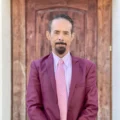
Francisco M. Torres is an interventional physiatrist specializing in diagnosing and treating patients with spine-related pain syndromes. He is certified by the American Board of Physical Medicine and Rehabilitation and the American Board of Pain Medicine and can be reached at Florida Spine Institute and Wellness.

Dr. Torres was born in Spain and grew up in Puerto Rico. He graduated from the University of Puerto Rico School of Medicine. Dr. Torres performed his physical medicine and rehabilitation residency at the Veterans Administration Hospital in San Juan before completing a musculoskeletal fellowship at Louisiana State University Medical Center in New Orleans. He served three years as a clinical instructor of medicine and assistant professor at LSU before joining Florida Spine Institute in Clearwater, Florida, where he is the medical director of the Wellness Program.
Dr. Torres is an interventional physiatrist specializing in diagnosing and treating patients with spine-related pain syndromes. He is certified by the American Board of Physical Medicine and Rehabilitation and the American Board of Pain Medicine. He is a prolific writer and primarily interested in preventative medicine. He works with all of his patients to promote overall wellness.