At 2 a.m. on Saturday, Oct. 3, 1970, someone started pounding on our apartment door. My mother thought it was a prank. She had ignored the buzzer downstairs because neighborhood kids occasionally rang doorbells in the middle of the night. My uncle arrived with his service pistol drawn, expecting trouble.
Instead, he found two Air Force officers standing at the door. One was a lieutenant colonel. The other was a chaplain. My father’s aircraft had crashed in Taiwan the previous night, Oct. 2, 1970.
My mother had heard a brief report on the 11 p.m. news. She made no connection because my father was supposed to be in the Philippines completing training. What we did not know was that he had finished early and boarded a flight to his new assignment.
For a week, we hoped. Perhaps the aircraft had ditched at sea. Perhaps there were survivors. Perhaps my father was sitting in a life raft awaiting rescue.
Real physician voices, twice a week
Free, and one click to unsubscribe.
A week later, the official notification arrived. There were no survivors. The plane crashed into a mountain in very foul weather conditions. My father was a passenger, just after requalifying as a senior navigator in the same type of plane: a C-130E.
I was thirteen years old. My father, an Air Force major, up from the enlisted ranks, was dead.
Today I am what military families call a Gold Star son.
What I remember most from that time is not the funeral, the folded flag, or the military honors. I remember the absence.
There was no organized system to support military children after the death of a parent. No developmental screening. No mental health assessment. No coordinated outreach. No one asked whether a thirteen-year-old suddenly trying to become “the man of the family” might need help.
People assumed we would somehow manage. And somehow, we did.
My mother went into psychological shock. For months she struggled to make decisions. My younger sister was too young to understand what was happening.
So I became the family’s unofficial logistics officer. I deposited checks. I helped pay bills. I learned budgeting. I bought groceries riding a bike to the market a mile away. I helped my mother navigate the bureaucracy that follows a military death.
Children are remarkably resilient. But resilience should never be confused with lack of need.
Years later, I became a developmental pediatrician. Looking back with professional eyes, I now recognize what I could not see as a child. The death of a parent is not a single event. It is a developmental event. Its effects unfold for years.
The needs of a grieving five-year-old differ from those of a grieving thirteen-year-old. The needs of a grieving thirteen-year-old differ from those of a grieving college student. Grief evolves as children mature.
Yet more than half a century after my father’s death, we still lack a comprehensive system to identify and support military children following the death, catastrophic injury, or severe psychological disability of a parent. This is particularly striking because we know how to mobilize support when tragedy strikes elsewhere.
After school shootings, communities deploy grief counselors, mental health professionals, and crisis response teams. When natural disasters occur, support services arrive rapidly. These responses are appropriate and necessary.
But where is the equivalent response for military families? Where is the systematic follow-up for the children of the service member killed in training, combat, or accident? Where is the long-term monitoring for children whose parent returns home with life-altering injuries or debilitating post-traumatic stress disorder? Where is the coordinated effort to ensure that these children do not simply survive, but thrive?
During my own career, I helped build systems of care for military children. I worked to create continuity and access for families whose lives were repeatedly disrupted by deployments, transfers, and sacrifice.
Those efforts taught me an important lesson. Good outcomes do not happen because people are resilient. Good outcomes happen because resilient people are supported by effective systems. Military families deserve no less.
The United States asks extraordinary things of its service members. We ask them to accept danger, separation, hardship, and, in some cases, death. When the worst happens, we honor their sacrifice with flags, ceremonies, and memorials. Those traditions matter.
But honor alone is not enough. A folded flag cannot provide developmental support to a grieving child. A bugler playing Taps cannot identify depression in an adolescent. A military funeral cannot build the long-term network families need to navigate years of loss.
Fifty-six years after my father’s death, I remain grateful for the people who helped my family endure. But I still find myself asking the same question. Why was there no system? And why, after all these years, are we still depending so heavily on individual resilience when we should be providing organized support?
The nation has never lacked the ability to honor those who made the ultimate sacrifice. The challenge before us is to honor them more completely by caring for the families they leave behind.
That would be a tribute worthy of their service.
Ronald L. Lindsay is a retired developmental-behavioral pediatrician whose career spanned military medicine, academic leadership, and national advocacy for dignity-centered neurodevelopmental care. His NIH-funded work with the RUPP Autism Network helped define evidence-based approaches to autism and related developmental disorders.
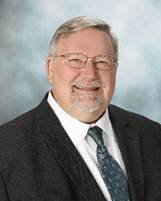
He directed the LEND Program at The Ohio State University and founded JBLM CARES, a $10 million autism resource center for military families. His writing spans clinical scholarship and long-form fiction. He is the author of The Mercy Directive and the six-novel Cassandra series, a completed political and medical fiction saga tracing the rise of the Cassandra system from its origins to its national and international legacy. His forthcoming memoir, The Quiet Architect, examines how conscience and structure collide in modern medicine.
He shares updates on LinkedIn.