When I was ten years old in Japan, I got a bicycle. It was a simple machine: one speed, coaster brake, no gears, and no pretensions. Designed for the flat Kanto Plain surrounding Tokyo, it was perfectly suited for its environment. For the next decade, it carried me through childhood, adolescence, and multiple moves as an Air Force dependent. The bicycle never failed me.
After my father died and our family returned to Massachusetts, that bicycle became more than transportation. It was how I helped the family function.
Twice a week, I rode 1.2 kilometers to Star Market to buy groceries. The bicycle had room for exactly two paper grocery sacks. When you’re the teenage “man of the family,” carrying groceries home matters.
I also walked 1.9 kilometers to Rockland High School each day, climbing roughly a kilometer in elevation along the route. Massachusetts was a far cry from the flat terrain of Japan.
Real physician voices, twice a week
Free, and one click to unsubscribe.
The bicycle hadn’t changed. The environment had. I would discover that lesson repeatedly throughout life.
By the time I entered Boston University, the old Japanese bicycle was showing its limitations. The hills of Boston were simply too much for a one-speed machine designed for the Kanto Plain.
My first summer job involved filing library index cards into alphabetical order at Boston University. Younger readers raised on computerized catalogs can scarcely imagine the monotony. Hour after hour, I sorted cards while earning enough spending money to maintain a measure of independence.
The work was tedious. But it paid for something important. I purchased a used green Raleigh ten-speed bicycle.
The salesman assured me that green was a healing color. At the time, I assumed he was simply trying to close a sale. Decades later, I am not so sure.
The Raleigh became a constant companion. It carried me across Boston University’s campuses, through the Modular Medical Integrated Curriculum (MMEDIC) program, and through medical school.
During medical school, I completed active-duty assignments at Travis Air Force Base and spent three months traveling through California and Hawaii between my third and fourth years of medical school. The Raleigh came with me.
It traveled to Travis Air Force Base, where I completed a family practice rotation. It traveled to Santa Barbara, where I rotated through radiology and slept in a hospital bed on a floor reserved for President Ronald Reagan whenever he visited the area. Years later, the same hospital would become known as the birthplace of Princess Lilibet, daughter of the Duke and Duchess of Sussex.
The bicycle came with me to Stanford for a hematology-oncology rotation and later to Honolulu for a much-needed vacation before returning to the demands of medical training. Wherever I went, the Raleigh went too.
Looking back, I realize it accompanied me through one of the most transformative periods of my life. It witnessed the transition from medical student to physician in training, carrying me through experiences that stretched from military medicine to academic medicine and across thousands of miles of the Pacific coast. Wherever I went, the Raleigh went too.
Money remained tight. Six-week active-duty tours paid approximately $1,200 compared with a $400 living stipend. Following what I called the “Dreist Rule,” 25 percent went to my mother for food and board. That was simply how our family operated. The bicycle represented independence, mobility, and adulthood.
Then residency arrived. And the Raleigh was stolen. I replaced it with a blue Raleigh bicycle.
At first, it seemed like nothing more than replacing stolen property. In retrospect, it became something far more important.
During residency, I suffered a significant anterior cruciate ligament (ACL) injury. The ligament was never reconstructed. Years later, knee replacement surgery confirmed that one ACL bundle had been torn while another remained intact. At the time, however, I simply knew that my knee hurt.
Patients still needed to be seen. Rounds still needed to be completed. Training did not stop.
I recently found a photograph from that period. White scrubs. Beard. Two crutches. I conducted morning rounds seated on a rolling stool.
I knew exactly how many crutch-assisted steps separated the parking garage shuttle stop from the hematology-oncology wards where I spent two months. One hundred fifty-nine. Not approximately. Exactly. Every step counted.
Rehabilitation sessions followed the workday. My orthopedic surgeon also happened to be the Minnesota Vikings’ team physician. Rehab was often followed by immersion in an ice bath designed for athletes. The blue bicycle became part of that recovery process.
After 36-hour call shifts, my brain was exhausted, but my body still had energy to burn. Anyone who trained in medicine during that era understands the feeling. Your mind is mush, but you aren’t ready to stop moving. So I rode.
My apartment sat half a block from Lake Calhoun, now known as Bde Maka Ska. From there I could ride the entire Minneapolis Chain of Lakes route, a 7.6-mile loop that connected Lake Calhoun, Lake of the Isles, and Cedar Lake.
I rode hard. Those rides were not exercise. They were therapy. They were recovery. They were how I reclaimed a little sanity after the demands of residency.
Afterward, I would sit in my third-floor apartment overlooking the lake, watch lightning storms roll across the water, and enjoy a Coors Light while nature provided the evening entertainment.
Looking back, I realize the bicycles themselves were never the story. The Japanese bicycle taught me responsibility. The green Raleigh taught me independence. The blue bicycle taught me resilience. Each arrived when I needed it most.
The salesman who sold me the Raleigh insisted that green was a healing color. Perhaps he was right. Or perhaps healing has less to do with color than with continuing to move forward when circumstances change.
A bicycle designed for the Kanto Plain could not conquer Boston’s hills. A teenager became a physician. A medical student became a resident. An injured knee learned to adapt. A stolen bicycle gave way to another.
The terrain changed. The equipment changed. Life changed.
The lesson remained the same: Adapt, keep moving, and trust that the road ahead can still carry you where you need to go.
Ronald L. Lindsay is a retired developmental-behavioral pediatrician whose career spanned military medicine, academic leadership, and national advocacy for dignity-centered neurodevelopmental care. His NIH-funded work with the RUPP Autism Network helped define evidence-based approaches to autism and related developmental disorders.
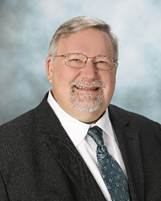
He directed the LEND Program at The Ohio State University and founded JBLM CARES, a $10 million autism resource center for military families. His writing spans clinical scholarship and long-form fiction. He is the author of The Mercy Directive and the six-novel Cassandra series, a completed political and medical fiction saga tracing the rise of the Cassandra system from its origins to its national and international legacy. His forthcoming memoir, The Quiet Architect, examines how conscience and structure collide in modern medicine.
He shares updates on LinkedIn.