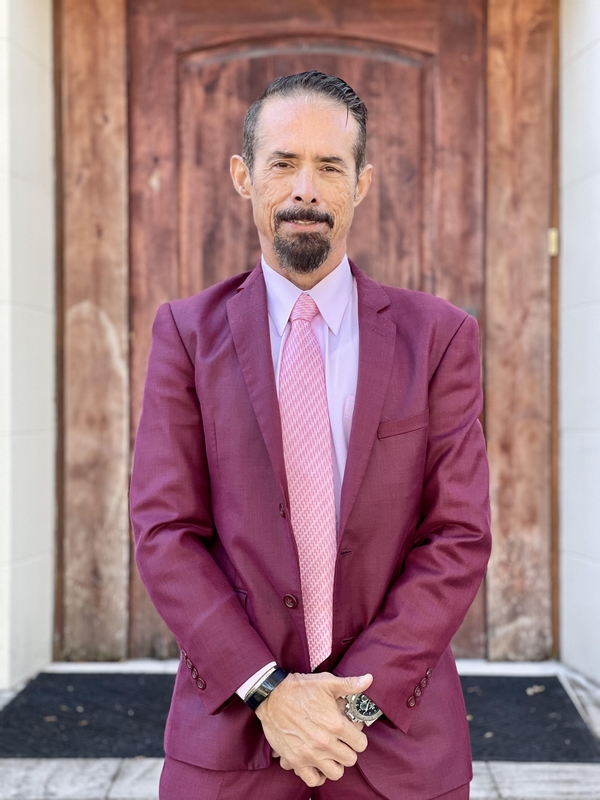
Francisco M. Torres is an interventional physiatrist specializing in diagnosing and treating patients with spine-related pain syndromes. He is certified by the American Board of Physical Medicine and Rehabilitation and the American Board of Pain Medicine and can be reached at Florida Spine Institute and Wellness.
Dr. Torres was born in Spain and grew up in Puerto Rico. He graduated from the University of Puerto Rico School of Medicine. Dr. Torres performed his physical medicine and rehabilitation residency at the Veterans Administration Hospital in San Juan before completing a musculoskeletal fellowship at Louisiana State University Medical Center in New Orleans. He served three years as a clinical instructor of medicine and assistant professor at LSU before joining Florida Spine Institute in Clearwater, Florida, where he is the medical director of the Wellness Program.
Dr. Torres is an interventional physiatrist specializing in diagnosing and treating patients with spine-related pain syndromes. He is certified by the American Board of Physical Medicine and Rehabilitation and the American Board of Pain Medicine. He is a prolific writer and primarily interested in preventative medicine. He works with all of his patients to promote overall wellness.
As a pain management physician, I often receive requests to authorize or renew patients’ accessible parking permits. These usually are routine, but not always. One morning, a patient, whom I’ll refer to as Steve, came into my clinic.
Steve was mainly a healthy man in his 40s. He had had chronic pain since an accident on a construction job site several years ago. He had successfully filed for disability, with a …
Read more…
The ethical dilemma of accessible parking permits
Over thirty years as a physician, I have proudly and intentionally developed my subspecialty in pain management. As an interventional physiatrist, it is my chosen calling to improve the quality of life of people in pain and help them get moving again. I’ve had the privilege of overseeing many remarkable recoveries, including those by patients who had little hope when they first came to my office. Though this has been …
Read more…
30 years in pain management: Transforming lives beyond opioids
I started having children towards the end of my medical school. By the time I became a resident, I already had two young boys. My wife was also a pathology resident at that time. We worked hard and were fortunate to have parents who helped us occasionally. However, we still missed out on a lot when my family relocated to Florida; my sons began their first years in school while …
Read more…
Fulfilling fatherhood and a thriving medical practice: my story
The healing potential of human interaction should always be considered, particularly when practicing medicine. Early in my medical career, I worked in the electromyography laboratory at Charity Hospital, Louisiana State University. During my time there, I saw an astonishing variety of patients. Among other things, we were the hospital of choice for the nearby Louisiana State Penitentiary, Angola, or “The Alcatraz of the South.” This prison was infamous for housing …
Read more…
Unlocking compassion: lessons from a prison clinic
As medical doctors, we think we can help alleviate physical suffering in almost any situation. When the 2010 earthquakes shattered Haiti’s capital, I felt compelled to help. I had extensive pain management experience and training as a physiatrist. I thought I was ideally suited to lend a hand. At the time, this all seemed obvious. But I had never been in a disaster zone before, which made me hesitant.
Still, my …
Read more…
From pain management to Port au Prince: a doctor’s journey in disaster relief
I was an intern who had recently graduated from medical school with little hands-on experience when the patient signaled me to his bedside. Initially, I did a double-take, wondering if the man would be asking for me. I glanced anxiously at the morning rounds as they hurried to the next patient. I’d just watched my attending physician present this patient’s case, speaking about him as though he weren’t there. The …
Read more…
A intern’s journey in delivering tough diagnoses
I was recently reminded that you always learn something from your patients, no matter how long your medical profession is. I was reminded of this when I had the opportunity to treat a young person in transition. I reviewed the chart before walking into the exam room. Among other things, it listed the patient’s chief complaint (i.e., in this case, lower back pain), age of nineteen, female sex, and a …
Read more…
Lessons from treating a transgender patient
I recently had an incident involving a long-time patient. This particular encounter proved to be challenging. The patient had chronic pain for years and had already exhausted all conventional treatment options. Ironically, he was otherwise healthy and fit. His recalcitrant condition made him a prime candidate to be treated with a spinal sord stimulator (SCS).
An SCS is an implantable device with two electrode leads connected to a battery-powered pulse generator. …
Read more…
Debating the role of psychiatric assessments in medical decisions
Treating patients with respect and dignity is essential to the medical profession. This is true even when the patient lies unconscious in the operating room. It seems unnecessary to stress the importance of creating a secure and comfortable environment to ease the patient’s anxiety and stress and develop confidence. Respect is also crucial to promote successful outcomes. By prioritizing these values, medical professionals can ensure that patients feel valued and …
Read more…
Patient respect in medicine: Ensuring well-being and trust
Recently, growing attention has been given to the fact that some types of surgery may be overrated. This article succinctly summarizes the situation, citing dozens of studies showing that some orthopedic surgeries popular in past decades had no better results than non-invasive treatments.
This issue is deeply personal to me. In 2020, during the pandemic, I sustained an injury to my left knee, experiencing severe pain, swelling, and loss of …
Read more…
Optimize your knee injury recovery without surgery
In the United States, physicians are typically categorized as either academics or private practitioners. However, a case can be made that it is possible to construct a career path that incorporates both professional avenues. I was put in an excellent position to realize this during my fellowship at LSU, which structured some parts of its community medicine program in a way that resembled private practice.
I enjoyed my experience as a …
Read more…
Combining academic medicine and private practice: a success story
There were no smartphones when I was a medical resident in the late 80s in Puerto Rico. During my last year, while waiting for a lecturer to arrive, I grabbed a medical journal from the conference room table to kill some time. I flipped through the pages, skimming the titles of the articles and looking at some of the advertisements. When I was about to put the journal down, I …
Read more…
Why taking risks is worth it: a doctor’s journey from uncertainty to opportunity
Paula came to my office on a Monday afternoon, a few months after burying her husband. She and John had been inseparable. They were both my patients, so I knew John had spent the last six months battling lung cancer. They had been married forty-five years when John died. I sincerely offered Paula my condolences on that Monday afternoon. I could tell she was in pain and shared how she …
Read more…
Not listening carefully to a vulnerable patient can become a matter of life or death
Talking about weight isn’t easy. Case in point, I was scheduled to perform five back-to-back fluoroscopically guided procedures. This was not unusual, but all my scheduled patients happened to be seriously overweight. Excess fat and skin made it difficult to see my needles during the interventional procedures. Therefore, what was ordinarily a routine procedure suddenly became complex and challenging.
I am an interventional pain management physician. For many of my patients, …
Read more…
Are we too scared to talk to our patients about their weight?
It has always been difficult for medical professionals to balance the time needed for personal care, both physical and emotional, against the overwhelming demands of their time. This is particularly true today, given the extraordinary pressures created by health challenges generated through external factors, such as the pandemic and those caused by genetics or lifestyle choices. However, focusing on this balance is critical for the welfare of both the doctors …
Read more…
The importance of non-judgmental empathy