Post Author: Gerald Kuo

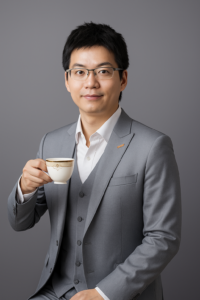
Gerald Kuo, a doctoral student in the Graduate Institute of Business Administration at Fu Jen Catholic University in Taiwan, specializes in health care management, long-term care systems, AI governance in clinical and social care settings, and elder care policy. He is affiliated with the Home Health Care Charity Association and maintains a professional presence on Facebook, where he shares updates on research and community work. Kuo helps operate a day-care center for older adults, working closely with families, nurses, and community physicians. His research and practical efforts focus on reducing administrative strain on clinicians, strengthening continuity and quality of elder care, and developing sustainable service models through data, technology, and cross-disciplinary collaboration. He is particularly interested in how emerging AI tools can support aging clinical workforces, enhance care delivery, and build greater trust between health systems and the public.

Gerald Kuo, a doctoral student in the Graduate Institute of Business Administration at Fu Jen Catholic University in Taiwan, specializes in health care management, long-term care systems, AI governance in clinical and social care settings, and elder care policy. He is affiliated with the Home Health Care Charity Association and maintains a professional presence on Facebook, where he shares updates on research and community work. Kuo helps operate a day-care center for older adults, working closely with families, nurses, and community physicians. His research and practical efforts focus on reducing administrative strain on clinicians, strengthening continuity and quality of elder care, and developing sustainable service models through data, technology, and cross-disciplinary collaboration. He is particularly interested in how emerging AI tools can support aging clinical workforces, enhance care delivery, and build greater trust between health systems and the public.
Innovation in health care is often described in technological terms (new devices, advanced imaging, digital platforms). But some of the most meaningful forms of innovation happen quietly, inside small hospitals struggling to survive.
This is the story of a community hospital in Taiwan that once faced collapse, and the unexpected lessons it offers to health care leaders everywhere.
Looking for a way forward
In the late 1990s, the hospital was in serious decline. …
Read more…
Last winter, a senior nurse in our psychiatric unit told me, “The dashboard says we’re low-risk. But during night shifts, I don’t even feel safe walking to the bathroom.”
The monthly quality report on her desk said the same thing it had said for nearly a year: “Violence incidents: no significant difference among the three wards (p > .05).”
On paper, her ward looked normal. At the bedside, it was anything but.
Her …
Read more…
He spent his youth memorizing lungs. That was how he learned chest X-rays, not by chasing abnormalities, but by studying thousands of perfectly normal films until his eyes could sense when something was ever so slightly wrong. “If you don’t know normal,” he would tell residents, “you’ll never understand abnormal.”
He was a chest physician, not a radiologist, yet his skill with chest imaging became legendary. At Taipei Veterans General Hospital, …
Read more…
The day before the attack, a senior physician at a Catholic university hospital in Taiwan sat with young medical students at noon, talking not about lawsuits or hospital finances, but about Brahms. He loved four-hand piano pieces, especially Brahms’s Hungarian Dances, and he would explain how two players must breathe together, listen to one another, and balance passion with discipline. For him, this was also a lesson about medicine: You …
Read more…