Physicians, nurses, chaplains, and families writing on KevinMD about comfort, dignity, and quality of life in serious illness: hospice and why it is used late, the prognosis conversation, goals of care, symptom management, and what it is like to care for a dying patient. Most contributors work in palliative medicine or hospice, or have been the family at the bedside. For a maintained record of what physicians have said about dying and the decisions at the end of life since 2004, including the assisted-dying debate with both sides at equal weight, see End of life: what physicians say, in their own words.
Are advance directives any better than they were four years ago when COVID was surging? Are patients still comfortable with being placed on ventilators? Do physicians better understand how to treat COVID as a serious illness?
Physicians provide emergency measures unless there’s an advance directive to the contrary. Only one-third of Americans have advance directives when “down for the count” with serious illness.
Last month, the daughters of Wendy Miller, a 68-year-old author of three bestselling books about her experience with dementia, posted online her final words: “In the end, I died simply by deciding not to eat or drink anymore.”
Her stark statement reminded me of my interviews with Dan Winter, 62, which had begun nine months before he, too, took his own life. Alzheimer’s disease was slowly disassembling Dan’s rich and …
I walk into the patient’s hospital room during evening rounds. He looks pale and tired, having recently completed a round of chemotherapy for his stage IV pancreatic cancer. His wife is at the bedside, scared and concerned about her husband’s rapid decline. I sit down to discuss goals of care when the patient immediately says, “I can’t do this anymore.” His wife responds immediately to the patient: “Of course you …
How do you make sense of someone dying? The only way I know is to put it into some context so that, if possible, some good can come of it.
Some of you may have known about my dad’s Parkinson’s disease. He’s had a fairly rapid decline over the past four months, and now he’s rapidly declining again. He has been on home hospice for the past three months. He has …
We all have those moments in medicine when we know that care has become more futile. Then we do everything in our power to educate, support, gently guide, and give permission to patients and families. There are moments that treating for a cure goes against our tenet to “first do no harm.”
I never would have imagined that I would be on the family side of these debates. I had a …
At a time when many states are considering assisted suicide legislation, I was interested to encounter the perspective of the well-known bioethicist Arthur Caplan who recently expressed his support for these laws on these pages.
While I appreciate Caplan’s endorsement of protecting doctors’ ability to refuse, as a matter of conscience, to participate in assisted death, I admire his insistence on restrictions or safeguards within these laws to …
America expends much time, effort, and resources when people become seriously ill, bringing many face-to-face with their own mortality. For patients and their families, it is an emotional and difficult time under the best of circumstances. As a cardiologist, I participate in the decision-making that comes at this time, and it has provided me with the honor of delivering care that has allowed patients to rebound from acute illness and …
Join Thaddeus Mason Pope, an expert in medical law and clinical ethics, as we delve into the complex landscape of medical aid in dying (MAID) legislation. Explore the evolution of MAID legislation over …
Medical aid in dying (MAID) is poised to be one of the hottest political health care issues of 2024. As in 2023, more than a dozen states will hold both impassioned hearings in legislative chambers and equally fervent debates in the community. Already, nearly twenty states have introduced bills to authorize MAID this year. They seek to join the eleven states that already authorize MAID for 73 million Americans (California, …
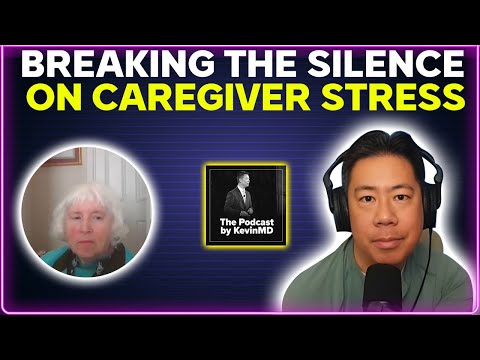
Join R. Lynn Barnett, a patient advocate. We’ll explore the world of caregiving, its challenges, and the profound impact it has on individuals and families. Discover valuable insights on caregiver stress, self-care, and the importance of respite …
My grandmother had a beautiful garden that she expanded through years of effort in her terraced backyard. Despite rocky soil and areas of deep shade, her flowers blossomed, and the garden thrived. I do not know if her skills as a gardener were innate or learned through trials and failures, but I know my garden could certainly benefit from her guidance now.
In the medical field, there is a long-held misconception …
I’m writing this in November, which is National Caregiver Month. It’s also Alzheimer’s Awareness Month. But regardless of when you’re reading this, if you’re a caregiver, every month is “caregiver month.”
Ironically, it’s also just a few days after the former first lady, Rosalynn Carter, passed away. She was acutely and astutely aware of the role of the caregiver and the toll that it can take on you. She so insightfully …
I was the “stranger” at my father’s bedside. Shortly after his 84th birthday, my father fell and landed in the hospital with a split scalp. His metastatic prostate cancer was an incidental finding, and superimposing this wildly invasive tumor on his Parkinson’s-compromised body marked his first steps onto his death path.
I came to my father’s final illness as his daughter, a doctor, and a clinical bioethicist. While I was unable …
“I cannot escape death, but at least I can escape the fear of it.”
– Epictetus
I wish more people knew that quote during the pandemic. I write this on November 1st, celebrated as Dia de Muertos or “Day of the Dead.” Epictetus and the other Stoics knew that death is inevitable, that life can change in an instant, and viewed it as a reminder to live each day purposefully and virtuously. …
Dame Cicely Saunders, the founder of the modern hospice movement and palliative care, famously said, “You matter because you are you, and you matter to the last moment of your life.” This quote has become the central philosophical tenet of palliative care. It implores us to remind patients, who may be feeling helpless, hopeless, or worthless, that they matter. There is abundant evidence that patients approaching death are susceptible to …
Join Thaís Salles Araujo, an internal medicine resident. Discover the potential benefits, challenges, and the need for greater awareness and education in integrating these therapies into modern medicine. Gain insights into the evolving landscape of patient care, with a …
Finishing up a consultation in the ICU, the nurses approached me to see how it went. “Did you get the DNR?” I explained that I enter these conversations without an agenda. My first goal is to develop rapport, reading the room to gauge how far I can take this conversation. What are they ready to hear? This phase of the consult is akin to preparing the soil for planting. The …
During the COVID pandemic, I wished I could put out a public service announcement for physicians, patients, and families about end-of-life care. Palliative care is critical to hospitalist practice and one of the least discussed fields of medicine. It also is a major …
Join Althea Halchuck, a patient advocate. We explore critical insights into end-of-life care, the ethical considerations around antibiotic use, and the quest for a peaceful, dignified death. Delve into the complex world of health care decision-making in …