

Listen and followApple PodcastsSpotifyYouTubeMore apps · Browse all episodes
“For too long have gardeners allowed our food supply to be dependent on mysterious logistics. We have criminally allowed our own food growing capacity to be displaced. Growing something you eat and trading with people who grow what you don’t are ways to be less reliant on Big Food and its failed connections and also to help your neighbors.
We have the opportunity to subvert the dominant supply chain. Local gardens and gardeners should be at the center of a new, three-part food supply chain — grow, share, eat.”
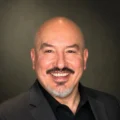
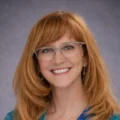
John La Puma is an internal medicine physician and author of ChefMD’s Big Book of Culinary Medicine. He can be reached at What is Nature Therapy?
He shares his story and discusses his KevinMD article, “Grow, share, eat: We have the opportunity to subvert the dominant supply chain.”
Reflect and earn 1.0 AMA PRA Category 1 CME for this episode.
Did you enjoy today’s episode?
Please click here to leave a review for The Podcast by KevinMD. Subscribe on your favorite podcast app to get notified when a new episode comes out!
Do you know someone who might enjoy this episode? Share this episode to anyone who wants to hear health care stories filled with information, insight, and inspiration.

Hosted by Kevin Pho, MD, The Podcast by KevinMD shares the stories of the many who intersect with our health care system but are rarely heard from.


Transcript
Kevin Pho: Hi, welcome to the show, where we share the stories of the many who intersect with our health care system but are rarely heard from. My name is Kevin Pho, founder and editor of KevinMD. Today on the show we have John La Puma. He is an internal medicine physician, and he’s the author of the book ChefMD’s Big Book of Culinary Medicine. He wrote the KevinMD article “Grow, share, eat: We have the opportunity to subvert the dominant supply chain.” John, welcome to the show.
John La Puma: Kevin, great to be here with you. Thanks for inviting me.
Kevin Pho: We’ll get into your article in a little bit, but first off, can you share your story and journey to where you are today?
John La Puma: I’m a board-certified internist. I practice in Santa Barbara, California. Currently I’m doing mostly telehealth, about nutrition, where I’ve focused for about 20 years. I had another career in medical ethics for about 10 years before that. Currently my work concerns both nutrition and nature. I’m really interested in the way that nature changes the mind and the body, and simple activities in it can be, I think, both preventative and therapeutic tools.
Real physician voices, twice a week
Free, and one click to unsubscribe.
Kevin Pho: As you know, nutrition isn’t a big part of medical education. So talk about the importance of why physicians need to learn more about nutrition, and how can they go about doing so?
John La Puma: Michael Roizen and I (Michael is the founding director at the Cleveland Clinic Center for Wellness) taught the first class in cooking and nutrition in the United States, at the State University of New York Upstate, in 2003. Since then, about 50 percent of medical schools now teach a class or offer a class in culinary medicine, which, as you know, blends the art of cooking with the science of medicine to create restaurant-quality meals that help to prevent and treat disease.
I’ve been fortunate enough to have a good deal of experience with this, both writing books and doing TV shows, and introducing this subject both at a public level and to clinicians as a therapeutic tool. I think most people don’t appreciate that many patients would actually prefer it to a medication, because of fear of the side effects of medication, sometimes the expense of medication, and curiosity about what really is helpful about food. Not just its flavor, taste, and beauty, which of course are all important, but also how it changes the body, both at a chemical level and, of course, at a clinical one. So nutrition, I think, is another tool in the toolbox of the clinician’s armamentarium, much like a nature prescription, whether that’s forest bathing or gardening, as I know we’ll get into with the supply chain article.
Kevin Pho: I regret to say that I’m one of those doctors who did not get the opportunity to take a culinary medicine course. I wish I did. Tell us what exactly such a course entails and what one can expect to learn in a culinary medicine course in the United States.
John La Puma: Although there are now culinary medicine departments or subdepartments worldwide, I just had some people at my farm here in Santa Barbara from Germany who were going to guest teach a week at UCLA, and they stopped by to get some advice and supplies and stuff, which was terrific. So it’s now become a worldwide phenomenon, culinary medicine.
I think what people should learn is how cooking techniques can change not just flavor but also nutrition and nutrient bioavailability, as well as become proficient in at least the basics of cooking, as well as how things grow, how things actually get to the store or to the farmers market, to the plate, because how they grow actually influences not just their nutrient content but also that nutrient bioavailability.
Most people don’t know that the outer leaves of lettuce have more phytonutrients and antioxidants than the inner leaves, because they’ve had to fight off predators. Most people don’t know that if you add avocado to a spinach salad, you absorb seven times the lutein and beta-carotene than you do without it. Most people don’t know if you eat a handful of walnuts while you’re eating your salami and cheese sandwich, you have better brachial artery flow, because it inhibits that spasm that comes with junk food, and so on.
But all this starts with how foods grow, how they actually get to your plate, how they get to the kitchen before you prepare them, and how they get to a restaurant kitchen before you pick it up for dinner or order it. That, I think, is the missing link that a lot of clinicians really love in their own lives, whether it’s their rose garden, their swimming pool, or the dog at their feet. All of that is a nature connection that we crave, and I think it has been missing. So we’re going to get some of that information.
Kevin Pho: So for those who didn’t take a formal culinary medicine course, my interest is certainly piqued by what you said. If I wanted to research more about what you just said, what can these physicians turn to?
John La Puma: You can come to my website, which is chefmd.com. You can search for culinarymedicine.org, which is a website started by the folks at Tulane, which has promulgated about half of the courses available in the United States by creating a free, kind of nutrition-based curriculum. It’s not quite the same as a culinary curriculum, but they’ve done very good work in promulgating the concept.
The folks at Harvard have had a CIA (which is not the Central Intelligence Agency, but the Culinary Institute of America) for over 15 years, which David Eisenberg has stewarded, and he is responsible for the idea of the teaching kitchen. If you Google “Teaching Kitchen Collaborative,” you’ll find the worldwide collaboration about that idea: that there ought to be a teaching kitchen, and what it should look like. Those are some ideas.
Kevin Pho: All right, let’s transition into the KevinMD article that you wrote. It’s titled “Grow, share, eat: We have the opportunity to subvert the dominant supply chain.” Now, for those of you who get a chance to read your article, can you just walk my audience through it and share the story of why you decided to write it?
John La Puma: Sure. I was refilling a prescription around Thanksgiving, and one of my patients I was filling for jokingly asked me if I could add cranberries and stuffing to the prescription. They were worried about shortages, and we all know that things are parked on big ships outside of ports these days. So I began to look into it.
Because of our farm experience with new gardeners (about 22 million people became new gardeners last year, and there are about 60 million nationwide), I thought clinicians should know that people who garden have real health care advantages, not to mention more and better food than you get in the grocery store.
Kevin Pho: So talk more about these advantages they have.
John La Puma: Well, it turns out that gardening, of all things, is associated not just with better mood and higher self-esteem but with lower rates of dementia, long-term. No one quite knows why this is, but it’s a consistent finding. It’s a retrospective finding; I’ve done, had time really to do prospective ones.
Similarly, most clinicians are unaware that proximity to parks and access to green spaces actually results in a lower risk of mortality, lower odds of depression, lower rates of obesity, diabetes, and cardiovascular disease, as well as what we’re seeing a lot of these days, which is anxiety.
Kevin Pho: So tell me about what specifically by gardening. Is there something just in the backyard? What kind of gardens do most of these people have?
John La Puma: In the studies, they generally are food-producing gardens, but actually there are some benefits of flower gardens as well. For the food-producing gardens, a study in San Jose about 10 years ago documented that people saved about $436 on average over a summer of gardening, and that their diabetes rates and their hemoglobin A1Cs all declined.
So the kind of garden almost doesn’t seem to matter, but it does seem to have a dirt-based garden rather than a hydroponic one. Although there are real advantages to hydroponic ones, the tower garden types that you see, which can provide fresh vegetables as well. I think those are great. There are models for them that the Musks have pushed in inner cities, inside of specifically outfitted U-Hauls that are containers, where there are vertical gardens that are horizontal, that are very water-efficient and produce vegetables. I think those gardens have real production advantages.
But for personal therapeutic use, having five minutes in a garden actually lowers your cortisol levels, as well as engages your senses. One of the things that I teach people is how to use your senses, which is very different from the cognitive part of your brain, where we’re always looking at a phone or thinking about notifications. That’s what gardens do: They kind of draw your attention rather than demand it. When you have a phone, you’re always on; your sympathetic system is going, “OK, let’s go.” In your garden, you’re noticing things gently.
A lot of people don’t remember how to use their senses, or which ones they are, so I’m going to just remind us: You hear, you touch, you see, you smell, you taste. So it’s all in your face, and those five senses, for a minute each, let you know that you’re somewhere else, in a garden.
Kevin Pho: As you know, and I’m sure you talk to a lot of clinicians, they’re tremendously busy, especially during the pandemic, dealing with things like anxiety, depression, and burnout, and they may think to themselves, “I have absolutely no time to garden.” So walk my audience through how easy, or maybe not easy, it is for them to implement some of the steps that you describe.
John La Puma: Well, I think one way to know about that is to know that there are higher COVID rates in the least green neighborhoods in the U.S., and that’s actually underappreciated. It’s also underappreciated that 80 percent of us live in cities, and that 93 percent of our time is spent inside in buildings and 6 percent in vehicles. Those are dramatic numbers, but it puts into relief exactly how sunk we are into our inner life, our inside life.
You don’t need much time. You need five minutes, quite literally, to go through those five senses, one minute each, if you’re outside. If you don’t have a garden, you don’t need to start one, particularly in winter, but you might have a plant on a windowsill. Rosemary in a planter is impossible to kill. You keep it by a window. It’s my favorite herb for not killing. My second favorite is also not killing. You can buy, for $2.99 probably there in New Hampshire, $2.49 here in California, a little seedling from Trader Joe’s, and get a pot with potting soil for under $10 easily, and you automatically have a garden.
What’s interesting about that is that you get to be outside of your obsession with how bad things are, pay attention to something that doesn’t expect anything of you, and get both fragrance and flavor from it. We actually believed that, and did a trial here of stress reduction in a Southern California five-city company that is concerned with mental health. We gave everybody exactly what I’m talking about. We gave them a houseplant to put on their desk. Some chose mint and rosemary, some chose a snake plant like the one behind me, and a monstera. We gave them instruction about nature and how to enjoy it, and tracked their burnout. Their burnout actually reduced, as did their palpitations, as did their back pain, as did their days away from work. We documented this in a report that the company has internalized and changed their practices with.
So I would say that plants on your desk, plants in your office, and a poster of a meadow, a forest, a garden, or moving water on your wall all change the way that your patients experience stress, and likely change the way that you do as well. I can provide references for that for anyone who’s interested.
Kevin Pho: We’re talking to John La Puma. He’s an internal medicine physician and author of the book ChefMD’s Big Book of Culinary Medicine, and he wrote the KevinMD article “Grow, share, eat: We have the opportunity to subvert the dominant supply chain.” So John, tell us more about your book. What are some of the main points that my audience should come away with?
John La Puma: The ChefMD book contains the idea that food can work not just like medicine but still taste not just like food, but like great food. Its principles are organized around the idea that food has a bioavailability for nutrients, that there are anti-nutrients, things that are bad for you and actually worsen your health, as well as flavor being the focus for enjoyment. Because the purpose of medicine, I believe, is to increase well-being, to move away from the burnout and chronic stress that so many clinicians have experienced, and people in other industries as well. The Great Resignation is not just a phenomenon that happens to be brought around by COVID, but I think many people are brought down by their jobs.
So food can provide not just a way to enjoy life more but also to improve your health, and it is even more meaningful when you raise some of it. Because if you raise any of your own food, you’re much less likely to waste food. We know that people who grow food waste less of it, and we also know that gardening improves food insecurity, and it appears to reduce the chance of dementia, as I mentioned, and that food insecurity makes it less likely that people will take their medications. Having access to fresh food that either you begin to grow yourself, or that you trade with other people, or that farmers at farmers markets inform you about: All are powerful therapeutic tools that I think we’re missing.
Kevin Pho: So if a clinician were to incorporate one single culinary tip that you described into their busy lifestyle, what would that one tip be?
John La Puma: It would be to use a pinch of herb, from the herb plant that you grow, in any dish this week. All green things actually taste good together. So if you put any kind of herb in a salad, it doesn’t have to Pantone-match it; it just has to be green too. You will not just boost your flavor, and the flavor will be a surprise, because you’re not used to having mint or tarragon or basil that’s fresh in a salad, but you will also get anti-inflammatory chemicals and antioxidants that the plant has manufactured to defend itself, and that kind of absorption of those compounds benefits you as well.
So it would be to pinch an herb properly, which is just above the way that the leaves come out, so that it can branch from there and you’ll get two more stems. And press those leaves with your fingers so that you release the aromatic oils, which are part of the experience of eating: smelling the scent. And of course smell is about 80 percent of taste, so if you have allergic rhinitis, you’re not going to taste well, and that’s a good reason to treat allergic rhinitis. Then drop those leaves in your salad, on top of it.
So this does a lot of good things. It gets you to eat a salad, because I’m telling you, it’s the most important thing. Second, you’re using something that’s really accessible. Again, go to Trader Joe’s and buy a seedling if you don’t have one, and a pot, so that you can keep it near a windowsill and have it accessible at all times. Third, it puts you in touch with your senses, which I think people, again, are missing, as part of a kind of engagement that gets you out of your head, for burnout, as we demonstrated in our trial with employees in the mental health industry, and closer to a sensible, sensual part of your brain, which is a lot more fun and draws your attention instead of demanding it.
Kevin Pho: And my final question: What are some of your take-home messages that you want to leave with the KevinMD audience?
John La Puma: My take-home message is that perfect is the enemy of good here. You don’t need to grow everything you eat. You need to grow one thing. If you can’t find something at a grocery store and it’s a plant, well, then consider growing it and trading with people who grow what you don’t. Be less reliant on Big Food and big grocery stores and their failed supply chain connections, and help your neighbors too.
I think we have the opportunity to subvert the dominant paradigm, and that local gardens and gardeners (and there are 60 million of us nationwide) should be at the center of a new three-part food supply chain: grow, share, eat.
Kevin Pho: Thank you so much for sharing your time and insight, and thanks again for being on the show.
John La Puma: It’s a pleasure, Kevin. Thanks for having me.
Listen and followApple PodcastsSpotifyYouTubeMore apps · Browse all episodes