














Listen and followApple PodcastsSpotifyYouTubeMore apps · Browse all episodes
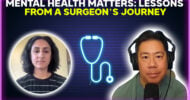
Join us on this episode as we speak with Alexandra Kharazi, a cardiothoracic surgeon and author of The Heart of Fear: A Surgeon’s Collection of Stories on Adversity, Passion, and Perseverance. Alexandra shares her unique perspective on how her experience with skydiving has influenced her approach to medicine, and how she navigates high-pressure situations in both fields. She also discusses the importance of attention to detail, proactive risk identification, and maintaining a commitment to safety in both skydiving and medicine. Listen in to gain insights from a passionate writer, mother of a four-year-old, and skilled cardiothoracic surgeon.
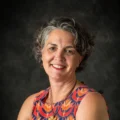
Alexandra Kharazi is a cardiothoracic surgeon, mother to four-year-old Harper, and a passionate writer. She can be reached on LinkedIn, Instagram, and TikTok.
She shares her story and discusses her book, The Heart of Fear: A Surgeon’s Collection of Stories on Adversity, Passion and Perseverance.

The Podcast by KevinMD is brought to you by the Nuance Dragon Ambient eXperience.
With a growing physician shortage, increasing burnout, and declining patient satisfaction, a dramatic change is needed to make health care more efficient and effective and bring back the joy of practicing medicine. AI-driven ambient clinical intelligence promises to help by revolutionizing patient and provider experiences with clinical documentation that writes itself.
The Nuance Dragon Ambient eXperience, or DAX for short, is a voice-enabled, ambient clinical intelligence solution that automatically captures patient encounters securely and accurately at the point of care. Physicians who use DAX have reported a 50 percent decrease in documentation time and a 70 percent reduction in feelings of burnout, and 83 percent of patients say their physician is more personable and conversational.
Rediscover the joy of medicine with clinical documentation that writes itself, all within the EHR.
VISIT SPONSOR → https://nuance.com/daxinaction
SUBSCRIBE TO THE PODCAST → https://kevinmd.com/podcast
RECOMMENDED BY KEVINMD → https://kevinmd.com/recommended
GET CME FOR THIS EPISODE → https://earnc.me/xjH66z
Powered by CMEfy.
Transcript
Kevin Pho: All right, welcome to the show. Subscribe at KevinMD.com/podcast. You can get CME for this episode by clicking on the CME link in the show notes. Today we welcome Alexandra Kharazi. She’s a cardiothoracic surgeon, and she’s the author of the book The Heart of Fear: A Surgeon’s Collection of Stories on Adversity, Passion, and Perseverance. Alexandra, welcome to the show.
Alexandra Kharazi: Hi, Kevin. Thanks for having me.
Kevin Pho: So we’ll get into your book in a little bit, but first off, briefly introduce yourself and share your story and journey to where you are today.
Alexandra Kharazi: Sure. I’m a cardiothoracic surgeon, and I’m in private practice in Southern California. I initially went to medical school at UC Davis, went to a general surgery residency at Westchester Medical Center in New York, and completed my CT surgery fellowship in Greenville, North Carolina, at ECU.
Real physician voices, twice a week
Free, and one click to unsubscribe.
Kevin Pho: All right, so tell me some of the rewards and challenges of private practice cardiothoracic surgery today.
Alexandra Kharazi: I like it a lot because there is variety. I do primarily heart cases, but I also do some thoracic cases, some robotic lobectomies and things like that. I go to multiple hospitals around town. I’m in a group of three surgeons, we go to a total of five hospitals, and our call is one in three. It’s busy, which was primarily what I wanted, so there’s always a lot of work to go around. It’s good.
Kevin Pho: We have medical students who listen to this podcast. What kind of questions should they ask themselves if they’re considering a career in cardiothoracic surgery?
Alexandra Kharazi: I think it’s important to see, first of all, what your passion is, because it’s going to be a lot of work. I think that’s true for anything; I don’t think it’s just for cardiothoracic surgery. It’s going to be a lot of work no matter what you choose, so you may as well just choose what you want to do. I think a lot of people are deterred from a career in surgery because they think, “Oh, that’s too much work. That’s too many hours.” But I tell them that even if you want to go into peds or anything else, people presume that somehow that’s less work, and I don’t really think it is. It’s going to be a lot of work no matter what you choose, and it’s important to just choose something you’re really passionate about and pursue that.
Kevin Pho: All right, so we’re here to talk about your book, The Heart of Fear: A Surgeon’s Collection of Stories on Adversity, Passion, and Perseverance. Now, tell us, how did your book come together?
Alexandra Kharazi: It really started as a passion project for me. I just wanted to look at the mindset of people in high-stakes, high-risk careers. The reason is that I’m a cardiothoracic surgeon, and I know a lot of people in medicine, obviously, of all different specialties. We talk to our colleagues in passing, or whatever, between cases, we talk to them at the surgeons’ lounge, or we talk to our friends and colleagues that we’ve met along the way, and we get an idea of what they’re going through. One thing that I did notice, and this especially got worse post-pandemic, is that among the people I would talk to, as I mentioned, there were a lot of systemic pressures mounting. A lot of people had almost a fearful reaction surrounding what was going on around them, whether that was job security, like, “Am I going to lose my job? Am I going to not get the promotion, or am I not going to get the partnership?” Or people getting hit with medical malpractice lawsuits. I’m just recently coming out of a medical malpractice lawsuit myself. It’s all these things that we deal with as health care professionals.
On the other side of my life, I know a lot of people through skydiving, and those people also do very high-risk things. And not just them; there are other people in high-risk careers, like firefighting or whatnot. We’re not the only ones that deal with high-pressure situations. But I did notice that the approach of people in other high-risk careers is a little bit different; their relationship with fear is different. So I just started a project within my cohort of people that I knew. I picked a representative sample and separated the book into part one and part two. Part one is basically where I interview the doctors and talk to them about things that have happened in their careers and how they’ve dealt with them and navigated them. Then in part two, I talk about those other people.
One of the people I interview is a stuntwoman, and she did the Burj Khalifa stunt, where she jumps for Emirates Airline, and that’s the tallest building in the world. I get into what was going through her mind in what is obviously a very high-risk situation with a lot of safety protocols involved, not unlike what I do as a surgeon, where you really have to understand the risks and make sure that you’re very prepared. That’s the kind of thing that I explore in my book. So it’s not really something where I look at the systemic pressures. I’m not discounting any of that; there’s plenty of that. But it’s not really looking at how we deal with those external factors. It’s more about what we can do from within to temper our reaction to all of these mounting external pressures.
Kevin Pho: You mentioned that people in other high-risk specialties outside of medicine approach fear differently than those inside of medicine. Tell me more about that observation.
Alexandra Kharazi: More or less, and not all the time; there are exceptions to every rule. But I did notice that the general trend, at least in my study of these people, is that they had a more positive relationship with fear. I go into the details in the book about the specific techniques that they use, but for example, they learn to recognize signs of fear. Then, instead of saying, “Oh no, this means I’m scared,” or “This means that I’m anxious,” they say, “OK, well, this is a good thing. That means that I’m at my peak performance. My palms are sweating, or my heart rate’s going up, and this is actually a good thing. I’m capable of doing more when I’m in this heightened state.”
So they learn to recognize the signs, and instead of being averse to them, they’re almost welcoming of them, which I think is a very different mindset. I’m not saying that health care workers on the whole don’t know how to do this, but I’m saying that, definitely, in what I have seen, we don’t use this enough in medicine.
Kevin Pho: In your excerpt on KevinMD, you tell a story about your skydiving experience and some of the lessons that you take from skydiving into medicine. Talk more about that skydiving experience and the connection with medicine.
Alexandra Kharazi: It’s actually not that different, which I know sounds crazy. I started skydiving in medical school, honestly, and I found it almost meditative, which is interesting, because I think a lot of people would say the same thing.
Kevin Pho: What was the initial event that got you interested in skydiving? Was it something that you sought out yourself, or did someone say, “Hey, let’s go skydiving”? What was the initial inciting event that made you take that leap?
Alexandra Kharazi: Nothing specific, but after that, I just fell in love with it. The reason is, have you ever meditated? Do you meditate at all?
Kevin Pho: I don’t.
Alexandra Kharazi: No, you don’t? OK, well, it’s interesting. I meditate, and I’ll tell you something about meditation. One of the things that is so key to it is they tell you to focus on the breath. When I started, I got the Calm app, and I would just sit down and do these 10-minute daily meditations. You sit down in a room for 10 minutes, or whatever it is, and you’re doing what they’re telling you. It’s a guided meditation, and they’re telling you to focus just on the breath, in and out, and not let any other thoughts come in, basically. That sounds like a relatively straightforward task, but it’s actually very, very difficult. It’s nearly impossible, at least when you start, and it’s still difficult for me to focus just on your breath and really empty your mind.
That’s what skydiving did for me, and there’s nothing else that has really done that for me. That’s because I’m just so focused on those moments, in the airplane, on the jump. My mind is fully empty, and the only thing I’m thinking about is what’s right in front of me. That’s why it was so powerful for me. That was really the draw, you know what I mean?
Kevin Pho: So how did that change you as a physician, as a cardiothoracic surgeon?
Alexandra Kharazi: The focus improvement that I got from it was almost like what people get from what you would think of as meditation. It was this calm state that I was able to take with me. It was that, yes, you’re in a potentially very dangerous situation, but there are different things that you can do that are within your control, and you can make it go really, really well. And also just being there, and especially being in the bad skydiving situations. I talk about a couple of those.
Kevin Pho: Yeah, you talk about that in your KevinMD excerpt, a little malfunction there. Tell us about that malfunction.
Alexandra Kharazi: I think there’s one, the one I talked about in the KevinMD article. I think that was the one where my packing job was, well, we had multiple skydiving malfunctions. I’ve had a few, not a few. And complications happen, and that’s the thing. There are a lot of parallels between skydiving and medicine and surgery, and one of them is that complications happen, and complications happen at really bad times and in really bad situations. That’s particularly true for cardiothoracic surgery. It’s not ideal, but something happens, and it’s obviously very high-stakes real estate when you’re working on somebody’s heart. But the question is how you deal with that complication, and a lot of that is what your mindset is at the time that complication happens. That’s literally, I think, 95 percent of it. Are you able to really just focus on your training and do what you were trained to do, despite things falling apart and not going well?
That holds so true in my malfunction. To go back to your question, when my main parachute wasn’t coming out, I was just pulling on it, and I kept pulling on it. I even reached back behind myself, and my altimeter was beeping because the altitude was getting lower. I was approaching that hard deck, which is our hard decision altitude, where we have to have a parachute above our heads, or at least, not have to, but you set it for yourself. Eventually, I just said, “It’s not coming out.” The next step, even though this is not ideal, is you pull your reserve parachute out. Of course, the danger with that is you could potentially have two parachutes out, and those can tangle, and all sorts of stuff can happen with that. But anyway, luckily, the reserve came out on that particular jump, and I was able to fly it down with no issues.
That’s very similar to a case, where intentions are well laid, but something happens during the case. I think your mindset has to go back to being very focused on the training. You know what to do. You trained to do this, and you have to just go through the steps and trust that you can handle it.
Kevin Pho: So during that particular jump, your main parachute didn’t come out, and you had to go through a proverbial checklist, go through the systems check, and you eventually settled on the reserve parachute. So your training as a cardiothoracic surgeon prepared you for an event like that?
Alexandra Kharazi: I think that, well, I wasn’t a cardiothoracic surgeon at that time, so no, it was kind of the other way around. But yeah, they’re similar. There’s the training that you go through, there’s the ideal way things go, there’s a checklist that you have, and then there’s what really happens, you know what I mean?
Kevin Pho: After an experience like that, I would guess that there are very few things in the operating room that would faze you.
Alexandra Kharazi: I think there are obviously still things that don’t go as ideally as you’d like, but I definitely think that, as far as my mindset, what I’ve gotten from skydiving has been invaluable in teaching me how to be in a bad situation but be very much at peace in that bad situation.
Kevin Pho: Now, in your book, among the people that you’ve interviewed, perhaps other clinicians, what other kind of fear-based activities do they go into? If someone were interested in doing something similar to skydiving, but not skydiving itself, what other activities do other physicians do?
Alexandra Kharazi: Well, not all of them have high-risk hobbies, in the physician population that I interviewed. But one of the people that I interviewed is an ER doctor in Sacramento, and he is a BASE jumper and skydiver, so he has a lot of very high-risk activity experience. BASE jumping is basically jumping off of stationary objects, usually from much lower heights. It’s considered much more dangerous than skydiving is, and you use only one parachute, to put it in a nutshell. But he does that, and the story he told was fascinating. It was a great chapter to write.
Kevin Pho: Now, from all your interviews with people with high-risk hobbies, what kind of lessons can you teach other clinicians who may be listening to you here?
Alexandra Kharazi: I think mindset matters. That is the main takeaway, because there are always going to be external issues going on, and that’s just, unfortunately, the reality of medicine today. But I think what’s important is to really find what works for you. I do offer some techniques, but I’m a case study of one person that interviewed these people around me.
Another thing I want to mention is that anybody can do this. Kevin, you could take 12 people in your life and interview them, and you would have a completely different book. People would read it, it would teach a different audience a different set of lessons, and it would be completely valuable. That’s the other point: I think there are different techniques that work for different people, and I offer what worked for these people. But I think the key is really finding those techniques that put you in a good mindset. That doesn’t have to be skydiving. That doesn’t have to be climbing to the top of the Burj Khalifa and jumping off. That doesn’t have to be crashing cars as part of your hobby or your job. It doesn’t have to be any of those things. It can be going to the beach, it can be going on a hike, it can be whatever works for you that really connects you with that positive mindset.
Kevin Pho: We’re talking to Alexandra Kharazi. She’s a cardiothoracic surgeon. Her book is The Heart of Fear: A Surgeon’s Collection of Stories on Adversity, Passion, and Perseverance. Alexandra, tell us some of your take-home messages that you want to leave with the KevinMD audience.
Alexandra Kharazi: Yeah, thanks, Kevin. I think that’s it. I do want to just go ahead and say that if you’ve ever thought of writing a book, or just doing something like a passion project, there’s not going to be a good time. I did this at one of the busiest times of my clinical practice. I have a very busy clinical practice, yes, but you find time if you’re really passionate about it. I would literally whip out my phone between cases and put the notes out. I don’t think anybody even uses notes anymore, right? Who uses notes? But that’s what I would do. Or sometimes I would just take paper from the printer in the lounge, and I would just call my friend, or whoever, somebody that I knew, one of these people that I was interviewing, and I would just say, “Do you have 10 minutes?” Or I would email them the day before and say, “Do you have 10 minutes?” I would sit there and just ask them the questions. Eventually, after doing this for about a month, I had a collection of notes and papers of these people’s stories.
Writing has just always been kind of fun for me, so I signed up for this writing club, kind of like a writing class. It’s called the 30-day book writing challenge. It was under 100 bucks, and I just did it, again, 20 to 30 minutes a day. What it taught me was a format. It doesn’t have to be that format, but it taught me a format to just get these stories and put them into a nonfiction book. Then from there, little by little, I moved it through.
But if you have a passion, don’t wait until you have more experience, or more whatever it is. I was always told, “Oh, you should take a formal writing class. You should go do all these things.” One day, I said, “I’m just going to do it because I want to do it.” So that would probably be my take-home message: If you want to do something, just start. Just start.
Kevin Pho: Alexandra, thank you so much for sharing your story, time, and insight, and thanks again for being on the show.
Alexandra Kharazi: Thanks, Kevin.
Listen and followApple PodcastsSpotifyYouTubeMore apps · Browse all episodes