California’s opioid policies reveal a stark hypocrisy, imposing draconian restrictions on prescriptions for chronic pain patients (leaving wildfire survivors and others in unrelenting agony) while allocating over $100 million annually through initiatives like the California Harm Reduction Initiative (CHRI) and Proposition 36 to provide free needles, pipes, and fentanyl test strips to addicts with minimal oversight. This disparity is compounded by the Medical Board of California’s (MBC) overreach, where physicians face retroactive scrutiny of decade-old patient notes, often based on outdated 2012 data, fostering a “Tylenol-only” prescribing trend that intimidates doctors and delays critical pain guideline updates, such as those in 2023, for years. In Northern California counties like Shasta and Plumas, chronic pain patients face medication shortages due to sparse Medi-Cal funding and unaddressed wildfire disruptions, contributing to rising suicides, while rural syringe service programs (SSPs) expand, effectively reducing overdose risks for addicts through low-barrier distribution. The rationale underscores the disconnect: pain management restrictions aim to prevent diversion and overdoses through suspicion-driven oversight, whereas harm reduction prioritizes compassionate risk mitigation, and the MBC’s “accountability” measures, criticized as biased, divert resources from patient care while ignoring that 80 percent of overdoses stem from illicit street drugs, not prescribed medications.
The core hypocrisy: Opioid denial vs. harm reduction support
At its heart, the issue stems from California’s response to the opioid crisis, which has claimed over 8,000 lives annually in recent years, largely from illicit fentanyl. Strict prescribing laws, such as the 2016 AB 2760 (requiring mandatory checks of the CURES database for controlled substances) and updated MBC guidelines, emphasize caution to prevent diversion and overdoses. These rules mandate detailed documentation, urine testing, and tapering plans for long-term opioid use, creating a chilling effect on physicians who fear professional repercussions for treating pain aggressively.
Denial to legitimate patients
Wildfire survivors and chronic pain sufferers are particularly hard-hit. Northern California’s frequent blazes have left thousands with severe burns, respiratory issues, and exacerbated chronic conditions (e.g., arthritis or nerve damage), necessitating opioids for management. Yet, post-disaster disruptions compound access barriers: pharmacies close, records are lost, and strict laws prevent easy refills. Studies show immediate drops in opioid fills (up to 20-30 percent in affected areas) after major fires, forcing patients into withdrawal or inadequate alternatives like NSAIDs, which can worsen conditions. Chronic pain patients statewide (affecting one in five adults) report similar struggles, with Human Rights Watch documenting cases where fear of scrutiny leads to undertreatment, increasing suicide risks.
Real physician voices, twice a week
Free, and one click to unsubscribe.
Contrast with harm reduction funding
Meanwhile, California invests heavily in harm reduction for substance use disorders (SUDs), viewing it as a compassionate, evidence-based strategy to reduce overdoses and disease transmission. The governor’s administration has allocated millions, including $6 million in 2024 for free fentanyl test strips via the Naloxone Distribution Project. Statewide programs, like those in Los Angeles and Santa Clara counties, distribute sterile syringes, glass pipes, pipe covers, sharps containers, and test strips, often at no cost to users. The California Harm Reduction Initiative (CHRI) has boosted syringe service programs (SSPs), with supported sites distributing nearly double the fentanyl test strips compared to others. Proponents cite CDC data showing these tools prevent HIV/hepatitis spread and encourage treatment entry, with studies linking test strip use to overdose risk-reduction behaviors.
This duality fuels accusations of hypocrisy: why fund tools that enable safer drug use (e.g., pipes for crack/meth) while criminalizing or deterring doctors who prescribe opioids for verifiable pain? Critics argue it creates a moral hierarchy of suffering (“deserving” addicts get empathy and resources, while “suspect” pain patients face suspicion of addiction potential).
Medical board overreach: Retroactive vetting as a tool to curtail access
The MBC’s enforcement practices amplify this hypocrisy by overreaching into physicians’ past actions, often dredging up decade-old notes to justify discipline. This retroactive scrutiny, rooted in the opioid crisis response, aims to curb “excessive prescribing” but is criticized as a witch hunt that prioritizes metrics over patient care.
Mechanisms of scrutiny
The MBC’s Death Certificate Project, launched in 2018, exemplifies this. It reviewed overdose deaths from as far back as 2012-2013, investigating 471 physicians (out of 2,694 cases) for links to prescriptions. Accusations targeted 64 doctors, many for “excessive” dosing based on old records, even if compliant at the time. Physicians report board investigators combing through historical notes for inconsistencies, such as inadequate documentation of alternatives tried or risk assessments (standards that evolved post-2016). This has led to license suspensions, probation, or voluntary surrenders, with pain specialists feeling biased against.
Intent and outcomes
Proponents say it’s accountability, linking prescriptions to deaths to deter overprescribing. However, a 2024 study found medical boards often lenient on overprescribers in misconduct cases, suggesting selective enforcement. Critics, including defense attorneys, argue it retroactively applies modern guidelines to past practices, ignoring context like intractable pain exemptions. The result? Doctors self-censor, reducing opioid scripts by 10-20 percent statewide, per correlated studies, harming patients without curbing illicit overdoses.
Broader implications for patients in need
This framework decreases access for patients legitimately in need, particularly in Northern California, where wildfires amplify vulnerabilities. Physicians, fearing MBC probes into old records, opt for conservative care, leaving burn victims or those with conditions like CRPS undertreated. Meanwhile, harm reduction’s success (e.g., 30 percent overdose behavior change from test strips) underscores effective compassion, but why not extend it to pain equity? Reforms like MBC’s 2023 guidelines aim to ease this, but ongoing overreach perpetuates the hypocrisy, fueling calls for balanced policies that prioritize all forms of suffering without retroactive punishment.
Kayvan Haddadan is a physiatrist and pain management physician, and president and medical director of Advanced Pain Diagnostic & Solutions, a multidisciplinary pain management practice in California that he founded in 2012. A physician and surgeon licensed by the Medical Board of California, he is double board-certified in pain medicine and physical medicine and rehabilitation. He is also certified in controlled substance registration through the DEA and serves as a qualified medical examiner through California’s Department of Industrial Relations Division of Workers’ Compensation.
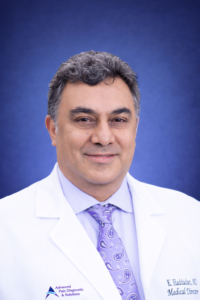
Dr. Haddadan earned his Bachelor of Science degree from the College of Alborz in Tehran, Iran, and his medical degree from Shahid Beheshti University of Medical Sciences. He later received his Educational Commission for Foreign Medical Graduates certification in Philadelphia, completed an internship in medical surgery at Loyola University Medical Center’s Stritch School of Medicine in Illinois, and finished his residency in physical medicine and rehabilitation at the same institution. He completed his fellowship in pain medicine at California Pacific Medical Center’s Pacific Pain Treatment Center and also trained in medical acupuncture for physicians at the University of California, Los Angeles David Geffen School of Medicine.
Dr. Haddadan has contributed to 29 research publications across multiple specialties, including pain management, cardiology, pulmonology, endocrinology, gastroenterology, and infectious disease. His work has examined topics such as hyperlipidemia in high cardiovascular risk patients, hyperuricemia and gout management, type 2 diabetes and hypertension, chronic obstructive pulmonary disease and asthma therapies, influenza treatment, irritable bowel syndrome, and opioid related complications in chronic pain care. His research has also included clinical outcome studies in spinal cord stimulation and award-winning presentations on neuropathic pain management and neuromuscular disorders.