In our diverse world, where everyone sees things through their own lens, shaped by life experiences, beliefs, and facts, chasing after one absolute “truth” often sparks arguments instead of solutions. But what if we aimed for something better: a “shared truth”? This is about coming together, respecting each other’s opinions, and teaming up to find common ground that works for everyone. It’s like turning a debate into a friendly conversation, where we build something stronger together. This approach isn’t just nice, but it’s powerful, backed by studies in psychology and real-life examples, especially in tough topics like health care. Let’s explore how it can bring people closer and solve big problems, step by step.
Why so many truths exist: celebrating our differences
People don’t all think alike, and that’s OK, as it’s what makes society rich and creative. Research in psychology shows that our brains filter information through biases, emotions, and backgrounds, creating personal versions of reality. For example, studies on group conflicts reveal that clashing ideas can cause tension, but when handled well, they spark better ideas and stronger teams by sharing knowledge. Other work highlights how our mental “rules” for thinking help us grow beyond fixed opinions, understanding that truth often depends on context. In conflicts, emotions and motivations play a big role, making it clear why one “truth” rarely fits all. Respecting others’ views isn’t about giving in; it’s smart, as ignoring them only deepens divides and blocks progress. By valuing this variety, we open doors to deeper understanding and real teamwork.
The beauty of shared truth: turning disagreements into wins
Instead of arguing over who’s right, let’s focus on building a truth we all can share. This starts with simple skills: listening actively, showing empathy, and exploring ideas together. Psychology tools like mindfulness help by encouraging calm awareness, which strengthens relationships and cuts down on fights. Training in these methods boosts teamwork, happiness, and results in jobs, including health care, where collaboration leads to better care. Experiments show that blending talks with empathy exercises bridges gaps, turning stuck situations into fresh solutions. Positive approaches, like reframing problems and chasing shared goals, help groups bounce back from conflicts. Shared truth celebrates our ability to connect, making everyday challenges feel exciting and solvable.
Real physician voices, twice a week
Free, and one click to unsubscribe.
How shared truth tackles big issues: a fresh way forward
This idea isn’t just for small talks, as it’s a game-changer for global problems like climate change or equality. By honoring different views, we skip the “us vs. them” trap and tap into everyone’s smarts. Models like group discussions in democracy bring people together to create fair plans that last. In public health, teaming up experts, communities, and leaders handles complex issues better than going solo. It’s about rewarding good results, not forcing one side’s rules, which builds trust and keeps things moving smoothly.
Shared truth in action: the opioid debate in health care
Take medicine, where clashing opinions can affect real lives. In the opioid crisis, some doctors want to stop prescribing these drugs because of risks like addiction, falls, or hormone issues, based on studies linking higher doses of medication use to more problems and even deaths. Others argue for keeping them available, as they ease pain and help people live better, with research showing careful use cuts misuse (to 15-26 percent) and addiction (under 8 percent) when monitored. Fighting over “right or wrong” misses the point, and we know that risks often come from mixes like other drugs, mental health, or street substances, while benefits vary by person. The shared path? Use opioids wisely: only when needed, in the right amounts, decided by the doctor who meets the patient face-to-face. Guidelines from experts like the CDC support this, urging doctors to balance risks and benefits personally. Evidence shows doctors with good training reduce issues, and tools like decision aids make prescribing safer without losing trust. Talking openly with patients boosts satisfaction and results, as trials prove better communication leads to real improvements. Skip the blame game with strict rules that scare doctors away and instead, celebrate successes with rewards for good patient outcomes. Programs fighting the opioid issue show this works, bringing together patients, families, and pros for fair, effective fixes. This way, we protect people from pain without overstepping, creating a kinder, smarter health care system.
Shared truth is our superpower as it turns clashes into chances for growth. By choosing connection over conflict, we can handle anything. So, let’s embrace it and watch our world get brighter, one conversation at a time.
Kayvan Haddadan is a physiatrist and pain management physician, and president and medical director of Advanced Pain Diagnostic & Solutions, a multidisciplinary pain management practice in California that he founded in 2012. A physician and surgeon licensed by the Medical Board of California, he is double board-certified in pain medicine and physical medicine and rehabilitation. He is also certified in controlled substance registration through the DEA and serves as a qualified medical examiner through California’s Department of Industrial Relations Division of Workers’ Compensation.
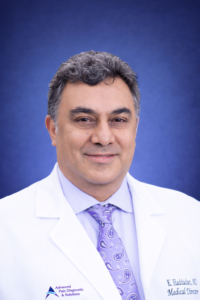
Dr. Haddadan earned his Bachelor of Science degree from the College of Alborz in Tehran, Iran, and his medical degree from Shahid Beheshti University of Medical Sciences. He later received his Educational Commission for Foreign Medical Graduates certification in Philadelphia, completed an internship in medical surgery at Loyola University Medical Center’s Stritch School of Medicine in Illinois, and finished his residency in physical medicine and rehabilitation at the same institution. He completed his fellowship in pain medicine at California Pacific Medical Center’s Pacific Pain Treatment Center and also trained in medical acupuncture for physicians at the University of California, Los Angeles David Geffen School of Medicine.
Dr. Haddadan has contributed to 29 research publications across multiple specialties, including pain management, cardiology, pulmonology, endocrinology, gastroenterology, and infectious disease. His work has examined topics such as hyperlipidemia in high cardiovascular risk patients, hyperuricemia and gout management, type 2 diabetes and hypertension, chronic obstructive pulmonary disease and asthma therapies, influenza treatment, irritable bowel syndrome, and opioid related complications in chronic pain care. His research has also included clinical outcome studies in spinal cord stimulation and award-winning presentations on neuropathic pain management and neuromuscular disorders.