Skip to content
  • About
  • Contact
  • Contribute
  • Book
  • Careers
  • Podcast
  • Recommended
  • Speaking
  • All
  • Physician
  • Practice
  • Policy
  • Finance
  • Conditions
  • .edu
  • Patient
  • Meds
  • Tech
  • Social
  • Video
    • All
    • Physician
    • Practice
    • Policy
    • Finance
    • Conditions
    • .edu
    • Patient
    • Meds
    • Tech
    • Social
    • Video
    • About
    • Contact
    • Contribute
    • Book
    • Careers
    • Podcast
    • Recommended
    • Speaking

Beyond burnout: the rise of the optimized, dissociated executive

Jenny Shields, PhD
Conditions
January 20, 2026
Share
Tweet
Share

The man sitting across from me is a Titan.

In the taxonomy of the 2026 economy, he is the apex predator: an MD, a CEO, and the chair of multiple boards. He has navigated the post-pandemic attrition and the algorithmic market corrections that swallowed lesser firms. He is wildly, empirically successful.

But recently, he sat across from me, sharing a shade of rage I hadn’t seen before. He had just navigated a brutal negotiation and felt he had been played. He looked at me, a man who has won almost every game he has ever played, and delivered an epitaph for the modern age.

“If you want justice,” he said, “you’re on the wrong planet.”

As we debated, he articulated a worldview of terrifying apathy. He described empathy not as a virtue, but as “latency,” a lag in the system he couldn’t afford. He admitted a visceral recoil at the concept of interdependence. “I don’t like needing things,” he told me. “Dependencies create vulnerabilities.”

I am a psychologist and behavioral ethicist. Listening to him, I recognized that the conversation about “burnout” is five years out of date. Burnout implies the machine has overheated. What I was seeing was something colder.

We are witnessing a form of induced evolution.

My client is the prize specimen of a new natural selection: a system that no longer selects for intelligence or creativity, but for the capacity to dissociate.

The market as a biological sieve

In 2021, we spoke of the “Great Resignation.” Now, in 2026, we are watching the “Great Filtration.” The market acts as a biological sieve. It is systematically filtering out those who pause to grieve, those who require the “maintenance” of complex relationships, and those who feel the friction of moral injury.

This is not limited to the C-suite. I see it in the junior analysts using AI to do the work of three people, stripping away the “learning by doing” friction that once built character. I see it in physicians forced to view patients as data points to be processed in six-minute increments.

The system is selecting for the hollow. It rewards the entities, biological or digital, that can process the most signal with the least amount of emotional noise.

The irony of this client is the literary cruelty of his position.

ADVERTISEMENT

He is a trauma surgeon by training. He spent the first half of his career with his hands inside the chests of dying patients. He remembers the warmth of blood on his gloves, the metallic smell of the trauma bay, and the chaotic synchronization of a team saving a life. He knows the weight of a heart.

But the environment in which he succeeded has convinced him that his own humanity is “legacy code,” an outdated operating system that cannot run the software of the modern economy.

He treats his own emotions as technical debt. He views his need for connection as a bug to be patched.

He isn’t broken. He is optimized. He has become the perfect executive for 2026: a biological entity running on algorithmic logic.

The fear of softness

If this were just a story about a cold CEO, it would be unremarkable. But it is a love story. It is a story about a man fighting to retrieve his own heart, and the terror that act inspires. The breakthrough came when we discussed his daughter.

He speaks with intense curiosity about “emotion socialization,” analyzing how he taught himself to suppress his feelings to survive. He knows, intellectually, that this suppression is toxic. But he is terrified to stop. He fears that if he allows his daughter to be soft, he will render her unfit for the world he dominates.

He is caught in a bioethical bind: He wants to love his child, but his definition of “fitness” requires him to armor her until she, too, is incapable of feeling the air on her skin.

In the safety of our session, challenged to look at this contradiction, the Titan finally cracked.

“It scares me,” he admitted.

He wasn’t scared of the shareholders. He was scared that his capacity for sadness, which he had suppressed for 40 years, would overwhelm his capacity for output. He was scared that if he let himself feel, he would cease to function.

And he might be right.

The system demands the output of care (the life saved, the scaling hospital system) while brutally penalizing the input of care (empathy, grief, time). It wants the golden egg, but it despises the goose.

If my client actually “reboots,” allowing himself to feel the full weight of the decisions he makes and the price of his efficiency, he may find he can no longer sit in the chair. He is the King of the Mountain, yes. But he is realizing the air up there is too thin for human life.

Dismantling the machine

We are not “fixing” him to make him more productive. We are doing something far more dangerous. We are dismantling the logic of the machine from the inside out.

He still retreats to his fortress when he feels threatened. We still spar over the definition of privilege. He believes privilege is the capacity to stand alone, the exemption from need. I counter that true privilege is the safety to rely on others without fear of collapse.

The “Great Hollowing” of our health care leadership wasn’t an accident; it was an efficiency measure. We designed a system to extract maximum yield from its stewards, and we succeeded. But efficiency has a blast radius. My client is the survivor of that blast, and he is finally checking his own pulse.

My client is wildly successful. But his greatest victory won’t be his next IPO. It will be the moment he finally gives himself permission to be human and realizes that a system which cannot survive his humanity is a system that deserves to fail.

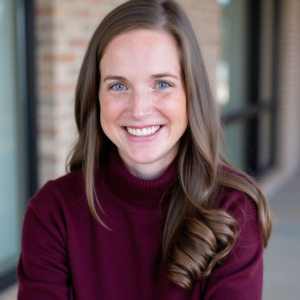
Jenny Shields is a licensed clinical psychologist and nationally certified health care ethics consultant specializing in clinician burnout, moral distress, ethical trauma, and complex psychological assessments. Based in The Woodlands, Texas, she leads a private practice—Shields Psychology & Consulting, PLLC, where she offers confidential counseling, consultation, and education for physicians, nurses, therapists, and health care leaders nationwide. Dr. Shields is committed to shifting the conversation in health care from individual resilience to system-level ethical reform. She is affiliated with Oklahoma State University and regularly contributes insights through public speaking and writing, including features on Medium. Her professional presence extends to platforms like LinkedIn, Google Scholar, ResearchGate, the APA Psychologist Locator, and the National Register of Health Service Psychologists.
Prev

How system strain contributes to medical gaslighting in health care

January 20, 2026 Kevin 0
…

Kevin

Tagged as: Psychiatry

Post navigation

< Previous Post
How system strain contributes to medical gaslighting in health care

ADVERTISEMENT

More by Jenny Shields, PhD

  • How American medicine profits from despair

    Jenny Shields, PhD
  • Institutional reporting systems discourage clinical honesty

    Jenny Shields, PhD
  • Why doctors stay silent about preventable harm

    Jenny Shields, PhD

Related Posts

  • Physician burnout: the impact of social media on mental health and the urgent need for change

    Aaron Morgenstein, MD & Amy Bissada, DO & Jen Barna, MD
  • Combating physician burnout: the case for subsidized vacations

    Angel Garcia Otano, MD
  • Female physician burnout and its impact on patient care

    Raya Iqbal
  • A simple 10-10-10 tool to prevent burnout through mindfulness

    Annabelle Bailey
  • Gun crisis in America: Youth fatalities on the rise

    Edward Hoffer, MD
  • The rise of direct primary care in America

    Andy Bonner

More in Conditions

  • How fNIRS and light therapy are shaping precision psychiatry

    Muhamad Aly Rifai, MD
  • The emotional labor of volunteering in an aging society

    Gerald Kuo
  • Understanding the evolutionary mismatch in health and modern disease

    Max Goodman, MD
  • Why Brooklyn’s aging population needs more vascular health specialists

    Anil Hingorani, MD
  • Why pediatricians are key to postpartum depression screening

    Mikenna Reiser
  • Prostate cancer genomic testing: a physician-patient’s perspective

    Francisco M. Torres, MD
  • Most Popular

  • Past Week

    • Will AI replace primary care physicians?

      P. Dileep Kumar, MD, MBA | Tech
    • Why the U.S. health care system is failing patients and physicians

      John C. Hagan III, MD | Policy
    • Putting health back into insurance: the case for tobacco cessation

      Edward Anselm, MD | Policy
    • What is the minority tax in medicine?

      Tharini Nagarkar and Maranda C. Ward, EdD, MPH | Education
    • Why every physician needs a sabbatical (and how to take one)

      Christie Mulholland, MD | Physician
    • Retail health care vs. employer DPC: Preparing for 2026 policy shifts

      Dana Y. Lujan, MBA | Policy
  • Past 6 Months

    • Why patient trust in physicians is declining

      Mansi Kotwal, MD, MPH | Physician
    • How environmental justice and health disparities connect to climate change

      Kaitlynn Esemaya, Alexis Thompson, Annique McLune, and Anamaria Ancheta | Policy
    • Will AI replace primary care physicians?

      P. Dileep Kumar, MD, MBA | Tech
    • A physician father on the Dobbs decision and reproductive rights

      Travis Walker, MD, MPH | Physician
    • The blind men and the elephant: a parable for modern pain management

      Richard A. Lawhern, PhD | Conditions
    • Is tramadol really ineffective and risky?

      John A. Bumpus, PhD | Meds
  • Recent Posts

    • Beyond burnout: the rise of the optimized, dissociated executive

      Jenny Shields, PhD | Conditions
    • How system strain contributes to medical gaslighting in health care

      Alan P. Feren, MD | Physician
    • Black women’s health resilience: the hidden cost of “pushing through”

      Latesha K. Harris, PhD, RN | Policy
    • Why tele-critical care fails the sickest ICU patients

      Keith Corl, MD | Physician
    • True peace in medicine requires courage not silence [PODCAST]

      The Podcast by KevinMD | Podcast
    • Medical misinformation: a fracture in public trust and health outcomes

      Muaz Ahmad | Education

Subscribe to KevinMD and never miss a story!

Get free updates delivered free to your inbox.


Find jobs at
Careers by KevinMD.com

Search thousands of physician, PA, NP, and CRNA jobs now.

Learn more

Leave a Comment

Founded in 2004 by Kevin Pho, MD, KevinMD.com is the web’s leading platform where physicians, advanced practitioners, nurses, medical students, and patients share their insight and tell their stories.

Social

  • Like on Facebook
  • Follow on Twitter
  • Connect on Linkedin
  • Subscribe on Youtube
  • Instagram

ADVERTISEMENT

ADVERTISEMENT

  • Most Popular

  • Past Week

    • Will AI replace primary care physicians?

      P. Dileep Kumar, MD, MBA | Tech
    • Why the U.S. health care system is failing patients and physicians

      John C. Hagan III, MD | Policy
    • Putting health back into insurance: the case for tobacco cessation

      Edward Anselm, MD | Policy
    • What is the minority tax in medicine?

      Tharini Nagarkar and Maranda C. Ward, EdD, MPH | Education
    • Why every physician needs a sabbatical (and how to take one)

      Christie Mulholland, MD | Physician
    • Retail health care vs. employer DPC: Preparing for 2026 policy shifts

      Dana Y. Lujan, MBA | Policy
  • Past 6 Months

    • Why patient trust in physicians is declining

      Mansi Kotwal, MD, MPH | Physician
    • How environmental justice and health disparities connect to climate change

      Kaitlynn Esemaya, Alexis Thompson, Annique McLune, and Anamaria Ancheta | Policy
    • Will AI replace primary care physicians?

      P. Dileep Kumar, MD, MBA | Tech
    • A physician father on the Dobbs decision and reproductive rights

      Travis Walker, MD, MPH | Physician
    • The blind men and the elephant: a parable for modern pain management

      Richard A. Lawhern, PhD | Conditions
    • Is tramadol really ineffective and risky?

      John A. Bumpus, PhD | Meds
  • Recent Posts

    • Beyond burnout: the rise of the optimized, dissociated executive

      Jenny Shields, PhD | Conditions
    • How system strain contributes to medical gaslighting in health care

      Alan P. Feren, MD | Physician
    • Black women’s health resilience: the hidden cost of “pushing through”

      Latesha K. Harris, PhD, RN | Policy
    • Why tele-critical care fails the sickest ICU patients

      Keith Corl, MD | Physician
    • True peace in medicine requires courage not silence [PODCAST]

      The Podcast by KevinMD | Podcast
    • Medical misinformation: a fracture in public trust and health outcomes

      Muaz Ahmad | Education

MedPage Today Professional

An Everyday Health Property Medpage Today
  • Terms of Use | Disclaimer
  • Privacy Policy
  • DMCA Policy
All Content © KevinMD, LLC
Site by Outthink Group

Leave a Comment

Comments are moderated before they are published. Please read the comment policy.

Loading Comments...