Subscribe to The Podcast by KevinMD. Watch on YouTube. Catch up on old episodes!
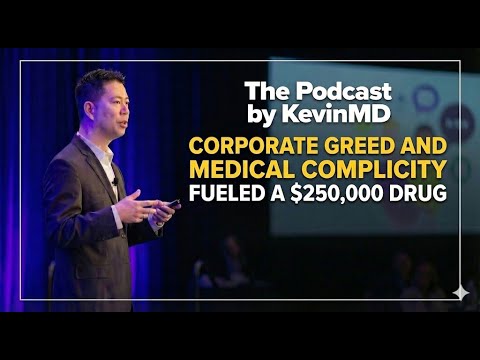
Internal medicine and pulmonary physician Bharat Desai discusses his article “How Acthar Gel became a $250,000 drug.” Bharat shares the shocking moment he realized an obsolete pituitary extract from 1952 was being sold for the price of a house. He explains how pharmaceutical companies exploited regulatory loopholes to reclassify a cheap animal derivative as a specialty biologic and effectively monopolize the market despite the existence of superior synthetic alternatives like prednisone. The conversation exposes the deep rot within the medical profession where key opinion leaders and institutions accepted industry funding to promote a physiological absurdity over evidence-based care. We must question how intellectual surrender allows corporate greed to exploit the very patients doctors are sworn to protect.

Partner with me on the KevinMD platform. With over three million monthly readers and half a million social media followers, I give you direct access to the doctors and patients who matter most. Whether you need a sponsored article, email campaign, video interview, or a spot right here on the podcast, I offer the trusted space your brand deserves to be heard. Let’s work together to tell your story.
PARTNER WITH KEVINMD → https://kevinmd.com/influencer
SUBSCRIBE TO THE PODCAST → https://www.kevinmd.com/podcast
RECOMMENDED BY KEVINMD → https://www.kevinmd.com/recommended
Transcript
Kevin Pho: Hi. Welcome to the show. Subscribe at KevinMD.com/podcast. Today, we welcome Bharat Desai. He is an internal medicine and pulmonary physician. Today’s KevinMD article is “How Acthar Gel became a $250,000 drug.” Bharat, welcome to the show.
Bharat Desai: Thank you, Kevin, for inviting me. I am really grateful for a chance to share a few perspectives that I think medicine badly needs right now. The article, even though it is cost-related, has a lot of deep meaning.
Kevin Pho: Why don’t we talk about the article. It is “How Acthar Gel became a $250,000 drug.” Just before you talk about the article, give us some context. Tell us what Acthar Gel is, how it is used today, and why it is relevant.
Bharat Desai: Acthar Gel is adrenocorticotropic hormone, or ACTH, which is an old hormone discovered in 1950. It was a crude pituitary extract. It basically stimulates your adrenal gland to produce more steroids. In the 1980s, when synthetic steroids arrived, this drug was almost dead. There was no market because no one would use ACTH if they had steroids.
What happened is that the company who had that original patent could still use it through some FDA loophole. They sold that for $400,000 to a California biotech company, and they labeled it as a biologic. With a biologic, you can charge whatever you want. There is no competition. So now it is the same old drug. There is no difference. It is called Acthar Gel, but it is basically ACTH in an injectable form used for multiple sclerosis, sometimes nephrotic syndrome, or in rheumatology as a steroid-sparing agent.
Really, it is absurd that this medication should cost 10 dollars and now it costs $250,000 and is still being used. The company filed for bankruptcy a few times because of bribes and other issues. However, in spite of two bankruptcies, they are still alive and charging this much money.
Kevin Pho: All right. Your article talks about the story of how Acthar Gel became a $250,000 drug. How did it get from there to where we are today?
Bharat Desai: All they do is use that original loophole that it is still indicated. Then they hired some key opinion leaders and started spreading the word, and people are using it. Still, many physicians are not aware of it or even the cost.
Kevin Pho: You mentioned that it is being used in conditions like multiple sclerosis. How common is this drug being used today?
Bharat Desai: It is not that common. But as you see in multiple sclerosis and also in rheumatologic conditions (any inflammatory autoimmune disease, basically), if a patient does not want to take steroids or if they have side effects, this is kind of what they give you as a steroid substitute. It is not even a substitute because all it does is increase the steroids. That is how it works.
Kevin Pho: How did this story get your attention? Why did you decide to write about it?
Bharat Desai: What happened was we came to a point where I can’t even see the cost. One of my CEOs called me back and said: “Do you know this doctor?” I said: “Why?” She said: “He wrote this prescription which costs $250,000.” I said: “You must be mistaken. It cannot be that unless it is a lifesaving, one-in-a-million drug.” Then she told me: “Acthar Gel.” I looked up ACTH, and it blew my mind that this is absurdity. How can this happen?
So then I dug deeper and deeper. The worse it looked, it wasn’t just corporate greed. It was really corruption dressed as science and woven into the culture of medicine. It is about how these few key opinion leaders got bought and then everybody else followed. The theme of my article was distilled into two sentences: “The shepherds were bought and the flocks followed them into the ditch.” Basically, as physicians with a herd mentality, we never really question. This is just one example. This happens on many different occasions, and I have found it.
Kevin Pho: Despite the loophole that this particular biotech company used to raise the price of Acthar Gel, did they do anything illegal according to the letter of the law?
Bharat Desai: No. They didn’t do anything illegal. But morally, they took a drug that cost 10 dollars and charged $250,000.
Kevin Pho: What does that mean for the patients who need this drug? Is this having an impact on payers and on patients? Just tell us some of the practical impacts.
Bharat Desai: It is really a big problem because Medicaid is paying so much money. A lot of the Medicaid budget is being drained into this. I don’t have personal experience of using this drug, so I can’t tell you about that. But basically, it is used without any specific indication. People are writing the prescription. That is the sad part: Physicians, without understanding or knowing, are writing the prescription. That was the theme of my article: Corporations are going to make money because this is their business. They did something legal, but they did a couple of things illegal, like buying out the only synthetic competition for ACTH. It was a monopoly where you control the market. They paid fees for that too, and it is still going on.
Kevin Pho: When you said that this company recruited key opinion leaders in their efforts to monopolize this drug, do you know the story behind that? Do you know some of the doctors that they recruited? Because you did mention the word corruption. So tell me how that was corrupt.
Bharat Desai: What happens is many times, let’s say in neurology (that was the main market), they had a few elite school neurologists. They give them the research money or grant money. They produce CME or pay speaking fees. They talk and go to the conferences. That is how it happens with all the pharmaceuticals. Because we physicians don’t have a lot of time to investigate, we follow the leaders. All they have to do is buy out a few leaders.
Kevin Pho: In your article, you use the term “intellectual surrender” when it comes to the doctors who prescribe this drug. Tell us more about why you have labeled that prescribing as intellectual surrender.
Bharat Desai: Basically, when we prescribe (and that is very common) without really truly understanding not only the cost but the mechanism and side effects, what we do is rely on the pharmaceutical company rep. They come on, give a little 10-minute presentation, and give you a couple of studies. Or you go to CME, and there is also financing by the companies.
Intellectual surrender happens because we never really questioned: “Hey, this should not be there.” That is what I meant. And that is one example. There are a lot of osteoporosis drugs, and I wrote an article about those drugs and the dangers and benefits. We either don’t question because of whatever reason, or we don’t have time or expertise. So that is what I meant by intellectual surrender. That is a big problem with current medicine.
Kevin Pho: I have to admit, even as an internal medicine physician, it has been a while since I have studied Acthar Gel. Are there really no substitutes for Acthar Gel for the conditions it treats?
Bharat Desai: No. All it does is give Solu-Medrol, and that will do the same thing.
Kevin Pho: Then why do doctors continue to prescribe Acthar Gel if there is such a cheap alternative?
Bharat Desai: That is what my question was. Because they have been told: “Oh, this is supposed to be more biological or supposed to spare the steroids. You don’t get side effects.” So what I am telling you is this is what they are telling, and people are believing the physicians. That is what I meant. As soon as my CEO told me ACTH, the first thing I said, even to the neurologist friend I called, was: “What about this?” He said: “Oh yeah, you use Solu-Medrol and you will do the same thing.”
Kevin Pho: Do we have an idea of the sales of Acthar Gel today and about how many prescriptions still prescribe this drug?
Bharat Desai: No, I didn’t get into all those other details, but I don’t think it is prescribed that much because the indications are only for neurologists, rheumatologists, and nephrotic syndrome. I don’t know whether any nephrologist prescribes it or not, but rheumatologists do. One of my colleague friends told me after I talked to him about this: “All these drug guys keep pushing me to prescribe this for whatever.” So I said: “Don’t do that.” So this is going on.
Kevin Pho: So that rheumatologist friend that you said, he is still having pharmaceutical representatives come to his office and pushing Acthar Gel, right?
Bharat Desai: Yeah, they say: “Oh, why don’t you write it?” They will never tell you the cost. The neurologist who had prescribed it is a friend of mine, so I called him: “Hey, you prescribed this. Do you know how much this cost is?” He said: “No. I thought it should be cheaper because it is old generic.” I told him $250,000. He could not believe it. He said that drug rep never would tell. They will never say; it will say a zero copay or 20 dollar copay. They will never say the cost.
Kevin Pho: Now, does this happen with other drugs? I think in the primary care setting, yes. I know that there are other drugs where pharmaceutical companies will take the patent of expiring or old drugs and then they would be the only one that could be able to produce that medication.
Bharat Desai: I haven’t looked into all the other drug details, but this one was unique because it was such an old law that they used. They did not conduct any trial. Not a single trial before. They just labeled Acthar Gel as a patented drug. All they did was use a few of their case studies and that original loophole. They used to do it with the FDA. Once the indication is approved, it was set in stone. Not anymore, but it used to be like that.
Kevin Pho: Now, do the third-party payers and Medicare and Medicaid cover this drug, or do they push back after the cost?
Bharat Desai: This is what happens. So I say: “How come Medicare is bound?” This problem is that Medicare is bound by the rule that if it is approved and if the physician writes an indication, then they have to pay for it. Some of the private insurers might complain, but it is difficult because then they have a liability and legal problems. This is exactly what I asked. I said: “How come insurance companies are bound by it? They cannot even bargain because Medicare cannot even bargain for the drugs’ cost.”
Kevin Pho: So what’s the answer here? What do you propose in terms of preventing something like this from happening again in the future?
Bharat Desai: The best thing is, and as physicians we are responsible, that those leaders who were bought and who tried to pursue this should be held accountable. Second, we cannot just take whatever somebody tells us and go for it. We have to do our own research. We have to claim our power of signature. The drug company can charge a million dollars, but without a physician’s signature, this medication will be dead.
My take-home message and philosophy is: Nothing in medicine moves without a physician’s signature. It is a sacred signature. It should reflect judgment, care, responsibility, and not just obedience or compliance. I think we have forgotten that power of our signature.
Kevin Pho: We are talking to Bharat Desai. He is an internal medicine and pulmonary physician. Today’s KevinMD article is “How Acthar Gel became a $250,000 drug.” Bharat, you gave us some take-home messages earlier. Anything you want to add before we close?
Bharat Desai: As I said, critical thinking is very important. Another thing which I have noticed in modern medicine is we have to return to physiology and pathophysiology and understand the real mechanism behind all these drugs. I know it takes time, but we need to do it because otherwise there are a lot of misguided misconceptions and dogmas in medicine. I am going to be writing and doing a lot of presentations. I think it is about time we need to challenge some of these mainstream drugs, no matter how widespread they are. We have to stand up and claim our power.
Kevin Pho: Bharat, thank you so much for sharing your perspective and insight, and thanks again for coming on the show.
Bharat Desai: Thank you, Kevin.