Imagine a healthy eight-year-old boy going under general anesthesia for a routine procedure. His preanesthetic workup is unremarkable. His family history raises no flags. He receives sevoflurane, the most commonly used inhaled anesthetic in pediatric practice worldwide, and he does not wake up the same.
This is not a theoretical scenario. It has happened to families of Venezuelan ancestry on multiple continents, across multiple decades, and no one connected the dots. The story of how those dots were finally joined is, in part, the story of a physician-mother who refused to accept that her family’s tragedies were unrelated coincidences.
One of the first known cases dates back to the early 2000s, when a member of a single Venezuelan physician’s family suffered significant neurological injury after exposure to anesthesia. After talking to her family and then her extended family, she realized that there had been several cases. They happened on different continents and were separated by years, facts that, under ordinary circumstances, would make a common cause nearly impossible to identify. But the mother at the center of those losses was herself a physician. She kept asking. She kept searching, as detailed in the CSA Vital Times the Podcast.
The discovery of a hidden genetic mutation
She approached a group of researchers in Spain who eventually found that a point mutation in mitochondrial DNA, mtND4 m.11232T>C, a variant of “uncertain significance” in global genetic databases, appears to render carriers profoundly vulnerable to volatile anesthetics, particularly sevoflurane. The mutation affects a subunit of Complex I of the mitochondrial electron transport chain, which volatile anesthetics are known to inhibit. In the presence of sevoflurane, patients who carry the mutation experience a catastrophic collapse in neuronal energy production. The result is basal ganglia infarction, acute encephalopathy, and in the worst cases, death.
Real physician voices, twice a week
Free, and one click to unsubscribe.
In July 2025, the Chilean Society of Anesthesiology reported a cluster of catastrophic outcomes in previously healthy pediatric patients of Venezuelan ancestry, resulting in the American Society of Anesthesiologists (ASA) and the Society for Pediatric Anesthesia (SPA) issuing their first joint communication. In November 2025, Dr. Eduardo Ruiz-Pesini, affiliated with Spain’s rare disease research network, presented data on additional cases from Spain, Venezuela, Germany, and the United States at the Venezuelan Congress of Anesthesiology regarding the effects of a mitochondrial genetic variant on sevoflurane hypersensitivity. Some of those cases were invisible for 20 years, each one isolated, each family told something different. The physician-mother whose persistence helped break that silence understood that isolation was a problem. These families were not each suffering a separate misfortune. They were all suffering the same one.
Global migration and the spread of risk
The ASA and SPA updated their guidelines in January 2026 with more specific clinical guidance. At that point, approximately 36 to 40 confirmed or suspected cases had been identified worldwide, in Venezuela, Chile, Spain, Germany, and the United States, and the number continues to grow, as noted in PAAD: Breaking News.
The mutation has been found to be maternally inherited, which means it passes silently through generations of healthy women whose children appear healthy and may never receive a triggering anesthetic. That silence is part of what made this so hard to see. As the physician-mother’s story illustrates, even when multiple relatives were affected, the cases were attributed to bad luck, individual variation, or the mysteries of rare adverse drug reactions. No one, until recently, had the full picture.
In recent years, Venezuela has seen one of the largest mass emigrations in modern history, with millions of citizens settling across the Americas and Europe. That migration has distributed this previously localized genetic risk worldwide. In South Florida, where Venezuelan Americans represent one of the country’s largest immigrant communities, this is not a distant concern. At least two deaths have been reported as of this writing, and four patients have tested positive for the mutation.
Screening and safe anesthesia options
Yet the screening question, asking patients about maternal Venezuelan ancestry, can be uncomfortable in the current political climate. Physicians working with this population have been careful to emphasize that the question is clinically privileged, legally protected, and asked solely to guide the choice of the safest anesthetic, as discussed in the CSA Vital Times the Podcast. The message to families is straightforward: If patients are at risk for carrying this mutation, there are options to provide safe anesthesia care.
The ASA/SPA guidance is explicit about those options, while acknowledging how much remains unknown in the ASA SPA Update. Volatile anesthetics, particularly sevoflurane, should be avoided in all patients with confirmed or suspected risk. Total intravenous anesthesia with propofol appears safer, although propofol has known mitochondrial effects on Complex I and should not be used in high doses and for prolonged infusions. Regional and neuraxial anesthesia should be used whenever feasible. Processed electroencephalogram (EEG) and depth-of-anesthesia monitoring should be used to detect early burst suppression. There is no point-of-care screening test yet. Laboratory mitochondrial sequencing takes 7 to 28 days, a window that can be problematic for urgent or emergent cases.
Bridging the gap in pharmacogenomic patient safety
The group Venezuelan Anesthesia PeriOperative Risk Society (VAPOR), formed by Venezuelan physicians, scientists, and geneticists working worldwide, has been central to bridging the clinical and community dimensions of this crisis, bringing both scientific rigor and the cultural fluency needed to reach affected families with sensitivity and trust. Their work is a model for what pharmacogenomic patient safety requires in an era of global migration.
The patient who entered the operating room for a routine procedure and left with significant neurologic dysfunction was not failed by a negligent anesthesiologist. They were failed by a gap in knowledge that no one yet knew existed. That gap is now closing, in part because a grieving mother with a medical degree and an iron will refused to let her family’s story be filed away as unexplained.
All health care professionals caring for patients of Venezuelan descent should be aware of this devastating risk in healthy children and adults undergoing anesthesia. Ask the question. Know the mutation. Change the plan.
The Instagram interview with the physician-mother referenced is available in Spanish.
Disclosure: Drs. Zoghbi, Rodriguez, and Bruguerra are active members of VAPOR.
Rita Agarwal is a double board-certified pediatric anesthesiologist at Stanford University and Lucile Packard Children’s Hospital. Her work focuses on pediatric pain management, neuroanesthesia, medical education, advocacy, mentorship, and sponsorship. She serves as chair of the California Society of Anesthesiologists’ Women in Anesthesiology Committee, is active with the ASA and CSA communications committees, and is one of two hosts of the CSA podcast Vital Times.
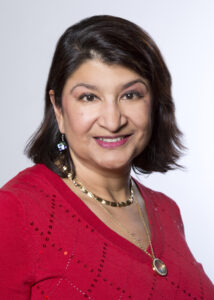
Dr. Agarwal is an active member of the Society for Pediatric Anesthesia and the Society for Pediatric Pain Medicine, where she contributes to educational and editorial initiatives. A representative sample of her publications includes work on pediatric sedation safety in Pediatrics, anesthesia for pediatric chest trauma in Seminars in Cardiothoracic and Vascular Anesthesia, airway management in laryngotracheal injuries in children in Paediatric Anaesthesia, opioid use in children during the perioperative period, perioperative management of pediatric patients using medicinal marijuana, dental anesthesia safety, outpatient opioid prescribing guidelines for children and adolescents, and safe and effective pain management in children in American Family Physician. She has also written on workforce trends in pediatric anesthesiology, adverse event disclosure, and perioperative considerations for adolescents and young adults with substance use disorders.
She has completed training in evidence-based coaching and is passionate about advocacy for safer care for children undergoing dental anesthesia and appropriate pain management for pediatric patients, while also supporting physicians through mentorship and coaching. She shares updates through her Stanford profile, on X as @ritaagarwal6, on Instagram as @ragarwal62, and on Bluesky as @momdoc3.bsky.social.
Veronica Zoghbi, Luis Rodriguez, and Claudia Bruguera are anesthesiologists.