Many clinicians recall cases that stand out not for their diagnostic complexity, but for their ethical dilemmas. One such experience involved a long-time patient, a devout Catholic in his 70s, who asked if donating his body to science conflicted with his church’s teachings.
For years, I have displayed a favorite prayer on a poster in my office called “Prayer of the Catholic Physician.” This display gave my patient the opening to bring up organ donation and his faith-based concerns. However, he approached the subject hesitantly and almost apologetically, as though his question might be inappropriate. Beneath his hesitation lay a real ethical struggle: He was grateful to medicine and anxious to give back, yet uncertain whether anatomical donation conflicted with Catholic burial precepts. He planned to ask his priest, but, since he was with me, he seized the moment to seek my opinion. His question was not about paperwork or processes. It was about identity, legacy, and moral alignment. As often happens, our dilemmas arise from the intersection of medicine, culture, and faith.
The intersection of medicine, culture, and faith
This patient was always curious about medicine. He asked thoughtful questions, read widely, and joked that he might have become a doctor if life had unfolded differently. His body donation idea was clearly well considered. He was also a lifelong and practicing Catholic. He had laid to rest parents, siblings, and friends according to the rituals of his faith. He believed deeply in the dignity of the human body, even after death. He worried that dissection, even in the service of education, might be seen as desecration. Worse yet, he feared it could place his faith in an eternal life in peril. He simply wanted the certainty that this was allowed because he had a deep desire to make this contribution to medicine. But, at the same time, he wanted to know if he could both honor his faith and make this contribution.
Real physician voices, twice a week
Free, and one click to unsubscribe.
For most clinicians, the ethics of body donation appear straightforward; anatomical gifts advance medical education, strengthen surgical training, and support research that benefits future patients. However, donors must decide freely, without coercion, and with full understanding. But ethical clarity for medical providers does not automatically translate into moral clarity for our patients. Therefore, we need to engage openly with their concerns, underscoring the importance of clinician awareness of such topics.
Many Catholics are unaware that the church explicitly supports organ and body donation as charity. The church requires remains to be treated respectfully and ultimately laid to rest. Misconceptions persist about bodily integrity, resurrection, and what counts as “respect” after death.
The physician’s role as a guide in ethical dilemmas
These gray areas between doctrine and assumptions sometimes place physicians in new roles. We are not theologians, but we become guides helping patients understand the implications of medical decisions. The physician’s role goes beyond just providing information. Citing church teaching was neither my place nor what the patient truly needed. He did not want a theological treatise. He wanted reassurance that his wish to help future physicians could coexist with his religious identity.
We discussed his concerns over several visits. I explained the process of anatomical donation from the medical viewpoint. I described how medical schools treat donors with respect and return remains to families. I mentioned ceremonies of gratitude for donors and explained how donations impact the training of future clinicians. Equally important, I listened to his reflections. He spoke about his upbringing, his parents’ funerals, his conviction in the dignity of the body, and his wish to leave a meaningful legacy. His dilemma centered not on doctrine, but on uniting deeply held values. This emotional and spiritual support is rarely taught in continuing medical education, yet it is key to compassionate, holistic care.
Fostering respect and understanding cultural differences
A wider ethical question arises for clinicians. How can we support patients whose medical decisions are shaped by different religious or cultural models? Accepting these differences fosters respect and strengthens relationships. Similar issues may arise among other faiths and cultures. By staying open to varied viewpoints, clinicians can personalize care for each patient’s context. This guarantees respectful, holistic care.
We often feel unprepared or uncomfortable when facing religious concerns. Ignoring them risks depriving patients of sincere connections. Respecting the patient also means understanding the moral space in which they make choices. In these cases, our ethical responsibility includes many parts. I had to provide accurate information about donations, acknowledge religious commitments without minimizing them, clarify misconceptions, and address spiritual concerns. I always encourage consulting clergy or spiritual advisors. Finally, I made clear that I supported my patient’s decision, whatever it was.
This process is not about endorsing one belief system, but about practicing medicine that sees the whole person. After several conversations and consultation with his priest, my patient chose to register as a body donor. Learning of the church’s support brought him peace. This allowed him to honor his faith and contribute to medical education.
But the encounter stayed with me. It reminded me that patient ethical conflicts must be addressed, just like therapeutic issues. These conflicts are personal and genuinely human. They remind us that patients are complex people with many factors affecting their well-being. Clinicians often share stories about diagnostic difficulties, system failures, or emotional demands. But these less-discussed ethical moments also deserve attention. They reveal the trust patients place in us as both providers and companions in their well-being. When a patient asks such a question, they are seeking reassurance that they can stay true to themselves. Helping patients answer these questions is part of our work. It is not flashy. It will not show up in billing codes. But it is the kind of medicine that reminds us why we chose this profession.
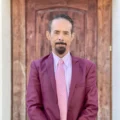
Francisco M. Torres is an interventional physiatrist specializing in diagnosing and treating patients with spine-related pain syndromes. He is certified by the American Board of Physical Medicine and Rehabilitation and the American Board of Pain Medicine and can be reached at Florida Spine Institute and Wellness.

Dr. Torres was born in Spain and grew up in Puerto Rico. He graduated from the University of Puerto Rico School of Medicine. Dr. Torres performed his physical medicine and rehabilitation residency at the Veterans Administration Hospital in San Juan before completing a musculoskeletal fellowship at Louisiana State University Medical Center in New Orleans. He served three years as a clinical instructor of medicine and assistant professor at LSU before joining Florida Spine Institute in Clearwater, Florida, where he is the medical director of the Wellness Program.
Dr. Torres is an interventional physiatrist specializing in diagnosing and treating patients with spine-related pain syndromes. He is certified by the American Board of Physical Medicine and Rehabilitation and the American Board of Pain Medicine. He is a prolific writer and primarily interested in preventative medicine. He works with all of his patients to promote overall wellness.