During my residency, while rotating through the spinal cord unit at the VA Hospital in Puerto Rico, I cared for young veterans who, to my surprise, had, in most cases, adjusted remarkably well to a new reality: they would spend the rest of their lives in a wheelchair. I remember one case, in particular. I recollect this case well because the patient was the unofficial Don Juan of the unit. He had several gorgeous girlfriends, among them some of the nurses. He flirted, he laughed, he lived intensely. Watching him, I thought resilience must simply be a young person’s privilege, and I marveled at his attitude under such conditions. It may have been an act. But it was a good one.
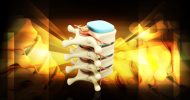
Years later, I met a patient during a consultation with a very different perspective. He was 60 years old, a year out from his spinal cord injury (SCI). The story behind it was almost cruelly ordinary: a beautiful Sunday morning at the beach, a book in hand, sitting on some rocks by the shore, and then a large wave knocked him down, striking his neck. In an instant, his life had been upended as he developed quadriplegia. By the time I saw him, he had become one of the most unhappy people I had ever treated. He was unpleasant to everyone who tried to help him. Nothing appeared to be adequate. He drifted from one center to another, exhausting the goodwill and patience of every team that took him on.
For a long time, I carried the stories of these two men as anecdotal proof of a simple rule. The young adapt, the old do not. The literature agrees with me, but only partway. And the part where it disagrees is the more clinically useful part.
The functional and participatory picture strongly favors my bedside impression. Longitudinal work on aging after SCI has found that people injured at a younger age go on to show better community participation and life satisfaction than those injured later, even when their injuries are more severe. Younger patients also tend to show better neurologic recovery, higher independence scores, and more frequent return to independent walking than older patients; older survivors often show a greater functional deficit than younger ones, despite comparable rates of biological and sensorimotor recovery. In other words, the body may heal similarly across ages, but the quality of life rebuilds differently.
Real physician voices, twice a week
Free, and one click to unsubscribe.
There’s also a fascinating wrinkle around timing. Acquiring a disability very early, for instance, in the teens or early twenties, tends to predict good long-term adjustment. So, interestingly, does acquiring one quite late, after 65 or 70. The roughest window to be struck down, according to this same body of psychosocial research, is around age 40, when identity as a nondisabled, capable adult is most entrenched, and when careers, marriages, and raising children are all in full swing. My beachside patient, injured in his early 60s after a lifetime of physical independence, fits a related pattern: older age at onset has repeatedly been linked to worse long-term life adjustment, even when physical recovery is otherwise unremarkable.
What does the data imply?
Here is where I had to revise my own certainty. A nationwide population-based cohort study, following patients after traumatic SCI, found that the highest risk of new-onset anxiety or depression post-discharge was actually among younger patients, those under 50, not older ones. Other studies examining psychosocial adjustment scales have found no significant age effect on mood at all, or have found older patients trending toward worse scores without reaching statistical significance.
Put bluntly, the Don Juan patient I met early in my career may have been adjusting behaviorally and socially with real skill, while carrying a mood burden that never showed up on rounds. Young patients often look like they’re thriving, active, social, and physically engaged. This is precisely because functional adaptation comes faster to them. But looking adjusted and being free of depression or anxiety are not the same thing, and the data suggest we may be undertreating the psychological injury in our most resilient-looking patients.
I still believe what I saw in that VA unit decades ago. Younger patients, overall, rebuild a functional and social life after SCI with a speed and completeness that is genuinely inspiring to witness. My patient from the beach represents something real, too. The impact and cruelty of an injury that arrives after a life has already been fully built, with no time left to build it differently.
But as physiatrists, we cannot let a patient’s apparent social and functional adjustment excuse us from screening for depression and anxiety just because they are young, mobile within their limitations, and surrounded by admirers. Behavioral resilience is not the same as mental resilience. The 25-year-old veteran flirting his way through the ward and the 60-year-old man who alienated every team that tried to help him were both adjusting, just on different axes, on different timelines, and, it turns out, with different hidden risks. Our job is to develop the capacity to recognize both.
Francisco M. Torres is an interventional physiatrist specializing in diagnosing and treating patients with spine-related pain syndromes. He is certified by the American Board of Physical Medicine and Rehabilitation and the American Board of Pain Medicine and can be reached at Florida Spine Institute and Wellness.
Dr. Torres was born in Spain and grew up in Puerto Rico. He graduated from the University of Puerto Rico School of Medicine. Dr. Torres performed his physical medicine and rehabilitation residency at the Veterans Administration Hospital in San Juan before completing a musculoskeletal fellowship at Louisiana State University Medical Center in New Orleans. He served three years as a clinical instructor of medicine and assistant professor at LSU before joining Florida Spine Institute in Clearwater, Florida, where he is the medical director of the Wellness Program.
Dr. Torres is an interventional physiatrist specializing in diagnosing and treating patients with spine-related pain syndromes. He is certified by the American Board of Physical Medicine and Rehabilitation and the American Board of Pain Medicine. He is a prolific writer and primarily interested in preventative medicine. He works with all of his patients to promote overall wellness.