I did not expect the red-carpet treatment. My illness came on abruptly, without a prodrome and without the courtesy of localizing symptoms, no cough, dysuria, or obvious source of infection.
One weekday morning, after stepping out of a hot shower, I collapsed onto the bathroom tile like a heap of wet seaweed. I attributed it to overwork, dehydration, and the predictable consequences of caring for everyone except myself. By the time I finally yielded to my family and agreed to go to the emergency department, I had spent three days in bed hydrating, resting, and praying that I could reverse whatever was happening.
I was an endocrinologist with type 1 diabetes, hypothyroidism, and multiple sclerosis. Chronic disease was not unfamiliar territory. Most of my medical problems lived comfortably within my wheelhouse, and I had spent years managing them with the same medications, algorithms, and vigilance I prescribed for my patients. I was a self-contained, meticulously managed physiologic unit. I did not need help.
For years, I had warned patients not to self-diagnose, self-treat, or delay seeking medical attention. At forty-seven, I nearly died doing all three.
Real physician voices, twice a week
Free, and one click to unsubscribe.
The rigors should have been the unmistakable signal. My teeth chattered violently, my body shook uncontrollably, and fever and chills arrived with textbook intensity. Yet I had not thought much about the term rigors since residency. It was only when my clicking teeth nearly propelled me out of bed that I acknowledged the possibility of a serious systemic infection. I had ignored the fever, the chills, the profound weakness, and the fact that I could barely walk to the bathroom or across the room. Instead, I attempted to will myself back to health.
I am not typically prone to reckless medical decisions, but severe hypotension has a way of dismantling executive function. My mentation was not simply cloudy. I was likely encephalopathic from sepsis and cerebral hypoperfusion, although I did not have the clarity to recognize it at the time. My gray matter felt wrapped in a dense, wet wool blanket.
Still, I performed well. My “I’m not that sick” persona could have earned an Academy Award for Best Actress in a Medical Drama. It apparently convinced enough stethoscope-wearing people in scrubs that I was appropriate for admission to a general medical floor.
My stay there was brief. When my blood pressure became unobtainable, I was transferred to the ICU. It was the first sound clinical decision anyone had made in three days.
By then, my body’s message was impossible to ignore: You are critically ill. You cannot manage this. You need help.
I was terrified. I understood that I had to surrender, to the intensivist, the critical care team, and the full machinery of modern medicine.
The source of sepsis had not been identified, and I was in septic shock. I knew enough to understand that I was deteriorating, even if I could no longer organize my thoughts into a coherent assessment and plan.
Oddly, I remained preoccupied with my blood glucose. Diabetes was the disease I understood. It was familiar terrain inside a body that had become physiologically foreign.
I could not formulate my own history into anything resembling a respectable case presentation. My thoughts were fragmented, my concentration impaired, and my speech weak. Yet one conclusion remained intact: if something did not change quickly, I might become the subject of the next morbidity and mortality conference. I asked questions whenever my brain could form one and my voice had enough strength to deliver it.
The intensivist rarely touched me. He did not look me in the eye or offer any meaningful reassurance. There were no promises, which I understood. But there was also little acknowledgment of fear. Instead, I heard variations of the same message: the protocols were being followed. My laboratory values were improving. My vital signs were improving. I did not feel as though I was improving.
There is a peculiar form of terror that occurs when the data suggest recovery but the patient experiences deterioration. Physicians are trained to trust trends, hemodynamics, imaging, laboratory values, and objective markers. Patients are left to trust the sensation of inhabiting their own bodies. In that moment, my body was telling me something the numbers were not.
Desperation overtook judgment. I called physician friends and asked them to become involved. The intensivist was furious that I had contacted consultants without first obtaining his approval. He documented, “The patient is trying to manage her own care without my approval.”
Even in septic shock, I understood the implication. I had become the enemy in the bed. The adversary. The physician-patient who asked too many questions, understood too much in some moments and too little in others, and made the clinical environment more complicated. I had crossed the invisible line from informed participant to difficult patient.
On hospital day four, my instincts proved correct. I required intubation, mechanical ventilation, neuromuscular blockade, and the full loss of bodily autonomy that accompanies critical illness. The interventions eventually helped save my life, but they transformed me into a turtle trapped inside its shell, fully enclosed, unable to speak, unable to move, and entirely dependent on the people surrounding me.
Only then did the intensivist tell my family that my estimated chance of survival was 10 percent.
Ten percent.
Weeks later, after discharge, I reviewed my medical record. My perception had not been imagined. I had indeed been characterized as an adversarial and difficult presence in my own care.
I never expected privilege because I was a physician. I did not expect a ceremonial pathway through the emergency department, twenty-four-karat-gold bathroom fixtures, or angels perched on the physicians’ shoulders. I did not expect my years in practice to earn me immunity from sepsis, expedited recovery, or a guaranteed favorable outcome.
I expected something far more basic. I expected my fear to be acknowledged. I expected the team to recognize that, although sepsis had impaired my cognition, I still possessed a physician’s understanding of how quickly critical illness can progress. I expected some degree of respect, even though a hospital gown had replaced my white coat.
The experience forced me to confront a question I have revisited many times since.
When did humanity become optional in medicine?
Critical care is demanding. Intensivists manage uncertainty, physiologic collapse, family distress, limited time, and relentless cognitive burden. No physician can promise survival, and false reassurance serves no one. But there is a vast difference between withholding false hope and withholding human connection.
A hand on the shoulder does not alter lactate clearance. Eye contact does not reverse distributive shock. Acknowledging fear does not replace vasopressors, antibiotics, source control, or mechanical ventilation. Yet those gestures matter. They tell the patient: I see you. I recognize what is happening to you. You are not merely the host of a failing organ system.
That was the model of medicine I had been taught. It was the physician I had spent my career trying to become.
The excellent and obvious conclusion is that I survived. Nothing makes a person more grateful for life than discovering she landed in the 10 percent.
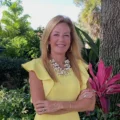
Andrea Hayes is a retired endocrinologist, author, and speaker whose work brings uncommon candor and humor to the realities of medicine, illness, and the human body. After nearly three decades in clinical practice, including years leading a high-volume endocrine and diabetes center, she now writes and speaks about health care, chronic disease, physician burnout, patient behavior, and the often-absurd intersection between science and daily life.
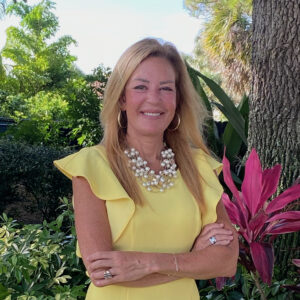
Diagnosed with type 1 diabetes as a teenager, Hayes offers a rare perspective from both sides of the exam room, as physician, patient, survivor, and storyteller. Her forthcoming memoir, Floodline: Blessings and Betrayals of a Life in Medicine, explores illness, faith, betrayal, resilience, and reinvention. She is also the author of Peach Cobbler Is Not a Fruit, a humorous essay collection drawn from the endocrine trenches.
She writes on Substack and shares updates on her website, LinkedIn, Facebook, and Instagram.