I grew up as the son of a dead Air Force officer who made the ultimate sacrifice for his country. In Boston in the 1970s, that lineage didn’t shield me. It marked me. I walked around with a crewcut, government-issued BCG glasses (“birth-control glasses,” as every military kid knew), and a stubborn refusal to follow the crowd. That was enough to get me spat on more than once.
Those moments didn’t make me bitter. They made me strong. They taught me that moral clarity is lonely, that doing the right thing rarely earns applause, and that standing apart from the crowd is not a pose. It is a cost.
I carried that mindset into college. At Boston University, I was elected president of the College of Arts and Sciences Student Government, not because I was the loudest voice, but because I was the steady one. I was also part of the inaugural cadre of the Modular Medical Integrated Curriculum (MMEDIC), a demanding early-admission pathway that allowed a small group of students to begin medical training while still undergraduates. It was the first time anyone formally acknowledged that I might have something exceptional to offer.
But I still couldn’t afford medical school. So I joined the Air Force. I didn’t enter as a prodigy or a golden child. I entered as the kid everyone underestimated. Yet a few leaders with vision saw something in me, steadiness, discipline, pattern recognition, and the ability to read a room and a mission at the same time, and they granted me command.
Real physician voices, twice a week
Free, and one click to unsubscribe.
Command changes you. It forces you to grow into the person others already believe you are.
At Minot, I rebuilt a demoralized pediatric clinic without theatrics or ego. Later, in rural North Dakota, I helped build and lead clinics that won national awards for access, quality, and innovation. We proved that rural medicine could be both compassionate and operationally excellent, something many urban institutions still struggle to achieve.
My career then took me into research. As the chief pediatrician in the NIH-funded RUPP Autism Network, I helped lead the first rigorous, multisite, double-blind trial showing that medication could significantly help children with autism and severe behavioral challenges. Our 2002 New England Journal of Medicine study on risperidone became, and remains, a foundational paper in pediatric psychopharmacology. It is still cited more than a quarter century later in systematic reviews, meta-analyses, and clinical guidelines. It established the evidence base for the only FDA-approved medication for irritability in autism. I didn’t chase prestige. I chased impact. The citations simply caught up.
After that, I was recruited to the OSU Nisonger Center, where I did some of the most meaningful work of my career. We modernized systems, elevated standards, and built programs that treated neurodevelopmental care as a matter of dignity, not bureaucracy. We proved that a clinic could be both humane and high-performing. We showed that families deserved better, and that better was possible.
Ironically, the most impactful work of my career came before the most disillusioning chapter. In my late career, I encountered leaders who had long since lost their idealism. Their positions were protected by tenure, rank, and a profound lack of vision. They were cynical in the way only people who have forgotten their purpose can be. They denied me opportunities not because I lacked ability, but because my clarity threatened their comfort.
I’ve learned that institutions can be saved, but only by people who still believe in something larger than themselves. And I still do.
I am a member of Generation Jones, the cohort born between 1954 and 1965, raised on the idealism of the Boomers but forged in the disappointments that followed. Many in my generation hardened into cynicism. I never did. Three years in Japan as a child preserved something in me that America was losing: a belief in dignity, quiet strength, and collective purpose. Later, a president who spoke openly about integrity rekindled it.
I still believe systems can be repaired. I still believe people can be elevated. I still believe Americans are resilient.
That belief is not naive. It is earned.
I’ve seen demoralized teams become high-functioning under steady leadership. I’ve seen families rise when given clarity and respect. I’ve seen institutions correct themselves when someone is willing to tell the truth without cruelty.
And yes, I want something tangible. Not fame. Not celebrity. Just recognition that the work mattered. A medal from my medical school. A nod from the institution that shaped me. Something my son can hold in his hands and say, “This is who he was. This is what he built.”
It isn’t vanity. It is accuracy.
Because the kid who was spat on for refusing to follow the crowd grew into a physician who rebuilt clinics, led seminal research, commanded teams, and fought for dignity in neurodevelopmental care. The officer who joined the Air Force because he couldn’t afford medical school became the one who built programs others now take for granted.
Outstanding, not famous. That has always been the mission.
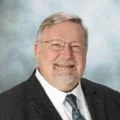
Ronald L. Lindsay is a retired developmental-behavioral pediatrician whose career spanned military medicine, academic leadership, and national advocacy for dignity-centered neurodevelopmental care. His NIH-funded work with the RUPP Autism Network helped define evidence-based approaches to autism and related developmental disorders.
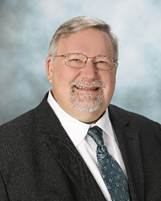
He directed the LEND Program at The Ohio State University and founded JBLM CARES, a $10 million autism resource center for military families. His writing spans clinical scholarship and long-form fiction. He is the author of The Mercy Directive and the six-novel Cassandra series, a completed political and medical fiction saga tracing the rise of the Cassandra system from its origins to its national and international legacy. His forthcoming memoir, The Quiet Architect, examines how conscience and structure collide in modern medicine.
He shares updates on LinkedIn.