For much of my career, I practiced developmental and behavioral pediatrics far from what many people consider the centers of American medicine. Not in Boston. Not in Philadelphia. Not in Baltimore. Not in the academic corridors that dominate medical journals, conference podiums, and faculty appointment committees.
Instead, I practiced in places like Minot, North Dakota; rural Ohio; Appalachia; Peoria, Illinois; and Phoenix, Arizona. Over time, I came to an uncomfortable conclusion: Excellence is not a coastal privilege.
American medicine often behaves as though innovation flows in one direction. Academic medical centers generate knowledge. Everyone else implements it. Reality is more complicated.
Some of the most creative solutions I witnessed emerged in communities that lacked specialists, funding, prestige, and national visibility. Necessity can be a powerful teacher.
Real physician voices, twice a week
Free, and one click to unsubscribe.
When I arrived at Minot Air Force Base in the late 1980s, the nearest pediatric subspecialists were hundreds of miles away. Families could not easily travel to major centers. Children with developmental disabilities, learning problems, behavioral concerns, and complex medical needs still required care. The problems did not disappear simply because geography made referrals difficult. So we adapted.
We built relationships with schools, public health agencies, early intervention programs, and families. Through the Department of Defense, we brought consultants to the community rather than sending every family away. We coordinated care because there was no alternative. Years later, many of the principles we practiced would become associated with the medical home model. At the time, we were simply trying to solve problems.
The same lesson followed me throughout my career. In Illinois and Ohio, we used telemedicine and regional developmental clinics to bring services to underserved communities long before virtual care became fashionable. We developed programs that connected children and families to specialized expertise without requiring them to travel long distances.
In Appalachia, families taught me that access matters far more than prestige. Parents were not asking whether a physician held an endowed chair at a famous university. They wanted answers. They wanted respect. They wanted someone willing to help their child.
In Phoenix, I encountered families who had waited months for developmental evaluations. Rather than accepting delays as inevitable, I redesigned the process. Questionnaires were completed beforehand. Records were reviewed in advance. Families often left with answers during a single visit.
The most important innovations were rarely technological. They were practical. They focused on reducing barriers and improving access.
Yet a persistent bias remains within American medicine. The assumption is that excellence resides primarily in large academic centers and that peripheral communities exist to receive wisdom rather than generate it.
That mindset does a disservice to patients and physicians alike. It overlooks the reality that rural physicians, military physicians, community practitioners, and safety-net providers often confront challenges academic centers rarely experience. Scarcity forces innovation. Limited resources encourage creativity. Communities ignored by the system frequently become laboratories for problem-solving.
The irony is that some of these innovations later reappear under new names, accompanied by policy statements, strategic initiatives, and conference presentations. By then, however, the frontline clinicians who first developed the solutions are often forgotten.
I have seen brilliant clinicians working in remote communities who would never appear on the national lecture circuit. I have watched families overcome obstacles that would discourage most policymakers. I have seen programs built on determination rather than budget.
None of this is an argument against academic medicine. Academic centers play a critical role in research, education, and discovery. The problem arises when prestige becomes confused with wisdom.
Some of the best physicians I have known worked far from national recognition. Some of the most important lessons I learned came from patients, families, and colleagues practicing in places frequently overlooked by the medical establishment. Medicine should be humble enough to acknowledge this reality.
A good idea does not become better because it originated on the East Coast. A solution does not become less valuable because it emerged in North Dakota, rural Ohio, or central Illinois.
Children do not care whether a physician practices in a famous institution or a modest community clinic. They care whether someone helps them. Families care whether someone listens. Communities care whether someone shows up.
For decades, developmental and behavioral pediatrics has struggled with workforce shortages, uneven access, and growing demand. Solving those challenges will require innovation from every corner of the country. We cannot afford to assume that excellence lives only where prestige resides. Some of the best answers are already being developed in places many decision-makers rarely visit.
I know. I spent a career finding them there.
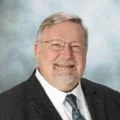
Ronald L. Lindsay is a retired developmental-behavioral pediatrician whose career spanned military medicine, academic leadership, and national advocacy for dignity-centered neurodevelopmental care. His NIH-funded work with the RUPP Autism Network helped define evidence-based approaches to autism and related developmental disorders.
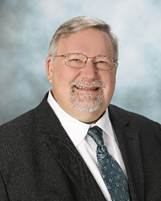
He directed the LEND Program at The Ohio State University and founded JBLM CARES, a $10 million autism resource center for military families. His writing spans clinical scholarship and long-form fiction. He is the author of The Mercy Directive and the six-novel Cassandra series, a completed political and medical fiction saga tracing the rise of the Cassandra system from its origins to its national and international legacy. His forthcoming memoir, The Quiet Architect, examines how conscience and structure collide in modern medicine.
He shares updates on LinkedIn.