It’s 5:30 in the afternoon. The last patient has left. The waiting room is quiet. The medical assistants are finishing their work, and the exam rooms are empty.
But the physician is still sitting in front of the computer. There are unfinished notes, laboratory results to review, medication refills waiting for approval, and patient messages that require careful clinical judgment.
The physician looks at the clock. There was a promise to be home for dinner tonight. But there is still so much to do. And tomorrow, the same cycle will begin again.
For many primary care physicians, this is not an occasional difficult day. It is an ordinary workday. I know because I lived it. After more than two decades in primary care, I have come to question something that our profession has accepted for far too long.
Real physician voices, twice a week
Free, and one click to unsubscribe.
When did exhaustion become evidence of dedication?
The invisible work of primary care
When people think about a physician’s workday, they imagine patient visits. They see the examination, the diagnosis, the treatment plan, and the prescription. What they rarely see is everything that happens afterward.
The laboratory results that need interpretation. The medication refill that requires reviewing kidney function, recent blood pressure readings, or potential drug interactions. The patient message that begins with a simple question but requires a complex medical decision. The forms, referrals, prior authorizations, and conversations necessary to coordinate care.
None of these tasks is insignificant. They are part of what makes primary care comprehensive, continuous, and deeply valuable.
But there is a problem. We often build physician schedules around the number of patients seen without adequately accounting for the work required to care for those patients between visits. Then, when the work doesn’t fit into the scheduled day, the physician is expected to find a way. Usually by staying late. Sometimes by working at home. And often by sacrificing personal time.
Over the years, many of us have accepted this as simply part of being a good doctor. I no longer believe that should be our standard.
When being a good doctor becomes a trap
One of the greatest rewards of primary care is the relationship we build with our patients. We know their medical histories, their families, their fears, and sometimes the struggles they never mention to anyone else. They trust us. And that trust is something I have always valued deeply.
But there is another side to that responsibility. When patients know you well, they want your opinion. When staff members trust your judgment, they bring you questions. When you are known as someone who will always help, more responsibilities gradually find their way to you.
And because you care, you keep saying yes. Yes to another patient. Yes to another refill. Yes to another urgent message. Yes to another task that nobody else seems able to handle.
Eventually, you become the person everyone depends on. At first, that feels like professional success. But I have learned that being indispensable can become a trap when the entire system depends on your constant availability.
A physician should not have to choose between being a dedicated clinician and having a sustainable personal life. Good patient care requires continuity and accountability. It also requires effective teamwork, clear protocols, appropriate delegation, and systems that function safely when an individual physician is unavailable.
Being a good doctor should not mean doing everything alone.
The question I stopped asking
Earlier in my career, I was seeing more than 22 patients a day. My days were long, and the administrative work seemed endless. I was successful by many traditional measures. I had a busy practice. My patients trusted me. I was earning a good income.
But I was exhausted. What troubled me most was not the clinical work itself. I loved medicine. I loved listening to patients, solving difficult problems, recognizing patterns, and helping people understand their health. What troubled me was that I often felt there wasn’t enough time to practice medicine the way I believed it should be practiced.
For years, I asked myself the same question: How can I become faster? Faster at documenting. Faster at reviewing charts. Faster at answering messages. Faster at moving from one patient to the next.
Then, gradually, I began asking a different question. What if I don’t need to become a faster physician? What if I need a better structure around the work I already do?
That question changed the direction of my career. I began examining my documentation habits, coding practices, compensation arrangement, workflow, and schedule. I wanted to understand where my time was going, how my work was being recognized, and which responsibilities could be organized more effectively.
The changes did not happen overnight. They required difficult decisions and a willingness to question routines I had followed for years. But over time, my professional life changed.
Today, I work three clinical days per week, seeing approximately 16 patients a day with 30-minute appointments. My annual clinical income reached $320,000.
I share this not because I believe every physician can reproduce my circumstances. Compensation arrangements, patient populations, practice environments, and personal responsibilities differ significantly. I share it because, for many years, I assumed that seeing fewer patients or working fewer clinical days would necessarily mean sacrificing professional success. My experience taught me that the relationship between workload, compensation, and career satisfaction is more complicated than that.
And perhaps the most important benefit was not financial. It was having more time to listen. More time to explain. More time to think carefully about complex medical decisions. More time to be the kind of physician I had always wanted to be.
The hidden cost of a successful career
We often measure physician success through salary, patient volume, productivity, and professional recognition. Those measures have their place. But I believe we are missing an important part of the equation.
How many hours does that salary require? How much work follows the physician home? How often are family dinners interrupted by unfinished charts? How much mental energy remains at the end of the day? And perhaps most importantly, can the physician continue working this way for another ten or twenty years?
A higher salary does not automatically mean a better career. Neither does a larger patient panel or a fuller schedule. A career can look successful from the outside while quietly becoming unsustainable for the person living it.
I believe we need to become more comfortable discussing these realities without treating them as signs of weakness. Physicians should understand their compensation structures, including productivity measures when applicable. They should understand accurate documentation and coding. They should know how much time they spend on work outside patient appointments. And they should be able to discuss staffing, administrative support, and workflow design as essential components of patient care, not as personal conveniences.
These are not simply business concerns. They influence the conditions under which we make clinical decisions.
What are we teaching the next generation?
Sometimes I imagine a young physician coming to me after a long clinic day. She is exhausted. She has unfinished charts waiting at home. She is missing time with her family. And she wonders whether she made the right decision choosing medicine.
What would I tell her? Would I tell her to work harder? To become faster? To accept that this is simply what being a physician requires? Years ago, perhaps I would have.
Today, I would tell her something different. I would tell her that medicine is demanding and always will be. That there will be difficult days, unexpected emergencies, and responsibilities that cannot wait.
But I would also tell her that chronic exhaustion should not be treated as a professional achievement. That she should understand her employment contract. Learn how her work is valued. Pay attention to her workflow. Ask for appropriate support. And never assume that the structure of her first job must define the rest of her career.
Most importantly, I would remind her why she entered medicine in the first place. Not to complete the greatest number of charts. Not to answer the most messages. Not to prove how much personal time she could sacrifice. But to care for people. To use her knowledge and judgment. To make a difference in patients’ lives.
We need a different definition of excellence
I still believe deeply in the value of hard work. I still believe that patients deserve physicians who are committed, knowledgeable, compassionate, and willing to go the extra mile when necessary. But I no longer believe that the physician who sacrifices the most is necessarily the physician who provides the best care.
Excellence in medicine should not be measured by how late we stay in the office. It should be reflected in the quality of our clinical decisions, the trust we build, the care we provide, and our ability to continue doing that work throughout a meaningful career.
We need to stop teaching physicians that exhaustion is evidence of excellence. Because the greatest achievement is not simply surviving another workday. It is building a professional life in which we can continue caring for patients without losing ourselves along the way.
And perhaps the most important question we should ask is no longer: How much more can this physician do? But rather: How can we build a system that allows this physician to do their best work, and still have a life when the last patient leaves?
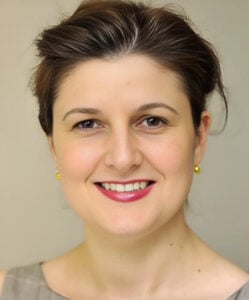
Jerina Gani graduated with high honors from medical school in Albania, Europe, in 1992. She later earned a Master of Science degree in Health Services Management from the London School of Hygiene and Tropical Medicine in the United Kingdom. In 1995, she relocated to the United States and completed her residency training in internal medicine in Brooklyn, New York. Since then, she has practiced as a primary care physician in Boston, Massachusetts. With decades of experience in the medical field, Dr. Gani is deeply committed to transforming primary care into a model of success and balance. Her professional focus emphasizes improving health care delivery while maintaining physician well-being. Dr. Gani shares her insights and strategies for achieving these goals through her platform at Dr. Gani Secrets, where she engages with health care professionals and the broader community.