For years, I gave my patients advice that I was not following myself. Reduce your stress. Protect your sleep. Listen to your body. Set healthier boundaries. Then I would finish a full day of back-to-back appointments and stay late answering inbox messages, reviewing charts, completing forms, and responding to insurance demands. I would go home physically tired but mentally still at work, replaying the day and thinking about everything waiting for me the next morning.
I told myself this was what a dedicated family physician did. Keep going. Stay later. Make room for one more patient. Carry everyone’s needs home with you.
In primary care, we are trained to care for the whole person. We consider the medical problem, the family, the work environment, the stress, the finances, and the social circumstances that shape health. Yet for a long time, there was one whole person I consistently left out of that equation: myself.
The privilege (and the weight) of longitudinal care
The beauty of primary care is continuity. We do not simply meet a diagnosis; we come to know a person. We may care for patients through new parenthood, chronic illness, grief, recovery, aging, and the ordinary fears that never fit neatly into a billing code. Over time, trust accumulates. That relationship is the heart of primary care.
Real physician voices, twice a week
Free, and one click to unsubscribe.
But continuity creates a particular kind of responsibility. When patients know and trust you, it becomes difficult to say no. Every urgent message feels personal. Every delayed appointment feels like a failure of access. Every schedule change carries the worry that someone who depends on you will be left without care.
Meanwhile, the work surrounding the visit keeps expanding. A 15- to 20-minute appointment may contain several chronic conditions, new symptoms, preventive care, medication questions, and emotional distress. The visit ends, but the work does not. As we all know, there are results to review, referrals to coordinate, forms to complete, prior authorizations to challenge, and an inbox that refills as quickly as it is emptied.
None of this appears in the reassuring phrase “work-life balance.” It feels more like trying to practice thoughtful medicine inside a system that rewards speed while patients need time.
The breaking point
For years, I tried to solve this mismatch by giving the system more of myself. I worked longer, moved faster, and treated exhaustion as evidence of commitment. I believed that if I were organized enough, efficient enough, and devoted enough, I could somehow absorb an unlimited workload without changing the quality of my care, or the quality of my life.
Eventually, I had to confront what many physicians already know but struggle to say aloud: Dedication does not make us inexhaustible. I reached a point where continuing in the same way was no longer sustainable. I made the difficult decision to reduce my clinical hours.
The decision felt heavier than I expected. I worried about patient access. I worried about disappointing colleagues and patients. I worried that working fewer hours would be interpreted as caring less. Medicine teaches us how to tolerate enormous responsibility, but it does not always teach us how to set a boundary without shame.
What happened next surprised me. I became a better doctor.
What working less restored
With more capacity, I could think clearly during complex visits. I could sit with uncertainty instead of rushing toward the easiest answer. I could listen without part of my mind already racing toward the next patient, the next message, or the unfinished chart waiting at the end of the day. I became more proactive and less reactive.
Preventive medicine and wellness counseling require more than a checklist; they require attention, judgment, and the ability to understand what change is realistic in a patient’s life. Mental clarity gave me more room for that work.
Most importantly, I could protect the relationship at the center of primary care. Patients can feel the difference between a physician who is physically present and one who is truly available to listen. Trust is built in those small moments, when we pause, notice what was not said, and make a patient feel that they are not simply the next task in a crowded day.
Reducing my hours did not make me less committed. It helped me practice with greater presence, patience, and precision. It also protected my ability to remain in medicine for the long term.
Physician well-being is a patient-care issue
We often discuss physician burnout as though it were primarily a personal wellness problem. We recommend exercise, meditation, resilience training, and better time management. These practices may help, but they cannot fully compensate for workloads designed around chronic overextension.
Burnout is not simply what happens when physicians fail to take care of themselves. It can be the predictable result of asking clinicians to provide deeply human care within systems that leave too little time for humanity.
A depleted physician may still be compassionate and highly skilled. But depletion decreases attention. It reduces patience. It makes reflection harder and recovery slower. I strongly believe that protecting a physician’s cognitive and emotional capacity is therefore not separate from quality of care; it is part of quality of care.
This does not mean every physician can reduce clinical hours. Many cannot, for financial, contractual, staffing, or personal reasons. Nor should individual physicians carry sole responsibility for repairing a system-level problem. Health care organizations must address administrative overload, inadequate visit time, inbox burden, staffing shortages, and cultures that equate self-sacrifice with professionalism. But when physicians do have the ability to establish a healthier boundary, we should not make them feel guilty for using it.
A different definition of dedication
Medicine has long celebrated the doctor who never stops, the one who stays latest, accepts every request, and remains endlessly available. But a profession cannot build its future around the quiet destruction of the people doing the work.
Perhaps dedication should not be measured by how much of ourselves we are willing to lose. Perhaps it should be measured by the quality of attention we bring to the person in front of us, by the thoughtfulness of our decisions, by the trust we preserve, and by our ability to continue serving patients without becoming emotionally absent from our own lives.
Today, I still care deeply about access. I still feel the weight of responsibility that comes with being someone’s primary care physician. But I no longer believe that exhaustion is proof of devotion.
We tell our patients that untreated stress has consequences. We encourage them to sleep, recover, and respect the signals their bodies are sending. We remind them that prevention matters more than waiting for a crisis. Physicians deserve to take that advice before reaching their own breaking point.
Working less did not pull me away from the physician I wanted to be. It brought me back to her.
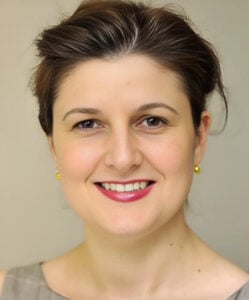
Jerina Gani graduated with high honors from medical school in Albania, Europe, in 1992. She later earned a Master of Science degree in Health Services Management from the London School of Hygiene and Tropical Medicine in the United Kingdom. In 1995, she relocated to the United States and completed her residency training in internal medicine in Brooklyn, New York. Since then, she has practiced as a primary care physician in Boston, Massachusetts. With decades of experience in the medical field, Dr. Gani is deeply committed to transforming primary care into a model of success and balance. Her professional focus emphasizes improving health care delivery while maintaining physician well-being. Dr. Gani shares her insights and strategies for achieving these goals through her platform at Dr. Gani Secrets, where she engages with health care professionals and the broader community.