Many physicians do not talk about this openly, but at some point in their careers, a quiet question begins to surface: Is this really what it is supposed to feel like? After years, often decades, of training, sacrifice, and dedication, all of us as primary care physicians find ourselves in a position that, on paper, looks successful. We are caring for thousands of patients, maintaining full schedules, and carrying immense responsibility. But on the other side, beneath that surface, something feels off. Long days stretch into evenings. Inbox messages go well beyond our personal time. Charting becomes a nightly routine. And exhaustion, once occasional, becomes a constant, everyday issue. Over time, many of us as physicians stop asking ourselves how we are doing. The focus remains entirely on patients, on systems, on keeping everything moving. Personal well-being becomes secondary, then distant, then unfortunately with time almost invisible. I recognize this pattern because I lived it.
There was a time when my days regularly extended to 12 or 13 hours. I was seeing more than 22 patients a day, staying late to finish documentation, and carrying the mental load of countless clinical decisions long after leaving the office. From the outside, everything appeared to be working. But internally, the experience was very different. The fatigue was not just physical; it was deeper. It was the kind of exhaustion that slowly disconnects you from your sense of purpose. The kind that makes even meaningful work feel so overwhelming. And in fact, the most difficult part was not the workload itself. It was the belief that this was simply the reality of practicing medicine. That this is what we signed up for. That financial stability required constant output. That slowing down would come at a high cost. But that belief deserves to be challenged. And I would like to do it right now.
Because the truth is, physicians do not have to choose between working less and earning well. Nor do they have to accept exhaustion as the price of success. What changed everything in my own career was not an increase in effort, but a change in structure. At one point, I made a decision that felt uncomfortable at first. I reduced my schedule. I worked fewer days and allowed more time per patient visit. I shifted my focus from volume to depth, moving away from rushing through appointments and toward more thoughtful, comprehensive care.
This approach initially felt counterintuitive. Would not fewer days and fewer patients lead to reduced income? That assumption is deeply ingrained in our medical culture. But in practice, something very different happened. My income did not decrease. In fact, it increased. More importantly, my experience of medicine totally changed. Time returned, not just in my schedule, but in my mind. There was space to think, to breathe, and to reconnect with the work itself. Patient interactions became more meaningful. Instead of feeling pressured to move quickly, I was able to listen more carefully, address concerns more thoroughly, and build stronger relationships with my own patients. And even patients noticed the difference. They felt more supported, more understood, and more confident in their care. What initially seemed like a reduction in productivity became, in reality, a shift toward higher-value care for both me as the physician and my patients.
For physicians who have spent 10, 15, or 20 years in practice, this perspective is especially important. There is often a deeply held belief that continued success requires continued sacrifice. But at a certain point, it becomes necessary to ask: How much more needs to be proven? Years of commitment, long hours, and clinical excellence have already demonstrated dedication. Continuing at an unsustainable pace does not add value; it erodes it. Of course, the idea of reducing workload brings understandable concerns, particularly around income. This concern is valid. It reflects every doctor’s responsibility and foresight at what the future will bring. However, what many physicians have not been shown is that income in primary care is not determined solely by volume. It is most importantly shaped by structure, how visits are organized, how care is delivered, and how the full scope of clinical work is recognized. When these elements are aligned more effectively, the relationship between time and income can shift in ways that challenge traditional assumptions, and the structure always wins over volume.
This is not about working less for the sake of convenience. It is about working with greater intention. It is about creating a model of care that supports both the physician and the patient, one that allows for sustainability, presence, and long-term fulfillment. I strongly believe that primary care, when approached thoughtfully, has far more potential than many of us were ever taught. For those who have quietly wondered whether a different way of practicing medicine might exist, that question is worth exploring. Not as a reaction to burnout, but as a reflection of growth. Because meaningful change does not always begin with action. Sometimes, it begins with a willingness to reconsider what is possible. And for many physicians, that reconsideration may be long overdue.
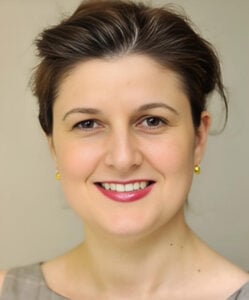
Jerina Gani graduated with high honors from medical school in Albania, Europe, in 1992. She later earned a Master of Science degree in Health Services Management from the London School of Hygiene and Tropical Medicine in the United Kingdom. In 1995, she relocated to the United States and completed her residency training in internal medicine in Brooklyn, New York. Since then, she has practiced as a primary care physician in Boston, Massachusetts. With decades of experience in the medical field, Dr. Gani is deeply committed to transforming primary care into a model of success and balance. Her professional focus emphasizes improving health care delivery while maintaining physician well-being. Dr. Gani shares her insights and strategies for achieving these goals through her platform at Dr. Gani Secrets, where she engages with health care professionals and the broader community.