Every few months, the news runs with a headline about artificial intelligence replacing doctors. A model passes an exam. A chatbot answers a patient question. A system summarizes a chart or reads an image. The debate starts again.
Will AI replace physicians? I think that is the wrong question. The better question is: Which parts of modern medical work should never have been placed on physicians in the first place?
Doctors are not burning out because they forgot how to care. They are burning out because care has been wrapped in documentation, inboxes, prior authorizations, fragmented records, quality metrics, billing rules, and a constant stream of clicks. A physician can spend years learning to diagnose illness, make decisions under uncertainty, and communicate with families, then spend much of the day serving the computer.
That is where AI should begin. The most useful first wave of clinical AI will not replace physician judgment. It will remove low-value work from the clinical day. It will summarize records before the visit. It will organize medication histories. It will draft routine documentation. It will help route messages. It will surface patterns that deserve attention. It will help translate medical language into words patients can understand.
Real physician voices, twice a week
Free, and one click to unsubscribe.
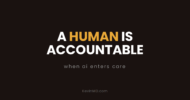
The physician still owns the decision.
That distinction matters. AI can help gather, summarize, translate, and pattern-match. Physicians bring context, accountability, bedside assessment, ethical judgment, and the ability to recognize when the data does not fit the patient. A model may know the textbook. It does not know the hesitation in a patient’s voice, the family dynamic in the room, or the practical reality of a crowded department at 2 a.m.
In the emergency department, signal and noise are always competing. A patient may be scared, unstable, confused, or unable to give a full history. The chart may contain years of data, but the decision window may be minutes. In that setting, a useful AI system isn’t one that gives a clever answer. It reduces friction around the decision.
It should help me find the old echocardiogram. It should show me the recent medication changes. It should warn me about a dangerous interaction. It should draft a note that I can correct quickly. It should make the next right step easier without pretending to be the clinician.
This is why implementation matters more than hype. Before deploying AI, health systems should ask practical questions.
- Does this tool reduce work or create another inbox?
- Does it make clinicians faster without making patients feel less seen?
- Can the output be reviewed, corrected, and traced?
- Does it help nurses, physicians, pharmacists, and staff, or does it only impress people in a demo?
- Are we measuring time saved, errors prevented, patient understanding, clinician satisfaction, and safety?
If a tool cannot answer those questions, it is not ready for clinical trust.
There is also a cultural risk. If AI is presented to clinicians as a replacement threat, they will resist. If it is introduced as another compliance burden, they will ignore it. If it is built with clinicians and aimed at removing unnecessary friction, it can become something medicine badly needs: a force multiplier for human care.
This is especially important for younger clinicians. Medical students and residents are learning in a system where information is abundant, but attention is scarce. They need to learn to question AI output, recognize weak reasoning, and keep the patient at the center of the encounter. AI literacy should become part of clinical literacy, not a separate technology elective.
The best AI in health care will not be the system that tries to sound like a doctor. It will be the system that helps doctors spend more time doing the work only humans can do. Listening. Examining. Explaining. Deciding. Comforting. Leading.
We should stop asking whether AI will replace physicians and start demanding that it replace the broken workflows that keep physicians from practicing medicine. That is the opportunity. That is the responsibility. And that is where health care AI should prove itself.
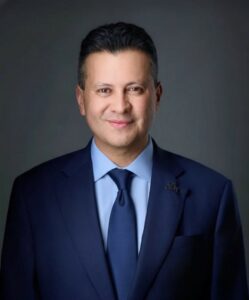
Harvey Castro, known as DR GPT™, is an emergency physician, author, keynote speaker, and physician futurist. He is advisor to the CEO of Phantom Space. He writes and speaks about artificial intelligence in health care, digital health, space medicine, and the future of human-centered care. Explore his speaking topics and availability.
He is the author of Bing Copilot and Other LLM: Revolutionizing Healthcare With AI, Solving Infamous Cases with Artificial Intelligence, The AI-Driven Entrepreneur: Unlocking Entrepreneurial Success with Artificial Intelligence Strategies and Insights, ChatGPT and Healthcare: The Key To The New Future of Medicine, ChatGPT and Healthcare: Unlocking The Potential Of Patient Empowerment, Revolutionize Your Health and Fitness with ChatGPT’s Modern Weight Loss Hacks, Success Reinvention, and Apple Vision Healthcare Pioneers: A Community for Professionals & Patients.
He shares updates on LinkedIn, YouTube, Facebook, Instagram, and X. #DRGPT