California’s SB 903 cleared the legislature on August 31, with the Assembly concurring in Senate amendments by a vote of 40 to 0. It now sits on Governor Newsom’s desk. Assuming he signs it, it’s a real, needed law: It bars companies from advertising AI products as “therapy,” and it puts disclosure, consent, and human-oversight requirements around AI used inside licensed clinical care.
When I wrote about this bill back in May, my concern was that the entire public debate over it was happening without a single family voice in the room. Every quote belonged to a legislator, a professional association, a labor union, a tech lobbyist. That’s still true. But now that the bill has actually passed, there’s a second problem worth naming, and it’s the one that matters more to the families I hear from every week.
Read the bill’s actual language, not just the press coverage. SB 903 defines “psychotherapy services” as care that diagnoses or treats a mental health or substance use disorder, and it restricts AI only when it’s assisting a licensed professional providing that care, or when a company is advertising an AI product as therapy itself. Peer support, religious counseling, self-help materials, and, critically, general-purpose AI products used informally are explicitly outside its reach.
That last exclusion is the whole ballgame. Look at the actual documented cases of chatbot-related psychiatric harm: the lawsuit working through the courts right now involving a man with schizoaffective disorder, the researchers’ four-part framework for how AI can act as a catalyst, amplifier, co-author, or object of a delusion, the pattern showing up again and again in case reports. None of it happens on a product that markets itself as therapy. It happens on ChatGPT. Character.AI. Replika. General-purpose consumer products that a person in crisis turns to at 2 a.m., not because a company sold it to them as clinical care, but because it was already open on their phone.
Real physician voices, twice a week
Free, and one click to unsubscribe.
SB 903 will do real good in the narrow lane it regulates: It will stop companies from falsely branding unlicensed AI as therapy, and it will put guardrails around AI tools used inside actual clinical workflows. Families should be glad it passed. But nobody should mistake it for a fix to the problem I hear about most: a family member spiraling in conversation with a chatbot that was never regulated as a mental health product at all, and still isn’t.
For physicians, this changes what the intake question needs to be. “Are you using an AI therapy app” is now close to the wrong question, because SB 903 just made sure almost nobody will answer yes to it going forward; the products doing the actual harm don’t call themselves that. The question that matters is closer to: “Are you talking to any AI chatbot about how you’re feeling, at all,” asked the same way we’d ask about any other coping behavior, with the word “therapy” nowhere in it.
For families, the practical takeaway is this: Don’t let SB 903’s passage lower your guard. If your loved one is managing a serious mental illness and spending hours in conversation with a general-purpose chatbot during a rough stretch, that’s worth paying attention to regardless of what law just passed, and regardless of what the app calls itself.
And for California lawmakers who did the hard work of getting SB 903 across the finish line: The next bill is the one that actually reaches ChatGPT and Character.AI when they’re standing in for care nobody sold as care. That’s the gap. Somebody in Sacramento should be looking at it before the next legislative session, not after the next case makes headlines.
Nicole Drapeau Gillen is a mother, advocate, and author who translates the fast-moving landscape of technology in serious mental illness (SMI) care into guidance families and clinicians can use. Thrust into caregiving for a loved one with SMI, with no direction on how to help, she turned that experience into a mission, writing two books and building an ongoing effort to bring families and clinicians into the conversation.
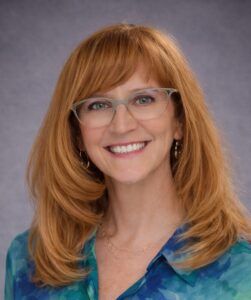
Her first book, Schizophrenia and Related Disorders: A Handbook for Caregivers, is a reference for every stage of caregiving, endorsed by Dr. E. Fuller Torrey as a must-read for SMI caregivers. Her second, Connected Care: A Practical Guide to Technology for Serious Mental Illness, maps apps, artificial intelligence tools, telepsychiatry, and brain-based treatments for a field moving faster than anyone can track. Dr. Akira Sawa, director of the Johns Hopkins Schizophrenia Center, has said the book “directly addresses” significant gaps.