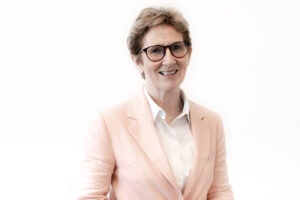
Emer MacSweeney is a world-renowned expert in brain and mind health, including the diagnosis and treatment of Alzheimer's disease, chronic traumatic encephalopathy (CTE), and other neurodegenerative conditions. She is the cofounder, CEO, and medical director of Re:Cognition Health, which provides a specialist service for the accurate diagnosis and treatment of progressive neurodegenerative and neurodevelopmental conditions, as well as traumatic brain injury, with centers across the United States and the United Kingdom.
A pioneer in Alzheimer's research and treatment, Dr. MacSweeney has been involved in clinical trials since the early development of therapies for the disease and was the first clinician in Europe to administer the amyloid-targeting therapy Kisunla outside of a clinical trial. She trained in neuroradiology at The Hospital of Neurology and Neurosurgery, Queen Square, London, specializing in interventional vascular neuroradiology, and spent time on scholarship at Harvard University. Her TEDx talk on CTE and contact sports has been viewed more than five million times worldwide.
Every day, primary care physicians speak to and counsel patients about controlling blood pressure, lowering cholesterol, maintaining a healthy weight, exercising, and getting preventative cancer screenings. Yet conversations about brain health often don’t happen until patients or their families notice memory problems. Forgetfulness is often thought of as a normal part of aging, and dementia is viewed as something physicians cannot proactively address.
But prevention and risk reduction can, and should, …
Read more…
4 conversations that lower a patient’s dementia risk
When Bill Ritter, a longtime anchor for WABC-TV New York’s ABC7 Eyewitness News, recently announced that he had been diagnosed with early-stage Alzheimer’s disease, he shared that he is receiving treatments that are keeping the disease’s progression at bay. Unfortunately, many patients never receive the same opportunity for treatment because they are diagnosed too late.
With Alzheimer’s disease, delayed diagnosis can determine whether patients qualify for new treatments, clinical trials, and …
Read more…
Early Alzheimer’s diagnosis now decides who gets treated
For decades, an Alzheimer’s disease diagnosis has been viewed as simply a confirmation of a disease, not an opportunity for treatment. Typically, patients or family members would notice subtle changes in memory. Once these symptoms reached the point where concern was raised to a physician, and referrals were made, often leading to months of waiting to see a neurologist, opportunities for even symptomatic treatment were significantly smaller. This diagnosis-to-treatment gap …
Read more…
Early Alzheimer’s detection is now a treatment decision


















