Ronald L. Lindsay, MD
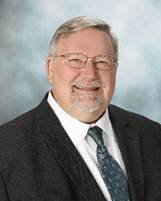
Ronald L. Lindsay is a retired developmental-behavioral pediatrician whose career spanned military medicine, academic leadership, and national advocacy for dignity-centered neurodevelopmental care. His NIH-funded work with the RUPP Autism Network helped define evidence-based approaches to autism and related developmental disorders.
He directed the LEND Program at The Ohio State University and founded JBLM CARES, a $10 million autism resource center for military families. His writing spans clinical scholarship and long-form fiction. He is the author of The Mercy Directive and the six-novel Cassandra series, a completed political and medical fiction saga tracing the rise of the Cassandra system from its origins to its national and international legacy. His forthcoming memoir, The Quiet Architect, examines how conscience and structure collide in modern medicine.
He shares updates on LinkedIn.
Conditions

Idaho has become the first state to end Medicaid funding for Applied Behavior Analysis (ABA) therapy. This marks a shift away from concerns about inflated billing and variable outcome metrics toward a model focused on measurable and inclusive care. As…
Idaho has become the first state to end Medicaid funding for Applied Behavior Analysis (ABA) therapy. This marks a shift away from concerns about inflated billing and variable outcome metrics toward a model focused on measurable and inclusive care. As a pediatrician who participated in NIMH-RUPP trials and has observed the clinical evolution of ABA, I recognize the significance of Idaho’s decision. The state acted proactively rather than awaiting federal …
Read more…
A new autism care model in Idaho
Physicians
For decades, I practiced developmental-behavioral pediatrics with a focus on coordinated care, measurable goals, and clinical accountability. I believed that if we could define a child's needs clearly and track progress with integrity, we could build systems that honored both…
For decades, I practiced developmental-behavioral pediatrics with a focus on coordinated care, measurable goals, and clinical accountability. I believed that if we could define a child’s needs clearly and track progress with integrity, we could build systems that honored both science and dignity.
But I now realize I missed something critical.
After reviewing the #BanABA initiative and speaking with Dr. Henny Kupferstein, I’ve come to understand the full scope of harm linked …
Read more…
A pediatrician’s reckoning with behavior therapy
Physicians
The terrain I refused to leave At Madigan Army Medical Center, I built a diagnostic model that delivered autism answers in under 30 minutes. No shortcuts, just smarter care. A Ph.D. pediatric nurse practitioner performed triage. I conducted the Screening…
The terrain I refused to leave
At Madigan Army Medical Center, I built a diagnostic model that delivered autism answers in under 30 minutes. No shortcuts, just smarter care. A Ph.D. pediatric nurse practitioner performed triage. I conducted the Screening Tool for Autism in Toddlers (STAT-MD), a targeted autism screening protocol developed at Vanderbilt, confirmed criteria from the Diagnostic and Statistical Manual of Mental Disorders, Fifth Edition (DSM-5), and families left …
Read more…
The collapse of developmental pediatrics
Physicians
I learned that in a rural exam room where four agencies circled a child with autism; and no one moved. Not the nurse. Not the case manager. Not the system. The child failed the Autism Screening Test. He was nonverbal,…
I learned that in a rural exam room where four agencies circled a child with autism; and no one moved. Not the nurse. Not the case manager. Not the system. The child failed the Autism Screening Test. He was nonverbal, avoided eye contact, even with his parents, and flapped his hands while playing with toys in unusual ways. The signs were classic. The diagnosis was clear. I spoke the “A” …
Read more…
What is professional inertia in medicine?
Conditions
Autism was never meant to be diagnosed in 15 minutes. The original vision, born in war-torn Vienna and postwar Baltimore, called for deep observation, multidisciplinary insight, and time. But somewhere between the ideal and the insurance code, we lost the…
Autism was never meant to be diagnosed in 15 minutes.
The original vision, born in war-torn Vienna and postwar Baltimore, called for deep observation, multidisciplinary insight, and time. But somewhere between the ideal and the insurance code, we lost the standard.
Today, families navigate a system built for speed, not truth. And children pay the price.
The ideal vs. reality
In theory, pediatricians perform routine developmental surveillance. Screenings like the M-CHAT happen at 18 …
Read more…
The crisis in modern autism diagnosis
Physicians
Florida has seen over 1,300 pertussis cases this year, an 81 percent increase from 2024. I didn't speak as a retired pediatrician. I spoke as a witness: a witness to systems retreat, a witness to the dismantling of public health,…
Florida has seen over 1,300 pertussis cases this year, an 81 percent increase from 2024. I didn’t speak as a retired pediatrician. I spoke as a witness: a witness to systems retreat, a witness to the dismantling of public health, and a witness to the consequences of ignoring coordinated care.
The numbers are staggering. Over 1,500 confirmed measles cases in 2025. Three deaths, the first measles-related fatalities in the U.S. in …
Read more…
The dismantling of public health infrastructure
Physicians

I entered medicine not just to treat illness, but to confront injustice. I wanted to be a force for good, battling death, yes, but also misinformation, institutional neglect, and the quiet superstition that children with developmental disabilities were somehow less…
I entered medicine not just to treat illness, but to confront injustice. I wanted to be a force for good, battling death, yes, but also misinformation, institutional neglect, and the quiet superstition that children with developmental disabilities were somehow less worthy of coordinated care. That conviction led me to align my career with the legacy of Eunice Kennedy Shriver, whose advocacy gave rise to the Special Olympics and helped shape …
Read more…
The case for coordinated care for children
Physicians
In 1995, I stood at the edge of a map most policymakers ignored: Appalachian Ohio. The Surgeon General's 2002 report, "Closing the Gap: A National Blueprint to Improve the Health of Persons with Mental Retardation," would later cite our work…
In 1995, I stood at the edge of a map most policymakers ignored: Appalachian Ohio. The Surgeon General’s 2002 report, “Closing the Gap: A National Blueprint to Improve the Health of Persons with Mental Retardation,” would later cite our work as a model for rural specialty outreach. But long before that recognition, we were ledgering care into counties where children with developmental disabilities had no clear path to diagnosis, let …
Read more…
How health disparities affect children
Physicians
Presidents are not immortal. But for much of American history, their bodies have been treated as state secrets, curated, concealed, and choreographed for public reassurance. When illness is hidden, the cost is not just clinical. It is geopolitical. Warren G.…
Presidents are not immortal. But for much of American history, their bodies have been treated as state secrets, curated, concealed, and choreographed for public reassurance. When illness is hidden, the cost is not just clinical. It is geopolitical.
Warren G. Harding: collapse before the scandal
President Warren G. Harding died suddenly on August 2, 1923, at age 57, while touring the country on his “Voyage of Understanding.” He collapsed in San Francisco’s …
Read more…
The secret illnesses of U.S. presidents
Physicians
My wife, Kathy, had stage 4 end-stage renal disease. She was slowly dying, but never stopped living. Her resilience in managing peritoneal dialysis made travel possible, even with the logistical complexities involved. Ireland had long been on our bucket list,…
My wife, Kathy, had stage 4 end-stage renal disease. She was slowly dying, but never stopped living. Her resilience in managing peritoneal dialysis made travel possible, even with the logistical complexities involved. Ireland had long been on our bucket list, inspired by Kathy and Stephanie’s earlier visit while we lived in Peoria. With careful planning, we booked our flights using points out of Orlando, knowing the drive would minimize Kathy’s …
Read more…
Traveling with end-stage renal disease
Physicians

In Minot, I practiced a kind of pediatrics no flowchart could predict: improvised, airborne, and often surgical. Minot didn't always follow the flowchart. One night, a toddler arrived in the emergency room, inebriated. Her father had given her vodka for…
In Minot, I practiced a kind of pediatrics no flowchart could predict: improvised, airborne, and often surgical. Minot didn’t always follow the flowchart. One night, a toddler arrived in the emergency room, inebriated. Her father had given her vodka for teething pain, never imagining she’d swallow it. She did. She stopped breathing. I called a code and began CPR, ordering a blood alcohol level (BAL) and routine labs. Her BAL …
Read more…
My experiences as an Air Force pediatrician
Physicians

I was not just a contributor. I was the pediatrician in the room, the one who translated clinical reality into research clarity, even when the system preferred abstraction. From 1997 to 2003, I lived a six-year burst of energy: equal…
I was not just a contributor. I was the pediatrician in the room, the one who translated clinical reality into research clarity, even when the system preferred abstraction.
From 1997 to 2003, I lived a six-year burst of energy: equal parts clinical invention, research precision, and institutional resistance. It was my Trinity Site: a catalytic moment where everything fused: rural care delivery, editorial rigor, and systems reform. The fallout still shapes …
Read more…
A pediatrician’s role in national research
Physicians
He was five, wiry, and fast, so fast his mother looped her purse strap around his wrist in the waiting room. She spoke softly, in Spanish, explaining that he could not sit still, could not sleep, could not stop. As…
He was five, wiry, and fast, so fast his mother looped her purse strap around his wrist in the waiting room. She spoke softly, in Spanish, explaining that he could not sit still, could not sleep, could not stop. As she described his meltdowns, he interrupted with nonsense sentences, unrelated to her words, untethered from context. It was not defiance; it was overflow.
I and my team of CNA Spanish interpreters …
Read more…
Treating autism and ADHD as a spectrum, not a contradiction
Physicians

In the early 1990s, while the American Academy of Pediatrics was formalizing its vision of the "medical home," we were already living it, without a name, without a policy statement, and without institutional applause. At Minot Air Force Base in…
In the early 1990s, while the American Academy of Pediatrics was formalizing its vision of the “medical home,” we were already living it, without a name, without a policy statement, and without institutional applause. At Minot Air Force Base in North Dakota, our pediatric team operationalized what would later be codified: interdisciplinary care, family partnership, coordinated services, and continuity across settings. We did not call it a medical home. We …
Read more…
Building the medical home before it had a name
Physicians
The vow was not ceremonial. It was lived. We were in Waverly, Ohio on 9/11, a town that did not make headlines, but held its own kind of gravity. The clinic was open. Kathy was chasing after Robert, age 8,…
The vow was not ceremonial. It was lived.
We were in Waverly, Ohio on 9/11, a town that did not make headlines, but held its own kind of gravity. The clinic was open. Kathy was chasing after Robert, age 8, who had darted toward the library at the end of the street, eager to explore its corners before school resumed. She did not call him back. She followed. That was the …
Read more…
A doctor’s duty on 9/11 in a small town
Physicians
The desegregation bus crash I was nearly killed in a desegregation bus crash. They called it progress, but it felt like degradation. We were children, packed into metal boxes and sent across neighborhoods like test subjects. The crash was more…
The desegregation bus crash
I was nearly killed in a desegregation bus crash. They called it progress, but it felt like degradation. We were children, packed into metal boxes and sent across neighborhoods like test subjects. The crash was more than metal and blood, it was a system shattering itself. I survived, and I have spent the rest of my life making sure no child has to survive reform just to …
Read more…
How tragedy shaped a medical career
Real physician voices, twice a week
Free, and one click to unsubscribe.