The terrain I refused to leave
At Madigan Army Medical Center, I built a diagnostic model that delivered autism answers in under 30 minutes. No shortcuts, just smarter care. A Ph.D. pediatric nurse practitioner performed triage. I conducted the Screening Tool for Autism in Toddlers (STAT-MD), a targeted autism screening protocol developed at Vanderbilt, confirmed criteria from the Diagnostic and Statistical Manual of Mental Disorders, Fifth Edition (DSM-5), and families left with answers. It worked. It was scalable. The administration abandoned the model the moment I left.
Academic pediatrics treats success delivered too swiftly like contamination. A 30-minute diagnosis? Too efficient. A nurse practitioner trusted to triage? Too disruptive. A developmental pediatrician who built a scalable model and was cast out? Too real. The stain wasn’t failure; it was success. And that made it intolerable.
Most of the leadership at the American Academy of Pediatrics (AAP) and the Society for Developmental and Behavioral Pediatrics (SDBP) were never primary care pediatricians, unlike Quentin Humberd and myself, who trained and served in general pediatric clinics while in the military. They went straight from residency to fellowship. They’ve never stood in the clinic. They cling to procedural orthodoxy while families wait, wander, and wither. It’s time to get out of the ivory tower and back to the terrain where children live.
The leadership failed the terrain
The leadership of the American Academy of Pediatrics (AAP) and the Society for Developmental and Behavioral Pediatrics (SDBP) didn’t just resist innovation; they abandoned the terrain. There’s no strategic lead on recruiting developmental-behavioral pediatricians. No urgency to address the bottleneck. No investment in models that work. Anything that threatens the financial choreography, especially in a field as poorly reimbursed as developmental pediatrics, is quietly buried.
Real physician voices, twice a week
Free, and one click to unsubscribe.
Screening and surveillance are taught as a pro forma month-long rotation in residency, easily ignored and never reinforced. The message is clear: This isn’t core pediatrics. It’s optional. Disposable. Forgettable.
Board certification reflects the same rot. One could fail every developmental pediatrics question on a recertification exam and still pass. The questions are so simplistic, you could guess the “liberal” answer and get it right, even if you were to the right of the late Charlie Kirk. It’s not about clinical mastery. It’s about optics. And families pay the price.
The indictment
At one medical center, a child waited months for a generic intake visit, conducted by a nurse practitioner using outdated questionnaires. The presenting problem was buried under protocol. The system didn’t diagnose. It delayed by design.
When the child finally saw a developmental pediatrician, the visit was labeled a “follow-up,” reimbursed at a lower rate. The irony? The system created the delay, then punished the clinician for responding to it.
So, I built a better model. Targeted questionnaires before the visit. A formal physician consult. 90 minutes, start to finish. Families left with answers. The visit was fully reimbursable. It worked.
But the hospital wanted shortcuts: less time, fewer consults, no Medicaid. Could I prioritize throughput over accuracy? I refused. I wouldn’t flatten care into an assembly line. I was fired.
In my next position, I was asked to violate Medicaid law. I refused again. And I was fired again.
The message was clear: Compliance was optional. But clarity? That was a punishable offense.
As one cartoonist put it: “Find a bold and innovative way to do everything exactly the same way it’s been done for years.” That was the tower’s mandate.
At Madigan, the administration wanted my academic resume to reaccredit its fellowship program, not my operational clarity. The system remained entrenched, resistant to reform, and allergic to anything that threatened its comfort. I offered solutions. They declined. I proposed efficiencies. They deflected. So, I did what any clinician committed to children would do: I disobeyed orders.
In concert with a nurse practitioner, I built a 30-minute consult system. Targeted intake. DSM-5 criteria. STAT-MD choreography. Families left with answers. The system didn’t just work; it thrived. But higher-ups didn’t welcome it. Because it didn’t come from the tower. It came from the clinic.
When families praised my care, the tower bristled. Operational clarity wasn’t supposed to be visible, especially when it came from outside their hierarchy. I wasn’t practicing general pediatrics or neurodevelopmental disabilities anymore. I was practicing something sharper, more efficient, and more honest. And that made me a threat.
The collapse
For weeks, I was the only physician in the developmental clinic. No authority, just responsibility. Leadership handed control to a geneticist in another department, someone who didn’t walk the terrain, didn’t know the rhythm, didn’t carry the weight. I carried it alone.
Developmental-behavioral pediatricians are, by nature, outliers. We’re not money-oriented. We tilt at windmills. We walk the beach looking for starfish to save, knowing full well the tide will bring more tomorrow. The system doesn’t reward that kind of care. It punishes it.
The tower won, not because it was right but because I was tired. Too old to keep fighting every morning, afternoon, and night. My mental health team told me to stop. My late wife, who watched me burn for children and institutions that never thanked me, told me to stop. So, I did.
But stopping isn’t silence. This essay is the ledger. The archive is the testimony. And the terrain still remembers.
Now, another cadre of developmental pediatricians is giving up. Nearly a quarter are aged 61-70. Hundreds retire each year. Only 25 new trainees graduate annually. The pipeline fractured. And instead of embracing the models that could stabilize the terrain, the tower rejects them.
The bureaucrat’s blueprint
The numbers are staggering. As Dr. John Voigt, Chair of the developmental-behavioral pediatrics sub-board for the American Board of Pediatrics, calculated: to evaluate all 20 million children and adolescents with developmental disorders in a single year, each of the 752 board-certified developmental-behavioral pediatricians (DBPs) would need to see 72 new patients per day, every day, for 365 days. Consultations with DBPs are now among the most inaccessible in all of medicine.
Voigt doesn’t just quantify the crisis; he offers a path forward. But it’s the wrong path. It’s DBP-exclusive. His model asks DBPs to focus solely on diagnostic consultation, while 60,305 pediatricians, 89,255 family physicians, 270,660 nurse practitioners, and 28,282 primary care physicians carry out longitudinal care. This isn’t collaboration; it’s execution. The DBP is the architect. Everyone else follows the blueprint.
Kristi Noem’s FEMA policy is a case study in this mindset, requiring personal sign-off on disaster relief over $100,000 during business hours, even as citizens suffer. It’s not just absurd. It’s deadly. And it mirrors the same choreography that delays care, sidelines solutions, and polishes the facade while the system bleeds out.
The inclusive blueprint
The consult model we built (fast, accurate, reimbursable) is ignored by SDBP leadership. The STAT tool, validated in real-world clinics, is sidelined by the AAP’s Council on Children with Disabilities. Even TELE-ASD-PEDS (TAP), a free, scalable, evidence-based screening tool developed by Dr. Zachary Warren at Vanderbilt, is treated as a threat instead of a gift. The tower doesn’t want solutions. It wants control.
TAP is used by psychologists and senior examiners at Vanderbilt. But its reach doesn’t stop there. We’ve trained speech-language pathologists, developmental pediatricians, nurse practitioners, and other allied health professionals with ASD assessment experience to use rapid screening models for early recognition. This expands the diagnostic terrain, multiplying access without compromising precision.
This isn’t just a workforce crisis. It’s a moral one. Families wait. Children wander. And the terrain grows quieter.
The silence and the bullhorn
Leadership remains silent. And in that silence, the bullhorn of misinformation grows louder. Government agencies, media outlets, and opportunistic voices fill the void with pseudoscience and political theater. Autism becomes a canvas for conspiracy. And families suffer.
The ledger remains
I placed my testimony. I built models that worked. I mentored, documented, and archived. And now, as the tower polishes its facade, I leave behind a ledger that cannot be erased. The terrain remembers. The archive holds. And the consult model, built from the clinic floor, remains ready for those who choose mercy over control.
Ronald L. Lindsay is a retired developmental-behavioral pediatrician whose career spanned military medicine, academic leadership, and national advocacy for dignity-centered neurodevelopmental care. His NIH-funded work with the RUPP Autism Network helped define evidence-based approaches to autism and related developmental disorders.
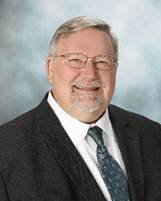
He directed the LEND Program at The Ohio State University and founded JBLM CARES, a $10 million autism resource center for military families. His writing spans clinical scholarship and long-form fiction. He is the author of The Mercy Directive and the six-novel Cassandra series, a completed political and medical fiction saga tracing the rise of the Cassandra system from its origins to its national and international legacy. His forthcoming memoir, The Quiet Architect, examines how conscience and structure collide in modern medicine.
He shares updates on LinkedIn.