



Listen and followApple PodcastsSpotifyYouTubeMore apps · Browse all episodes
“Physicians have struggled and sacrificed to develop the clinical judgment and skill needed to provide competent clinical care. They have undergone over a decade of schooling and training, taken on excessive student loan debt, worked backbreaking hours for low pay during residency, and risked their lives during the process. Yet when they have completed their training, they often times have to pay excessive malpractice premiums, having to answer to bureaucrats, administrators, insurance companies, politicians, and lawyers. Many times they get the short end of the stick, and are completely expendable by the system. Their incomes are tied to a job, boss, corporate, and regulatory entities that do not have their best interests in mind. More frequently, these entities are failing physicians.
Look at what happened with COVID-19, and ask yourself, ‘What if that source of income was eliminated by no fault of your own?’
What is needed is a paradigm shift, and breaking out of traditional modes of linear thinking that our profession is so accustomed to. Now, more than ever, it’s not just about having a single high-income wage. Too many physicians are living paycheck-to-paycheck, have large liabilities, little-to-no savings, and families to support. Today’s physicians must be able to use asset and income diversification to mitigate economic risks.”
Christopher H. Loo is a physician and author of How I Quit My Lucrative Medical Career and Achieved Financial Freedom Using Real Estate.
He shares his story and discusses his KevinMD article, “How COVID-19 is forcing physicians to rethink the concept of job security.”
This episode is brought to you by Money Insights. Please visit Moneyinsights.net/KevinMD for a unique financial strategy to help physicians across the country grow and protect their wealth.
Did you enjoy today’s episode?
Please click here to leave a review for The Podcast by KevinMD. Subscribe on your favorite podcast app to get notified when a new episode comes out!
Do you know someone who might enjoy this episode? Share this episode to anyone who wants to hear health care stories filled with information, insight, and inspiration.

Hosted by Kevin Pho, MD, The Podcast by KevinMD shares the stories of the many who intersect with our health care system but are rarely heard from.


Transcript
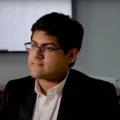
Kevin Pho: Hi, and welcome to the show, where we share the stories of the many who intersect with our health care system but are rarely heard from. My name is Kevin Pho, founder and editor of KevinMD. Today on the show, we have Christopher Loo. He’s an orthopedic surgeon, but now he’s an entrepreneur, he’s a speaker, and he’s a KevinMD contributor. He recently wrote the articles “How COVID-19 forced me to pivot and accelerated my business growth” and “How COVID-19 is forcing physicians to rethink the concept of job security.” He’s also the author of the book “How I Quit My Lucrative Medical Career and Achieved Financial Freedom Using Real Estate.” Chris, welcome to the show.
Christopher H. Loo: Thanks, Kevin. I’m really happy to be on the show. Thanks for having me.
Kevin Pho: So I’m sure my readers are interested in hearing your story and your journey to where you are today.
Christopher H. Loo: Yeah, definitely, I’m happy to share. I grew up in Houston, and from an early age, I was always the outsider. I grew up with a lot of uncertainty, so that helped me with a lot of my entrepreneurial, contrarian thinking. There was one point when I was growing up when I decided to myself that I would never be dependent upon a job, boss, corporation, Social Security, or pension, things like that. So I had to create my future prosperity and my future economic success, and in order to do that, I had to become an entrepreneur.
Nevertheless, I grew up on the cusp of Gen X and millennials, so a lot of the industrial-age ideas, where you had to get a stable job, a high-paying job, were ingrained upon me. So I went to Baylor for medical school. I was part of the MD-PhD program, and I got my PhD in bioengineering. But it was during my second year of medical school that I started two companies, and this was right after 9/11, because I saw these types of black swan events that could happen. So I started to prepare. I started two companies in real estate and stocks and options and grew those to the point where, in my final year of medical school, when I was 29, I was able to generate a full-time income.
At that point, I sought a lot of advice and mentoring, and everybody said, “Go the conventional route. Go the safe, secure route.” So that’s why I chose orthopedic surgery, because that was the highest-paying profession, but I wasn’t really passionate about it. I did it for two years, and I felt like I wasn’t really utilizing my talents and my skills. So the day Lehman Brothers filed for bankruptcy, I mustered up the courage, walked into my chairman’s office, and turned in my keys, badge, and pager. From there on, I got my life back. I was able to live life on my own terms, my own values, and my own beliefs.
I spent eight years investing in single-family condominiums, and by my mid-thirties, I had become a millionaire. I was able to take a year off in 2016 before launching my consulting company. Now I’m an advisor for a digital health startup company, I consult for large hospitals, and I do a lot of digital programs: digital education, online group coaching, digital products, programs, and seminars. So that’s my story. I’m happy to go from there or take any questions.
Real physician voices, twice a week
Free, and one click to unsubscribe.
Kevin Pho: So it sounds like you started your businesses back in medical school. Now, what kind of training did you have outside of the sciences that helped you start these businesses?
Christopher H. Loo: That’s a great question. I had always been an entrepreneur since I was very young. For example, my first business, I started a lawn-mowing business where I would just knock on my neighbors’ doors and offer my services, and I would team up with my friends, and we would just split and share the profits. That evolved into buying my first stocks when I was in high school, and eventually, by the end of college, I had built up a nice sum, you know, for a college student, so that I was able to go out and invest in my own first real property.
But my real education just came from books, really. I really looked up to entrepreneurs like Bill Gates and Steve Jobs. The one book I read that really changed my thinking and the course of my life was “Rich Dad Poor Dad,” so that altered the course. I then purchased a book called “Getting Started in Stock Options,” which was very fruitful during the 2001 to 2008 stock move, and then also the book “Multiple Streams of Income.” Those three books really shaped the course of my life, to start thinking in terms of diversifying income streams, diversifying assets, and always having a plan B, C, and D, just in case things such as COVID or the financial crisis and 9/11, things like that, happen.
Kevin Pho: Now, a lot of doctors write to me, and they want to get involved with real estate, because when you talk about alternative sources of income, real estate comes near the top of the list. For those physicians without a real estate background, can you share some tips on how they can get started? Where can they learn?
Christopher H. Loo: I think the first thing, what I advocate to my clients, is just start out very small. I started out in single-family condominiums, and that was very low risk, because for less than a hundred thousand, you could buy a pretty nice-sized condo in Houston. It’s a little bit different based on where you live, but start out very small. From there, the other thing you can try is house hacking, which I did with my first property. I lived in one room, and I rented out the other bedroom, and that taught me a lot about email marketing and the customer experience.
These days, there are a lot of things such as syndicates and crowdsourcing and crowdfunding. I don’t really participate in those, but I think the two things are just to start out with small single-family condos and also house hacking, and then go from there, you know, to single-family residences, duplexes, multiplexes, apartment buildings, commercial, things like that.
Kevin Pho: So you mentioned in one of your comments that COVID was one of those black swan events, and I want to talk about a recent KevinMD article that you wrote, “How COVID-19 is forcing physicians to rethink the concept of job security.” I was wondering if you could explain: Why is COVID making physicians rethink the concept of job security?
Christopher H. Loo: I wrote it specifically for that question, and really because, you know, as physicians, we’re trained that medicine is the low-risk profession. You can never get fired, you can never lose your job, people are always going to need health care. But you see that the profession itself is being eroded. Our autonomy, our skill sets, and our experience are all being commoditized. In other words, we’re becoming easily replaceable, either through automation or through midlevels or through insurance and malpractice and things like that. So I really wrote it to wake people up. Being a physician today is much more different than before 2000.
I also wrote it because of just old ideas. You know, the medical profession really lags behind societal and technological innovation, so I wrote it to really try and open people’s eyes that education, career, finances, things like that, are changing. The other thing is that I’ve done a lot of studying and reading and talking to a lot of physicians, and it’s really alarming that financial literacy is not very high among physicians. We’re all trained to pursue the high income, but we really don’t know what to do with our expenses. We don’t know the difference between assets and liabilities. We get into a lot of student loan debt. So I really wrote that to really wake people up.
Kevin Pho: So a lot of physicians are in my boat. My hours are cut. There are some doctors who are laid off, partially furloughed, completely furloughed. Now, what kind of advice can you give these doctors who relied on a stable income that’s not there anymore?
Christopher H. Loo: Yeah, so I had a lot of clients, really high-net-worth clients, that I worked with prior reach out to me during these times. One client went into the hospital one day, and he was told that he was being let go, and he just didn’t know what to do. So really, I think this is a wake-up call. It’s better to be planning beforehand, but if you can’t, now is the best time to be educating yourself. I think through social media, through a lot of online summits, through webinars, YouTube, things like that, you can start to educate and prepare yourself for the next COVID-type event, because each event is going to happen at a more rapid pace, and it’s going to happen more frequently and with more severity.
So really start educating yourself. Start reading books outside of medicine, start talking to people and networking. We really have to start getting smarter and thinking outside the box and doing things differently if we are to progress and survive in the next decade.
Kevin Pho: You mentioned real estate, which we talked about earlier, as a primary source of alternative income. What are some other areas and suggestions that you have for physicians who may not be reliant anymore on that primary job?
Christopher H. Loo: One is that I got my financial freedom through stocks and options, so I watch the markets every day. I think right now it’s a little bit overvalued, but I think, you know, with the second-quarter earnings coming out soon, I think we’re in for another drop. I’m not sure, but that’s my prediction. I recently launched a lot of online group coaching specifically devoted to stocks during this time, so I had a lot of engagement through there.
But the other thing that I think is the next gold mine for the next decade is just online entrepreneurship: podcasts, affiliate programs, webinars, online summits, things like that. Really, I think physicians, we as a cohort, have a lot of experience and talents and a lot of wisdom to give back. It’s just that we have to find the correct channels and means of monetizing that and giving back to our society.
Kevin Pho: Now, has your training as a physician helped or hurt you as you transitioned into the business world?
Christopher H. Loo: It’s actually, I would say, 75 percent helped and 25 percent really hindered me, but that 25 percent hindering is just because of the amount of time I spent on my career. You know, looking back, I would still go to medical school, I’d still get my PhD, I would probably just have done something differently after medical school. But it’s really helped a lot, because theoretically, if I didn’t have an MD-PhD from Baylor or Rice behind my name, and, you know, an orthopedic residency, I think it would be a hindrance to me, because it wouldn’t give me that street credibility, and people aren’t going to take you as seriously.
The other thing is it allows me to reach the physician audience, because physicians like to be interacting with and helped by another physician rather than someone they don’t really know. I also think that, you know, being a surgeon has really helped me in the entrepreneurship way, because now I look at everything in terms of: What is the risk? What is the downfall? What are the numerous steps I need to take to mitigate that risk? What can I do to increase my profit? So really, being a surgeon, and, you know, being wary of malpractice and things like that, has really helped me, because now I’m always thinking of the bottom line: What’s the inherent risk to the business?
Kevin Pho: Let’s take a step back. I was wondering if you could share something that you’ve been curious about or something that you’ve been passionate about over the last few months.
Christopher H. Loo: I’ve always been a big proponent of technology. I think technology is the David in this whole Goliath paradigm. I think technology is going to revolutionize and change the way we do things. We’ve seen it, you know, in the information age. I think when we see things such as riots and COVID, we’re just seeing old ideas clash with new ideas. So I think people really have to start embracing these new ideas and ways of thinking, and how we can use technology to best implement change in our profession today. So I think telemedicine, augmented reality, and the blockchain are going to change the way we educate, communicate, interact, and deliver patient care.
I also think that social media is really a fantastic, powerful tool for everybody, because, you know, instead of posting photos of food and funny videos, now we can really use social media to educate and inform. You know, we can team together to form movements. So I’m really passionate about technology and how we can best use it in medicine.
Kevin Pho: Wonderful advice and insight. We’re talking to Christopher Loo. He’s an orthopedic surgeon turned entrepreneur. He’s the author of the book “How I Quit My Lucrative Medical Career and Achieved Financial Freedom Using Real Estate.” He’s a KevinMD contributor. Christopher, what is your take-home message for the KevinMD audience?
Christopher H. Loo: Don’t let society or someone else dictate your beliefs or your values upon yourself and force you into a career that’s not to your liking. These days, we live in a world of abundance. I’ll give you a final example: Companies can be created using a cell phone, internet, and a laptop for free. So really do what you’re passionate about. Go out, share your message, and inspire people.
Kevin Pho: Well said. And how can people find you?
Christopher H. Loo: They can find me on social media. I’m on there as Christopher H. Loo MD PhD. I’m on Facebook, Twitter, Instagram, TikTok. I’m also on YouTube; just Google my name. You can find my four books on Amazon, and then also, I’m on YouTube as well, so my presence is everywhere. You can also email me at [email removed by the editor].
Kevin Pho: Fantastic. Thank you so much for your time and for joining me on the show.
Christopher H. Loo: Thanks, Kevin. I really appreciate our time together.
Listen and followApple PodcastsSpotifyYouTubeMore apps · Browse all episodes