









Listen and followApple PodcastsSpotifyYouTubeMore apps · Browse all episodes
“If you are finding yourself with trouble studying or focusing due to the state of the world, or due to changing circumstances in your own household, remember that a delay in this test or in any part of your application is not the end of the world. You need to focus on your health and well-being first so that you have the ability to keep pushing through this marathon of a process (and I don’t just mean the application to medical school—there’s a whole bunch to do once you get there as well!) Dive into meditation, exercise, and staying in contact with your friends and family. The MCAT, the application, and your dreams of being a physician will still be there when this is all over, so priority #1 is making sure that you are able to jump back into all of this when that time comes.”
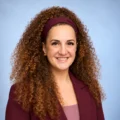
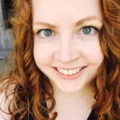
Elisabeth Fassas is a medical student and author of Making Pre-Med Count: Everything I Wish I’d Known Before (Successfully) Applying to Medical School.
She shares her story and discusses her KevinMD article, “COVID-19 and the MCAT: What should premedical students do?”
Did you enjoy today’s episode?
Please click here to leave a review for The Podcast by KevinMD. Subscribe on your favorite podcast app to get notified when a new episode comes out!
Do you know someone who might enjoy this episode? Share this episode to anyone who wants to hear health care stories filled with information, insight, and inspiration.

Hosted by Kevin Pho, MD, The Podcast by KevinMD shares the stories of the many who intersect with our health care system but are rarely heard from.


Transcript
Kevin Pho: Hi, and welcome to the show, where we share the stories of the many who intersect with our health care system but are rarely heard from. My name is Kevin Pho, founder and editor of KevinMD. Today on the show we have Elisabeth Fassas. She’s a medical student, and she wrote the KevinMD article “COVID-19 and the MCAT: What should premedical students do?” She’s also the author of the book Making Pre-Med Count: Everything I Wish I’d Known Before (Successfully) Applying to Medical School. Elisabeth, welcome to the show.
Elisabeth Fassas: Thanks so much for having me.
Kevin Pho: So we’ll get into your book and your article in a bit, but first off, tell me your story and your journey to where you are today.
Elisabeth Fassas: Sure. I am a rising second-year medical student at the University of Maryland. I took a couple of gap years before medical school and did a lot of work in kind of the intersection of medicine and health policy, which is where a lot of my interests lie. Right now, I’m also doing some work with the American Medical Association on that front, so a lot of kind of converging interests, and just kind of trying to make it through school now.
Real physician voices, twice a week
Free, and one click to unsubscribe.
Kevin Pho: Fantastic. And how is the pandemic affecting your medical training so far?
Elisabeth Fassas: Yeah, so we have been online since March, and now it’s kind of our final and first summer, so it’s been fairly relaxed, but we’re still pretty, you know, it’s unclear how our semester is going to be looking starting next month, so a lot of things are up in the air in terms of clinical experiences and lectures, small groups, all of that. So we’re just all kind of on the edge of our seats, trying to see how it’s all going to go.
Kevin Pho: Sure. Now let’s get into your KevinMD article, “COVID-19 and the MCAT: What should premedical students do?” I was wondering if you could walk us through that article and the story behind why you decided to write it.
Elisabeth Fassas: Sure. I currently work as an MCAT tutor for Kaplan. So when the kind of COVID situation hit, MCATs were getting canceled all over the place, and I had so many students struggling and confused and not knowing kind of what that was going to mean for their test dates and for their applications as a whole. So that’s kind of where it started, was just a forum to answer a lot of frequently asked questions that I was getting from students and parents alike about kind of how all of this was going to unfold.
Obviously, the situation has changed pretty dramatically. The MCAT has changed. It’s been shortened. They now have three seatings a day. But I think for students, the real trick has been, because everything got pushed back, now they’re having to balance taking the MCAT and filling in their personal statements, writing their personal statements, and filling out their applications all at the same time, which I think students typically plan to not have to do. So it’s definitely been interesting to see students adapt and figure out kind of what changes are going to be most appropriate for them in their schedules.
Kevin Pho: So what kind of advice can you give to premedical students who are applying to medical school, or even thinking of taking MCATs, during a pandemic?
Elisabeth Fassas: Sure. So I would say, first of all, the kind of common adage: Don’t try to control what you can’t control. Obviously, the COVID situation is changing tremendously every single day. Test dates now have been a lot more stable, so you know, you can kind of plan on taking it the day that it’s scheduled. That’s what it’s looking like. But I would just say kind of take it as it comes with how your plan is going to be.
I write in the book a lot about “apply early, early, early,” and I’m just seeing that this year that is not really a thing. Medical school admissions committees are having to make changes with how their interview format is going to be. Obviously, a lot of that is going to be online, so I think generally, de facto, the entire application has been shifted back. So if you’re a student who feels delayed in your process, I think you are not alone at all, and don’t let that deter you this year.
Kevin Pho: And in the next 3, 6, 9, 12 months, what kind of changes do you anticipate?
Elisabeth Fassas: Yeah, so MCAT dates are going to be ending in September, so up until then, we know that it’s going to be the shortened version. I think that by January, probably, that will kind of be back to normal. With respect to the application as a whole, I think most schools have said that they are going to be doing interviews online, which will be more cost-effective for students. I would say you definitely want to make sure that you are preparing to be interviewing online, in a kind of video format, which is going to be a challenge in and of itself and something for students to kind of aim towards in the future. But yeah, I think things are going to be a little bit different, for sure.
Kevin Pho: Now, when it comes to online versus in-person interviews, can you share any advice and tips that you could give to these aspiring medical students?
Elisabeth Fassas: Definitely. Obviously, when you’re kind of in person, there’s a lot of opportunity to speak with them kind of in a whole-day format. I’m not sure, and I don’t think a lot of schools have even released what their interview formats are going to look like this year. But just like in any kind of video chat that you might have been participating in over the last few months, it really is all about your face, your facial expressions, and making sure that you are focused on your viewer, you’re looking into your camera and not at yourself, that you’re really trying to stay focused and engaged as much as possible, and then also that you’re kind of really prepared with questions.
On the flip side, the interview is a really great opportunity for students to learn about the school. While certainly they’re going to be doing a lot of things to kind of help students make decisions about admissions, students really are going to have to come prepared with their own questions and really kind of work to get those answered in a shorter period of time.
Kevin Pho: Sure. Now, you also wrote the book Making Pre-Med Count: Everything I Wish I’d Known Before (Successfully) Applying to Medical School. Now, why did you decide to write that book?
Elisabeth Fassas: Yeah, so when I was a pre-med, I was very, very anxious about this entire process. I always felt like every little decision I could make would potentially have this huge impact on me and on my application, and where I would go to school, and what my career would look like, and just, you know, everything gets blown out of proportion. I realized that even though I went to a school that was very well resourced, there were still so many little questions, nagging things that I had on a day-to-day basis, that I just didn’t know where to direct.
So I thought I’d kind of sit down and compile all of those little things that can really add a lot of stress to students and just give a resource to say, “Here’s something to bounce your ideas off of. Here’s something to help you answer your own questions about this process,” and then hopefully to kind of calm you down, because everyone is just as anxious about it as you are.
Kevin Pho: Now, what are some of the top questions that premedical students are asking that you answer in the book?
Elisabeth Fassas: Sure. Well, it’s a great question. So I guess I talk a lot about the personal statement. I’m working with a lot of students now on writing personal statements, and it’s definitely a challenge. So kind of: What should I be focused on? How should I format it? I talk a lot about that. Letters of recommendation, I think, is another kind of big question that students have, just because there isn’t a set format for that. Who do I ask? When do I ask? What should they talk about? I dive into that in the book as well. And then I just kind of talk about the entire strategy, right? If you’re an incoming freshman or you’re a sophomore and you want to be in medical school three or four or five years from now, what are the action steps that you can take now to best prepare yourself for that?
Kevin Pho: All right, we’re talking to Elisabeth Fassas. She’s a medical student, and she’s the author of the book Making Pre-Med Count: Everything I Wish I’d Known Before (Successfully) Applying to Medical School. Elisabeth, what is your number one tip that you could share with premedical students to have them successfully be accepted to medical school?
Elisabeth Fassas: Oh, gosh. So I don’t want to sound too cliche, but I would say really, really follow what you want to do. This is such a long process that if you’re not doing something that you’re interested in, in medicine, you’re not going to make it there. For me, that was health policy and social policy, and kind of carving out an intersection for myself. For a lot of my peers, it’s been different types of research, volunteer work, things like that. So I would say really, really find something that you love, and don’t worry about checking all the other boxes. Everything will kind of fall into place if you’re passionate about what you’re doing.
Kevin Pho: All right. And let’s take a step back. Can you share with my audience something that you’ve been curious about or something that you’ve been passionate about over the last few months?
Elisabeth Fassas: Oh, gosh, yeah. So I’m currently working on a research project about health literacy, and kind of where physicians fit in, in helping patients understand what’s happening in their bodies and how to help them adhere to medical advice better. So that’s been really cool. I think it’s kind of: What is the role of the physician beyond just kind of providing care, but really being a resource for the patient?
Kevin Pho: And my final question: What is your take-home message that you want to share with the KevinMD audience?
Elisabeth Fassas: The application process is rough, and for those of you that are doing it right now, I’m sorry. Power through it. There is an ending, but it is so, so worth doing. If this is what you want to do, it is worth the trouble.
Kevin Pho: And how can people find you and find your book?
Elisabeth Fassas: Sure. My book is sold anywhere books are sold: Amazon, Barnes & Noble, any online, and on the Simon & Schuster website. And you can find me on Instagram, @makingpremedcount, and feel free to DM me. I’m happy to chat whenever.
Kevin Pho: All right, thank you so much for your insights, and thanks for being on the show.
Elisabeth Fassas: Thank you.
Listen and followApple PodcastsSpotifyYouTubeMore apps · Browse all episodes